

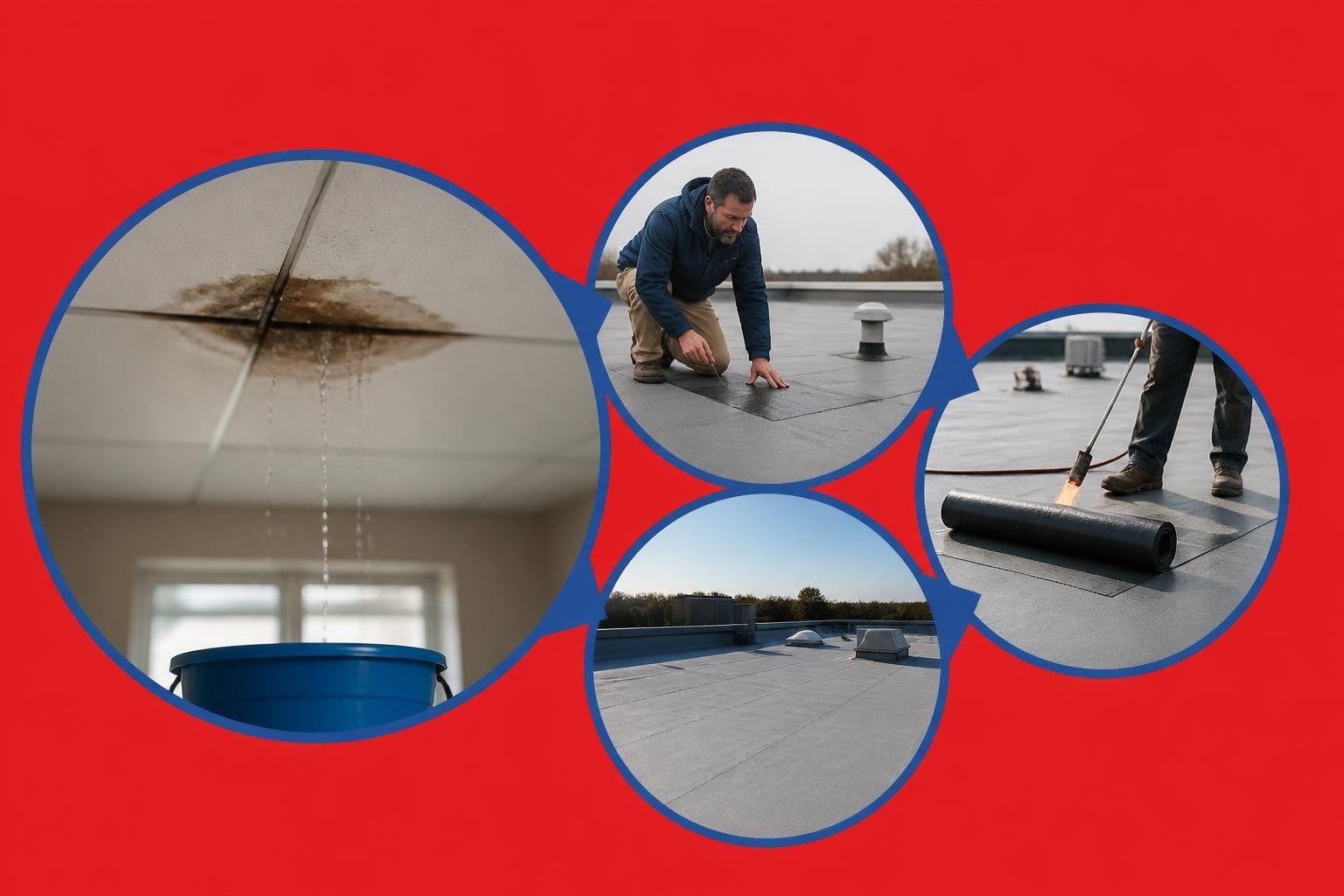
Commercial roof leaks pose serious threats to business operations, inventory, equipment, and building integrity. Unlike residential systems, commercial roofs typically feature low-slope or flat designs with modified bitumen, TPO, EPDM, or built-up roofing materials that require specialized repair techniques. Understanding the complexities of commercial roof leak repair helps property managers and business owners make informed decisions that protect their investments and minimize operational disruptions. This comprehensive guide explores detection methods, repair strategies, and preventive measures tailored to the unique challenges of commercial roofing systems in the Joliet area.
Understanding Commercial Roof Leak Vulnerabilities
Commercial roofing systems face distinct challenges compared to their residential counterparts. The expansive surface areas, low slopes, and specialized membrane materials create unique vulnerability points where water intrusion can occur.
Common leak entry points include:
- Penetrations for HVAC units, vents, and exhaust fans
- Parapet walls and roof edge flashings
- Expansion joints and seam failures
- Ponding water areas where drainage is inadequate
- Damaged or deteriorated roof membranes
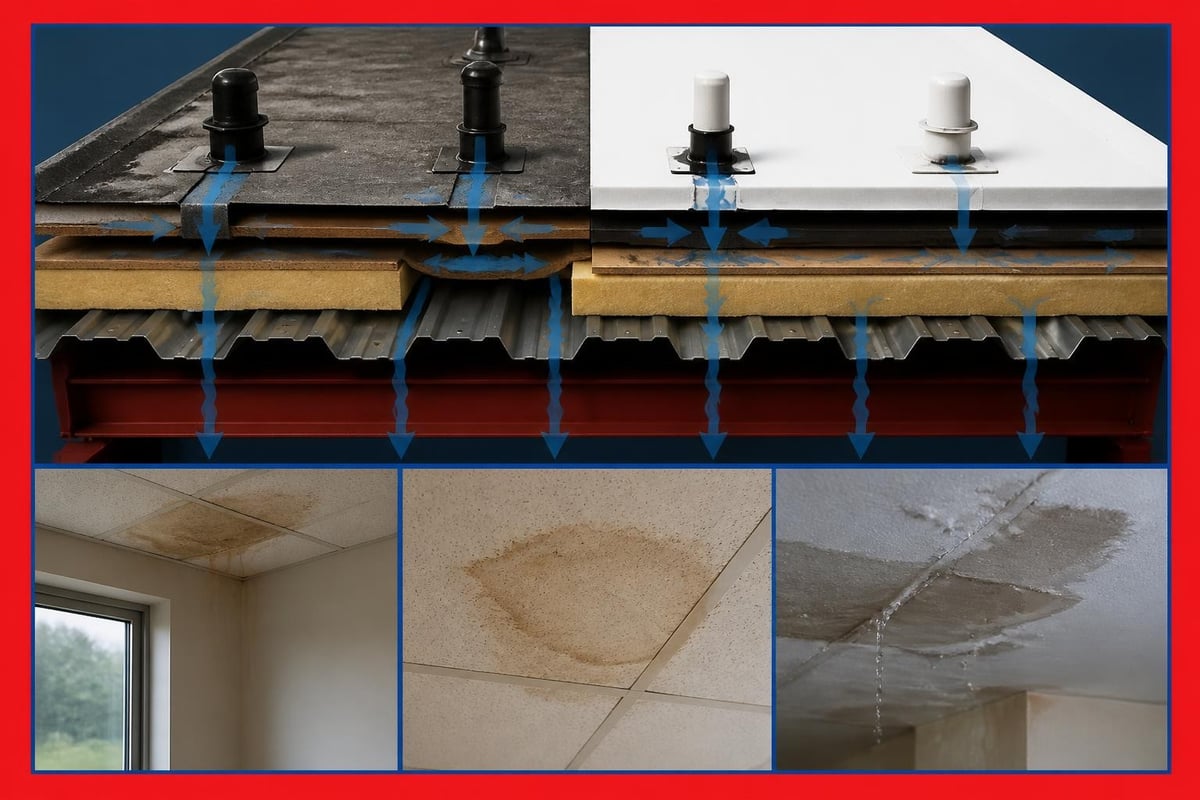
Modified bitumen systems, popular in commercial applications throughout Illinois, typically consist of multiple layers that can develop interlaminar defects invisible from the surface. These hidden weaknesses allow water to travel horizontally between layers before appearing inside the building, often far from the actual breach point.
The National Roofing Contractors Association guidelines emphasize that proper diagnosis requires understanding both the roofing assembly's construction and the building's structural characteristics. Water follows the path of least resistance, migrating along deck seams, through insulation layers, and around structural members before manifesting as visible damage.
The Financial Impact of Delayed Repairs
Postponing commercial roof leak repair creates cascading financial consequences that extend far beyond the roof itself. Interior water damage affects inventory, disrupts operations, damages electrical systems, and can trigger mold growth requiring expensive remediation.
| Consequence | Immediate Cost | Long-Term Impact |
|---|---|---|
| Inventory damage | $5,000-$50,000+ | Insurance premium increases |
| Business interruption | $1,000-$10,000/day | Customer relationship damage |
| Structural deterioration | $10,000-$100,000 | Premature roof replacement |
| Mold remediation | $15,000-$75,000 | Health liability exposure |
Early intervention through professional commercial roof leak repair typically costs a fraction of delayed response expenses. A small membrane patch or flashing repair costing $500-$2,000 can prevent tens of thousands in consequential damage when addressed promptly.
Advanced Leak Detection Methodologies
Locating the source of commercial roof leaks requires sophisticated diagnostic techniques that go beyond visual inspection. Water's tendency to travel horizontally through roofing assemblies makes pinpointing entry points particularly challenging.
Infrared Thermography
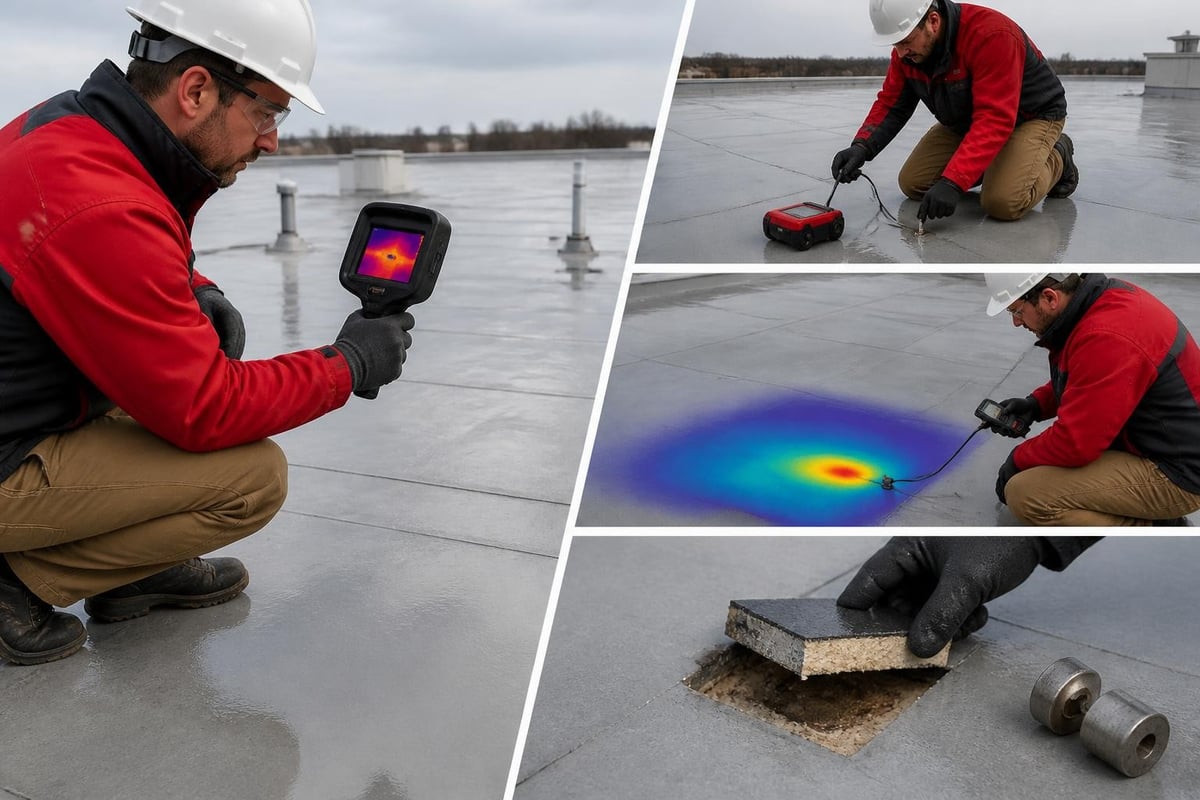
Thermal imaging cameras detect temperature variations caused by moisture trapped beneath roofing membranes. Wet insulation conducts heat differently than dry material, creating thermal signatures visible through infrared technology. This non-destructive method provides rapid assessment across large roof areas, though readings require careful interpretation based on weather conditions, time of day, and roof composition. The Whole Building Design Guide’s integrity testing overview details the strengths and limitations of various non-destructive testing approaches.
Electronic Leak Detection
Low-voltage electronic leak detection (ELD) works by creating an electrical circuit between the roof membrane and conductive deck or layer beneath. Technicians systematically grid the roof surface, identifying breaches where electrical current flows through the membrane defect. This method proves particularly effective for single-ply membranes like TPO and EPDM, offering precision that pinpoints leaks within inches.
Key advantages of electronic leak detection:
- Precise leak location regardless of water migration patterns
- Effectiveness on both wet and dry roof surfaces
- Ability to verify repair completeness after patch installation
- Detection of multiple small breaches that visual inspection misses
Nuclear Moisture Detection and Capacitance Scanning
Nuclear moisture meters and capacitance-based scanners measure moisture content within roofing assemblies without penetration. These tools help map wet areas across the roof, guiding targeted core sampling and repair planning. Understanding-Roofing’s technical comparison of leak-finding methods provides detailed analysis of each approach's practical applications and limitations for commercial facilities.
Forensic Investigation Techniques
Complex or recurring leaks demand systematic forensic investigation combining multiple diagnostic methods. The IIBEC technical article on finding leaks presents case studies demonstrating how investigators trace water paths through building assemblies, identify contributing factors like inadequate drainage or improper installation, and develop comprehensive repair specifications that address root causes rather than symptoms alone.
Emergency Response and Temporary Measures
When active leaks threaten operations, immediate action protects assets while permanent commercial roof leak repair plans develop. Emergency response prioritizes containment and documentation before executing temporary weatherproofing.
Immediate response steps:
- Contain interior damage: Deploy tarps, buckets, and temporary barriers to protect inventory and equipment
- Document thoroughly: Photograph water intrusion points, roof conditions, and affected areas for insurance and repair planning
- Identify the general leak area: Trace visible water to its approximate roof location, noting relationships to penetrations or roof features
- Execute safe temporary repairs: Apply emergency patches or tarps following manufacturer protocols
Emergency roof tarps must be properly secured with weighted bags or appropriate fastening systems that avoid creating additional penetrations. Professional contractors carry specialized tarping materials and hardware designed for commercial applications that withstand wind uplift and weather exposure.
Professional commercial roofing services provide 24/7 emergency response capabilities, ensuring rapid deployment when leaks threaten business operations. Attempting DIY emergency repairs on commercial roofs poses safety risks and can inadvertently worsen damage or void warranty coverage.
Permanent Repair Strategies by System Type
Effective commercial roof leak repair requires system-specific techniques matched to the existing roof assembly. Generic approaches often fail because different membrane materials, adhesion methods, and assembly constructions demand tailored repair protocols.
Modified Bitumen Repair Techniques
Modified bitumen systems, common across commercial buildings in the Joliet region, utilize either torch-applied, cold-adhesive, or self-adhering membranes. Repair methodology must match the original installation method and preserve the multi-layer system's integrity.
Torch-applied repairs involve heat-welding compatible modified bitumen patches over damaged areas, creating thermally bonded seals that integrate with surrounding material. Proper technique requires controlled flame application that achieves sufficient melt without overheating or damaging adjacent membrane areas.
Cold-adhesive repairs substitute specialized bonding adhesives for torch application, offering safer installation in occupied buildings or near combustible materials. These repairs bond reliably when surface preparation, primer application, and adhesive selection follow manufacturer specifications precisely.
Small punctures or tears may receive localized patches, while larger damaged sections require complete membrane replacement over affected areas. Transition detailing at patch edges proves critical, requiring staggered laps and proper edge sealing that prevents future water intrusion at repair boundaries.
Single-Ply Membrane Repairs
TPO and EPDM membranes dominate modern commercial roofing installations, each requiring distinct repair approaches based on their chemical composition and bonding characteristics.
| Membrane Type | Repair Method | Key Considerations |
|---|---|---|
| TPO | Heat-welded patches | Requires hot-air welding equipment; seams must achieve proper melt temperature |
| EPDM | Adhesive or tape patches | Surface preparation critical; primer selection matches adhesive system |
| PVC | Heat-welded patches | Similar to TPO but requires PVC-compatible materials and techniques |
The roof repair specialists at established contractors maintain equipment, materials, and expertise for all major commercial membrane systems, ensuring repair compatibility and long-term performance.
Built-Up Roofing (BUR) Repairs
Built-up roofing systems consisting of alternating layers of bitumen and reinforcing felts develop specific failure modes requiring comprehensive repair strategies. Surface cracks, blistering, and interlaminar defects characterize common BUR deterioration patterns.
Blister repairs demand cutting and removing affected layers, allowing moisture to escape before applying replacement plies and surfacing. Simply coating over blisters traps moisture and accelerates underlying deterioration. Proper BUR repair restores the original multi-ply redundancy that provides these systems' characteristic durability and weather resistance.
Addressing Root Causes Beyond Surface Repairs
Sustainable commercial roof leak repair addresses underlying conditions that caused initial failure, not merely visible symptoms. Without correcting contributing factors, repaired areas often fail again or new leaks develop nearby.
Drainage Improvements
Ponding water accelerates membrane deterioration and creates persistent leak risks. Areas retaining water more than 48 hours after rainfall require drainage correction through additional drains, tapered insulation systems, or slope enhancement. Commercial Roofing Intel's practical leak-response strategies emphasize drainage optimization as foundational to long-term leak prevention.
Common drainage solutions include:
- Installing additional roof drains in ponding areas
- Adding tapered insulation to create positive drainage slopes
- Clearing debris from existing drains and scuppers
- Upgrading undersized drainage systems to current code requirements
Flashing and Termination Bar Upgrades
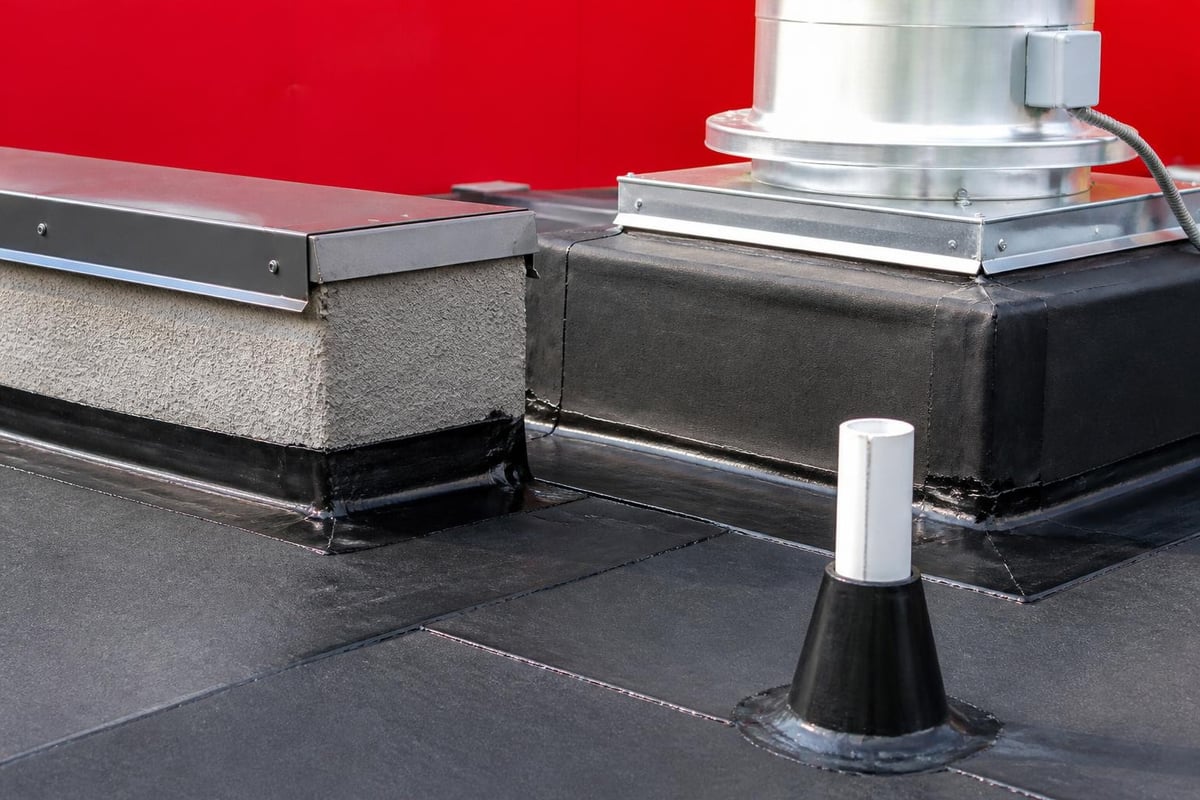
Many commercial roof leaks originate at flashings where roofing membranes terminate against walls, curbs, and penetrations. Original installations often utilized minimal edge securement or incompatible materials that deteriorate faster than field membranes.
Comprehensive flashing repairs remove failed components and reinstall using current best-practice details with proper laps, securement, and compatible materials. Metal termination bars mechanically fasten membranes to vertical surfaces, while compatible sealants and counter-flashings provide redundant weather protection.
Preventive Maintenance Programs
Establishing routine maintenance programs extends roof service life and identifies developing issues before they become emergency leaks. Professional maintenance includes debris removal, drain cleaning, sealant inspection, and detailed condition documentation tracking deterioration over time.
Annual or semi-annual inspections by qualified contractors cost a fraction of emergency repair expenses while preserving warranty coverage that often requires documented maintenance compliance. The services offered by established roofing contractors typically include customized maintenance programs scaled to individual building needs and budgets.
Repair Versus Replacement Decision Framework
Not every leaking commercial roof warrants immediate replacement. Strategic repair extends serviceable roof life while deferring major capital expenditure, but continued patching of extensively deteriorated systems wastes resources better invested in replacement.
Condition Assessment Criteria
Professional roof evaluations consider multiple factors beyond leak count when recommending repair versus replacement strategies.
Assessment factors include:
- Overall membrane condition and remaining service life expectancy
- Extent of wet insulation requiring removal
- Frequency and location pattern of recurring leaks
- Compatibility with building ownership and occupancy plans
- Available budget and financing considerations
Roofs in generally sound condition with isolated leak areas represent ideal repair candidates. Conversely, systems showing widespread deterioration, extensive wet insulation, or approaching 20-25 years of age may justify replacement that eliminates recurring repair cycles and provides modern energy efficiency.
Warranty Considerations
Existing roof warranties typically require manufacturer-approved contractors and materials for repairs that maintain coverage. Unauthorized repairs or incompatible materials void warranties, leaving owners fully exposed to future failure costs. Working with established contractors familiar with major manufacturers' requirements protects valuable warranty assets.
New repairs can include limited warranties covering workmanship and materials for the repaired area, though coverage duration and scope vary by contractor and project specifics. Clarifying warranty terms before authorizing work prevents misunderstandings about covered conditions and claim procedures.
Selecting Qualified Commercial Roofing Contractors
Commercial roof leak repair demands specialized expertise, equipment, and materials beyond typical residential roofing capabilities. Contractor selection significantly impacts repair durability, safety, and long-term building protection.
Essential Contractor Qualifications
Verify these credentials when evaluating contractors:
- Active commercial liability insurance with appropriate coverage limits
- Workers' compensation insurance protecting on-site crews
- Manufacturer certifications for installed roofing systems
- References from comparable commercial projects
- Safety training documentation and OSHA compliance programs
Family-owned contractors with deep local roots often provide superior accountability and personalized service compared to transient operators lacking community ties. The Great Roofing team brings decades of commercial and residential roofing experience to Joliet-area properties, combining technical expertise with genuine commitment to customer satisfaction.
Proposal Evaluation Best Practices
Detailed written proposals enable meaningful comparison between contractors and establish clear project expectations. Comprehensive proposals specify materials by manufacturer and product line, outline work scope with specific repair methodologies, provide project timelines, and clarify warranty coverage.
| Proposal Element | What to Verify |
|---|---|
| Materials specification | Exact products, not generic descriptions |
| Scope of work | Specific repair locations and methods |
| Project timeline | Start date, duration, completion milestones |
| Warranty coverage | Duration, covered components, claim process |
| Payment terms | Schedule tied to work completion stages |
Extremely low bids often indicate corner-cutting on materials quality, proper surface preparation, or trained labor. Middle-range pricing from established contractors typically delivers optimal value through proven performance and accountability.
The Importance of Local Expertise
Contractors serving the Joliet area understand regional climate challenges, local building code requirements, and weather pattern impacts on commercial roofing systems. This local knowledge influences material selection, installation timing, and maintenance recommendations tailored to Illinois conditions.
Established service area coverage ensures contractors respond promptly to emergency situations and remain available for warranty service or follow-up needs. Contractors operating from distant locations often disappear after project completion, leaving customers stranded when issues arise.
Safety Protocols and Regulatory Compliance
Commercial roof work involves significant fall hazards, weather exposure, and equipment operation risks requiring comprehensive safety programs. Professional contractors implement systematic safety protocols protecting workers, building occupants, and surrounding properties.
OSHA Requirements for Commercial Roofing
Federal and state occupational safety regulations mandate specific fall protection, hazard communication, and equipment safety measures for commercial roofing operations. Compliant contractors maintain written safety programs, provide worker training documentation, and utilize appropriate personal protective equipment and fall arrest systems.
Required safety measures include:
- Guardrail systems or personal fall arrest equipment for work above six feet
- Warning line systems establishing safe work zones on low-slope roofs
- Hole and penetration covers preventing fall-through accidents
- Proper ladder access and securing protocols
- Hot work permits and fire watch procedures for torch applications
Building owners share liability exposure when contractors operate unsafely on their property. Verifying contractor safety compliance and insurance coverage protects against costly citations, litigation, and workers' compensation claims.
Environmental Considerations
Commercial roof leak repair generates waste materials, potential chemical exposures, and environmental compliance obligations. Responsible contractors properly dispose of removed roofing materials, contain and manage hazardous substances, and comply with stormwater pollution prevention requirements.
Some older built-up roofing systems contain asbestos-containing materials requiring specialized handling, notification, and disposal procedures. Professional contractors identify potential asbestos before disturbing materials and engage certified abatement specialists when necessary.
Long-Term Roof Asset Management
Strategic commercial roof leak repair fits within comprehensive roof asset management programs that optimize lifecycle value through planned maintenance, timely interventions, and data-driven decision making.
Documentation and Record Keeping
Maintaining detailed roof records enables informed future decisions and preserves warranty eligibility. Comprehensive documentation includes original installation specifications, warranty certificates, maintenance logs, repair records, and periodic inspection reports.
Digital photographs documenting roof conditions over time provide visual evidence of deterioration rates and repair effectiveness. This historical perspective supports accurate remaining service life projections and capital planning for eventual replacement.
Budgeting for Roof Maintenance and Repairs
Prudent facility management includes annual roof maintenance reserves preventing emergency repairs from disrupting operating budgets. Industry guidelines suggest reserving $0.50-$1.50 per square foot annually for commercial roof maintenance and minor repairs, with amounts varying based on roof age, system type, and local climate severity.
Setting aside these funds ensures resources availability when leaks occur, enabling prompt response that minimizes consequential damage. Deferred maintenance due to budget constraints invariably costs more through accelerated deterioration and emergency service premiums.
Building a Relationship with Trusted Contractors
Establishing ongoing relationships with qualified roofing contractors delivers multiple advantages beyond individual repair projects. Contractors familiar with specific buildings respond more efficiently to emergencies, provide continuity in maintenance approaches, and offer preferential scheduling and pricing to valued clients.
Regular interaction keeps building conditions fresh in contractors' awareness, often prompting proactive recommendations that prevent problems before they develop into costly emergencies. The customer reviews of established contractors demonstrate the value clients place on these enduring professional relationships.
Material Selection for Optimal Repair Performance
Commercial roof leak repair materials must match or exceed original system specifications while accounting for compatibility, durability, and warranty requirements. Material selection significantly influences repair longevity and overall roof system performance.
Compatibility Requirements
Repair materials must chemically and mechanically bond with existing roof assemblies without causing deterioration or adhesion failure. Modified bitumen repairs require compatible asphalt formulations, while single-ply membrane patches demand precisely matched polymer chemistry.
Critical compatibility factors:
- Base polymer type (SBS versus APP for modified bitumen)
- Plasticizer systems in single-ply membranes
- Adhesive formulations for bonding layers
- Primer selection for surface preparation
- Sealant compatibility with substrate materials
Manufacturers publish technical bulletins specifying approved repair materials and methods for their roofing systems. Following these guidelines preserves warranty coverage and ensures chemical compatibility.
Quality Standards and Certification
Premium repair materials from established manufacturers undergo rigorous testing validating performance claims. Look for products meeting ASTM standards, FM Global approvals, or UL certifications demonstrating third-party validation of quality and performance characteristics.
Generic or economy materials lacking certification may initially cost less but often deliver inferior durability, weathering resistance, and adhesion performance. The incremental cost difference between quality materials and cheap alternatives represents minimal expense relative to total project costs and long-term value.
Protecting your commercial property from water intrusion requires prompt, professional attention when leaks develop. Understanding detection methods, repair options, and preventive strategies empowers informed decisions that preserve building integrity and operational continuity. Great Roofing combines decades of commercial roofing expertise with genuine commitment to Joliet-area businesses, delivering reliable commercial roof leak repair backed by quality workmanship and responsive service.