

Commercial property owners and facility managers face a critical challenge: protecting their significant roofing investment while minimizing unexpected repair costs. A properly maintained commercial roof can last decades beyond its expected lifespan, while neglect leads to premature failure and expensive emergency replacements. Understanding the fundamentals of commercial roofing maintenance transforms your roof from a liability into a manageable asset that protects your business operations, inventory, and employees.
Understanding Commercial Roofing Maintenance Requirements
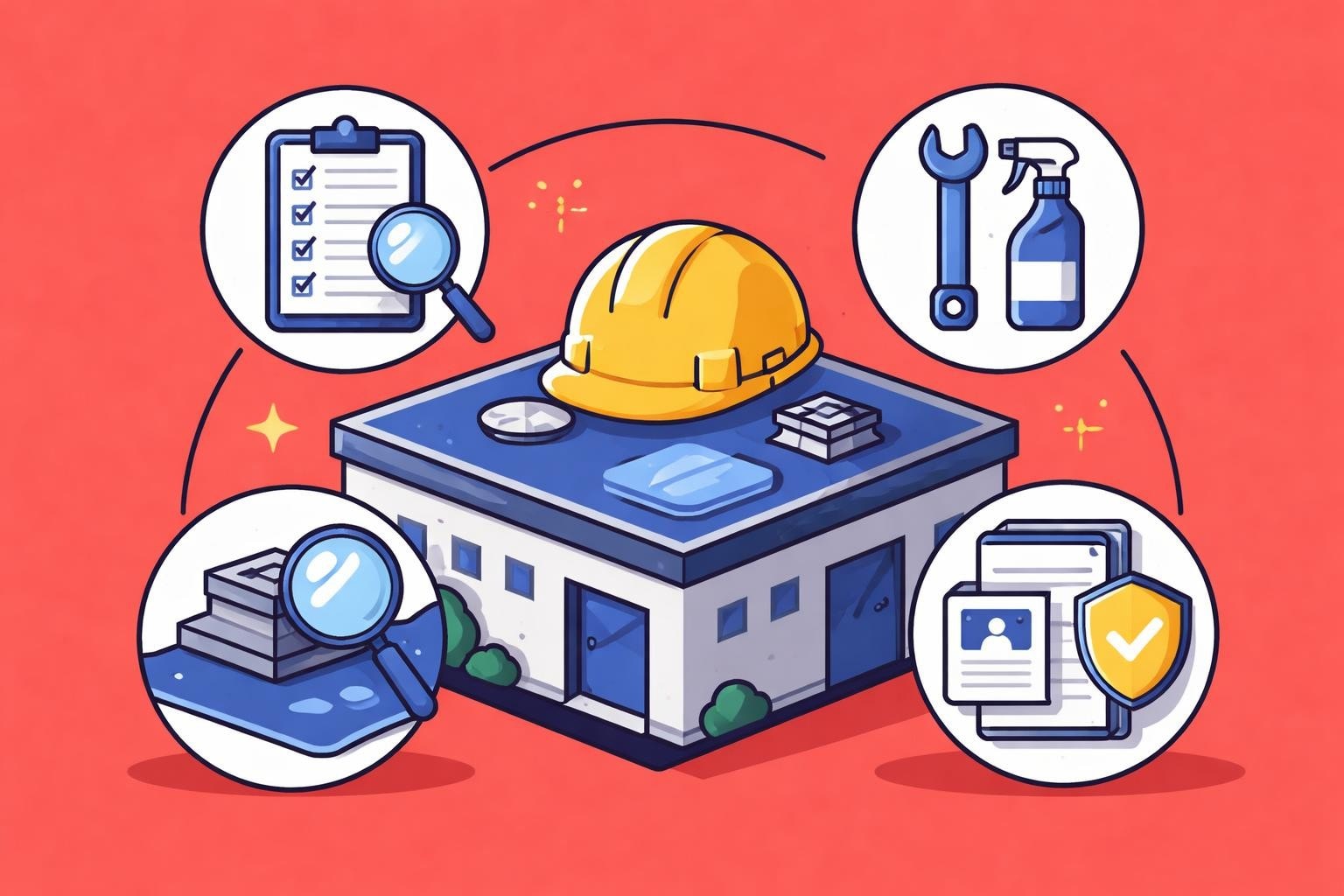
Commercial roofing maintenance encompasses systematic inspections, preventive repairs, and documentation that together form a comprehensive protection strategy. Unlike residential roofs, commercial systems cover larger square footage and often incorporate complex drainage systems, HVAC equipment, and specialized membrane materials requiring professional attention.
The National Roofing Contractors Association (NRCA) establishes industry standards for maintenance protocols that protect warranty coverage and extend system longevity. Modified bitumen systems, commonly installed on commercial properties throughout Joliet, demand specific maintenance approaches that differ significantly from residential applications.
Key maintenance components include:
- Scheduled biannual inspections during spring and fall
- Post-storm damage assessments within 72 hours
- Drainage system cleaning and verification
- Membrane integrity checks and minor repairs
- Documentation for warranty compliance
Why Preventive Maintenance Matters
Preventive maintenance programs cost significantly less than reactive repairs. Building owners who invest in regular inspections typically spend 15-20% of what emergency repairs demand, while simultaneously extending roof lifespan by 5-10 years.
Water infiltration represents the primary threat to commercial roofing systems. Small breaches in the membrane allow moisture to saturate insulation, compromise structural decking, and damage interior finishes. Early detection through routine maintenance prevents these minor issues from escalating into catastrophic failures requiring complete system replacement.
Establishing an Effective Inspection Schedule
Commercial roofing maintenance begins with consistent inspection timing. Regular commercial roof inspections should occur twice annually, ideally during moderate weather conditions that allow thorough evaluation without extreme temperature interference.
Spring inspections assess winter damage from ice accumulation, thermal cycling, and wind events. Fall evaluations prepare systems for upcoming freeze-thaw cycles and verify drainage capacity before heavy precipitation seasons. This biannual approach aligns with best practices recommended by facility management professionals.
| Inspection Timing | Primary Focus Areas | Critical Checks |
|---|---|---|
| Spring (April-May) | Winter damage assessment | Ice dam areas, membrane splits, fastener backup |
| Fall (September-October) | Weather preparation | Drainage flow, flashing integrity, sealant condition |
| Post-Storm | Event-specific damage | Punctures, lifted sections, debris accumulation |
| Quarterly | High-traffic areas | Equipment pad integrity, penetration seals, expansion joints |
Weather-Related Inspection Protocols
Severe weather events demand immediate roof assessment. High winds, hail storms, and heavy snow loads stress commercial roofing systems beyond normal operating parameters. Scheduling inspections within three days of significant weather events identifies damage before water infiltration causes secondary problems.
Temperature extremes also warrant attention. Commercial roofing maintenance during summer months focuses on thermal expansion issues, while winter inspections target ice dam formation and snow load distribution. The summer maintenance checklist provides seasonal guidance applicable to commercial applications.
Critical Areas Requiring Regular Attention
Commercial roofs contain numerous vulnerable points where problems commonly develop. Understanding these critical areas allows property managers to direct maintenance resources effectively.
Drainage Systems and Scuppers
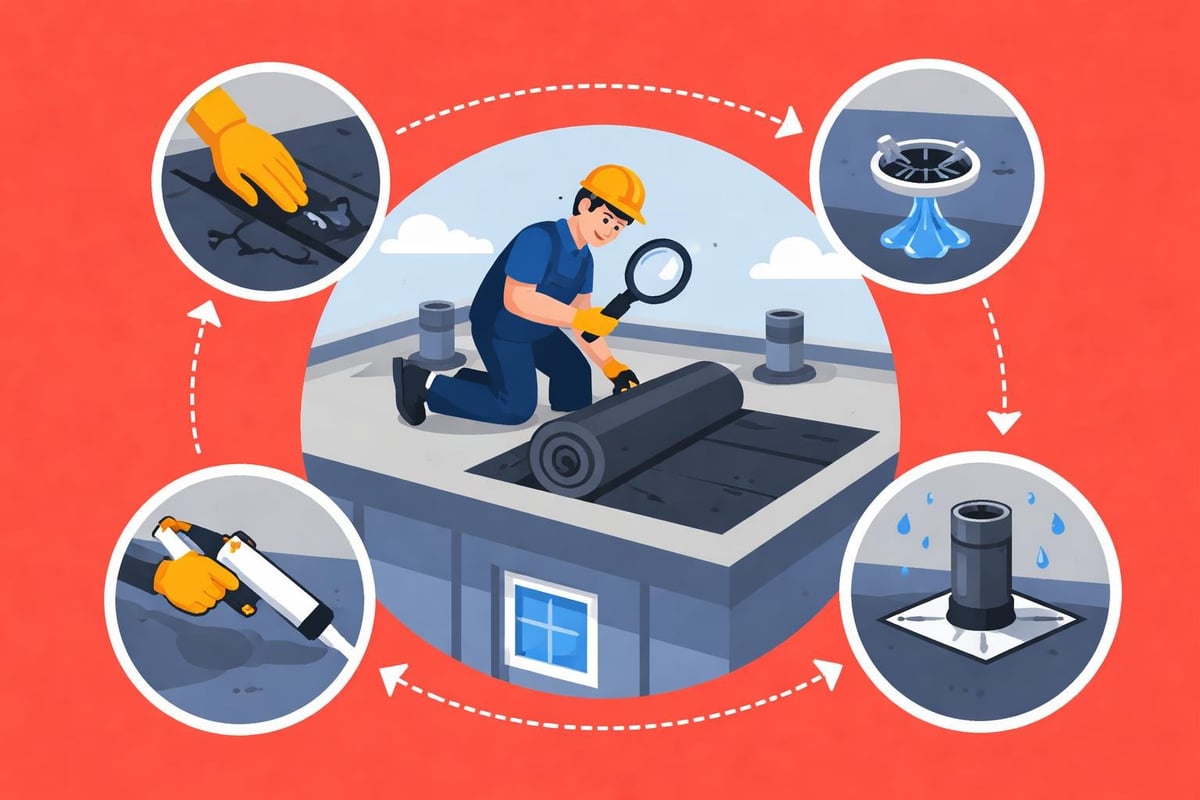
Proper water evacuation prevents standing water that accelerates membrane deterioration. Gutters, downspouts, drains, and scuppers require quarterly cleaning to maintain flow capacity. Debris accumulation blocks drainage paths, creating ponding conditions that stress roofing materials and breach waterproofing layers.
Drainage maintenance tasks include:
- Removing leaves, granules, and debris from drain basins
- Verifying downspout connections and flow paths
- Testing scupper functionality and sizing adequacy
- Confirming proper roof slope toward drainage points
- Clearing overflow drains and secondary drainage routes
Membrane and Flashing Integrity
Modified bitumen membranes require visual inspection for cracks, blisters, splits, and surface erosion. Flashing around penetrations, parapet walls, and equipment represents the most common failure point in commercial roofing systems. Sealants deteriorate under UV exposure and thermal cycling, requiring periodic replacement before leaks develop.
Professional contractors identify subtle membrane distress signals invisible to untrained observers. Alligatoring, granule loss, and thermal shock damage indicate approaching end-of-life conditions requiring proactive intervention.
Implementing Preventive Maintenance Protocols
Successful commercial roofing maintenance requires documented procedures that ensure consistent execution regardless of personnel changes. Written protocols establish quality standards and create accountability for maintenance completion.
Documentation and Record Keeping
Comprehensive maintenance records prove invaluable during warranty claims, property sales, and litigation. Photograph roof conditions during each inspection, noting specific areas of concern with GPS coordinates or grid references. Digital documentation systems allow comparison across inspection cycles, revealing progressive deterioration patterns.
Maintenance logs should capture:
- Inspection dates and weather conditions
- Personnel conducting evaluations
- Specific findings with photographic evidence
- Repairs completed with material specifications
- Future recommendations and priority rankings
Minor Repair Guidelines
Addressing small problems immediately prevents expensive future repairs. Preventive maintenance strategies emphasize prompt attention to minor defects before moisture infiltration occurs.
Property managers can authorize immediate repairs for issues like loose flashing, failed sealant beads, and minor membrane punctures. Establishing spending thresholds for emergency repairs balances budget control with timely problem resolution.
Protecting Membrane Surfaces from Damage
Commercial roofing maintenance extends beyond inspections to include protective measures that prevent damage. Membrane surfaces, particularly modified bitumen systems, suffer from improper use and exposure to harmful substances.
Limiting Roof Traffic
Unnecessary foot traffic accelerates membrane wear and increases puncture risk. Designate specific walkways using protective pads or pavers that distribute weight and shield underlying materials. HVAC technicians, window washers, and maintenance personnel should access rooftops only when necessary, using established paths.
The essential commercial roof maintenance tips emphasize minimizing surface traffic to extend system lifespan. Great Roofing recommends coordinating service visits to reduce separate roof access events.
Petroleum Product Restrictions
Modified bitumen membranes degrade rapidly when exposed to petroleum-based substances. HVAC condensate containing compressor oil, equipment lubricants, and certain cleaning solvents dissolve roofing materials, creating soft spots and eventual membrane failure.
Establish clear protocols prohibiting petroleum products on roof surfaces. Equipment maintenance should occur on protective barriers, and any spills require immediate cleanup with membrane-safe cleaning agents. Maintaining commercial roof health depends heavily on preventing chemical exposure.
Seasonal Maintenance Considerations
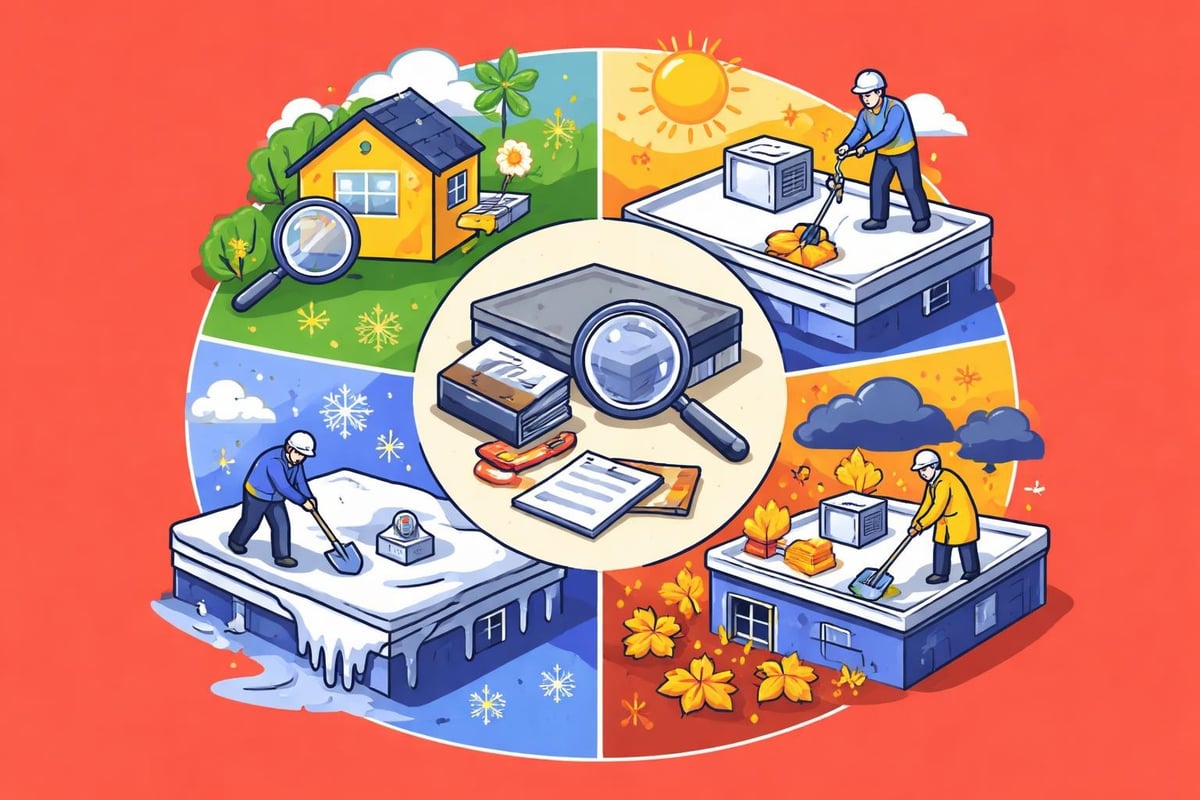
Commercial roofing maintenance requirements vary throughout the year, with specific seasonal threats demanding focused attention.
Winter Preparation and Ice Management
Fall maintenance prepares roofs for winter challenges. Verify drainage systems function properly to prevent ice dam formation. Clear debris that might trap water and freeze, expanding to damage membranes. Inspect insulation adequacy to minimize heat loss that contributes to ice accumulation.
Snow removal protocols should emphasize protective techniques. Metal shovels and aggressive scraping damage membrane surfaces. Professional snow removal services understand proper equipment selection and removal depth limits that protect underlying roofing materials.
Summer Heat Management
Thermal expansion during summer months stresses membrane seams and flashing attachments. High temperatures also accelerate UV degradation and increase brittleness in aging systems. Summer inspections focus on expansion joint functionality and sealant condition around penetrations.
Coating systems benefit commercial roofs by reflecting solar radiation and reducing surface temperatures. Reflective coatings extend membrane life while reducing cooling costs through decreased heat transfer into building interiors.
Professional Inspection vs. In-House Monitoring
Balancing professional inspections with staff monitoring optimizes maintenance effectiveness while controlling costs. Facility personnel can conduct monthly visual surveys identifying obvious problems, while professional contractors perform detailed biannual evaluations.
What Professionals Identify
Licensed roofing contractors bring specialized knowledge and diagnostic equipment unavailable to building staff. Infrared thermography detects hidden moisture, core samples verify insulation condition, and load calculations assess structural adequacy for equipment additions.
Professional inspectors recognize subtle warning signs indicating developing problems. Membrane discoloration patterns, fastener backup trends, and drainage flow changes signal issues requiring expert interpretation. The detailed maintenance and inspection checklist outlines comprehensive evaluation criteria.
Staff Responsibilities
Property managers and maintenance personnel should monitor roof conditions monthly, particularly following severe weather. Simple visual checks identify obvious damage, debris accumulation, and drainage problems requiring immediate attention.
Training staff to recognize concerning conditions improves response time. Photographs documenting changes between professional inspections provide contractors with valuable trend information during subsequent evaluations.
Understanding Warranty Requirements
Commercial roofing warranties typically mandate specific maintenance protocols as coverage conditions. Neglecting required inspections or improper repairs void warranty protection, leaving property owners financially responsible for premature system failures.
Documentation for Warranty Compliance
Manufacturers require proof of regular maintenance to honor warranty claims. Comprehensive records demonstrating consistent inspections, prompt repairs, and appropriate maintenance procedures satisfy these requirements. Missing documentation, even with excellent actual maintenance, can result in claim denials.
Warranty terms specify acceptable repair materials and qualified installers. Using non-approved products or unauthorized contractors terminates coverage. Great Roofing maintains manufacturer certifications ensuring repairs comply with warranty specifications for commercial roofing projects throughout Joliet.
Transferable Warranties
Some commercial roofing warranties transfer to new property owners, enhancing building value and marketability. Maintaining complete documentation and warranty compliance preserves this benefit. Prospective buyers verify maintenance history before completing transactions, making comprehensive records valuable beyond their protective function.
Budgeting for Commercial Roofing Maintenance
Strategic budget allocation for commercial roofing maintenance balances immediate costs against long-term value preservation. Industry standards recommend allocating 1-2% of replacement cost annually for maintenance and repairs.
| Roof Size | Annual Maintenance Budget | Typical Services Included |
|---|---|---|
| 10,000 sq ft | $2,000 – $4,000 | Two inspections, minor repairs, cleaning |
| 25,000 sq ft | $5,000 – $10,000 | Inspections, repairs, coating touch-ups, drainage maintenance |
| 50,000 sq ft | $10,000 – $20,000 | Comprehensive program with quarterly monitoring |
Cost Avoidance Through Prevention
Preventive maintenance delivers measurable return on investment. Emergency leak repairs cost 3-5 times more than scheduled maintenance addressing the same issues proactively. Interior damage from water infiltration multiplies repair expenses exponentially, affecting finishes, inventory, and business operations.
Building owners who defer maintenance face shortened roof lifespan and premature replacement costs. A properly maintained modified bitumen system serves 25-30 years, while neglected installations fail within 15-20 years. The financial impact of extending service life by even five years significantly outweighs maintenance program costs.
Selecting Qualified Maintenance Providers
Commercial roofing maintenance quality depends entirely on contractor expertise and reliability. Selecting qualified providers protects your investment and ensures warranty compliance.
Contractor Qualifications
Verify contractor licensing, insurance coverage, and manufacturer certifications before engaging services. Established companies with local presence provide continuity and accountability unavailable from transient operators. Family-owned businesses like Great Roofing develop long-term client relationships supporting consistent service quality.
Experience with specific roofing systems proves essential. Modified bitumen requires different expertise than single-ply membranes or built-up roofing. Contractors familiar with your system type identify problems accurately and implement appropriate solutions.
Service Agreement Benefits
Formalized maintenance agreements establish clear expectations, service schedules, and pricing structures. Annual contracts often provide cost advantages compared to ad-hoc service calls while guaranteeing priority response during emergencies.
Comprehensive agreements should specify:
- Number and timing of scheduled inspections
- Included services and exclusions
- Emergency response timeframes
- Repair approval thresholds
- Documentation and reporting requirements
Technology Integration in Maintenance Programs
Modern commercial roofing maintenance incorporates technology improving inspection accuracy and documentation quality. Digital tools enhance program effectiveness while reducing long-term costs.
Drone Inspections
Unmanned aerial vehicles safely document roof conditions without personnel accessing surfaces. High-resolution imagery identifies problems invisible from ground level while eliminating traffic-related damage risks. Drone technology proves particularly valuable for large-footprint buildings and facilities with access challenges.
Thermal imaging drones detect moisture intrusion and insulation deficiencies without invasive testing. This non-destructive evaluation method identifies problems early while they remain economically repairable.
Digital Asset Management
Cloud-based platforms centralize maintenance records, inspection reports, and warranty documentation. Automated reminders ensure scheduled inspections occur on time, while digital filing systems retrieve historical information instantly during warranty claims or property transactions.
Comparative analysis tools track condition changes across inspection cycles, revealing deterioration trends requiring proactive intervention. Data-driven maintenance decisions optimize budget allocation and prevent unexpected failures.
Common Commercial Roofing Problems
Understanding frequent commercial roofing issues helps property managers recognize developing problems and prioritize maintenance activities.
Ponding Water
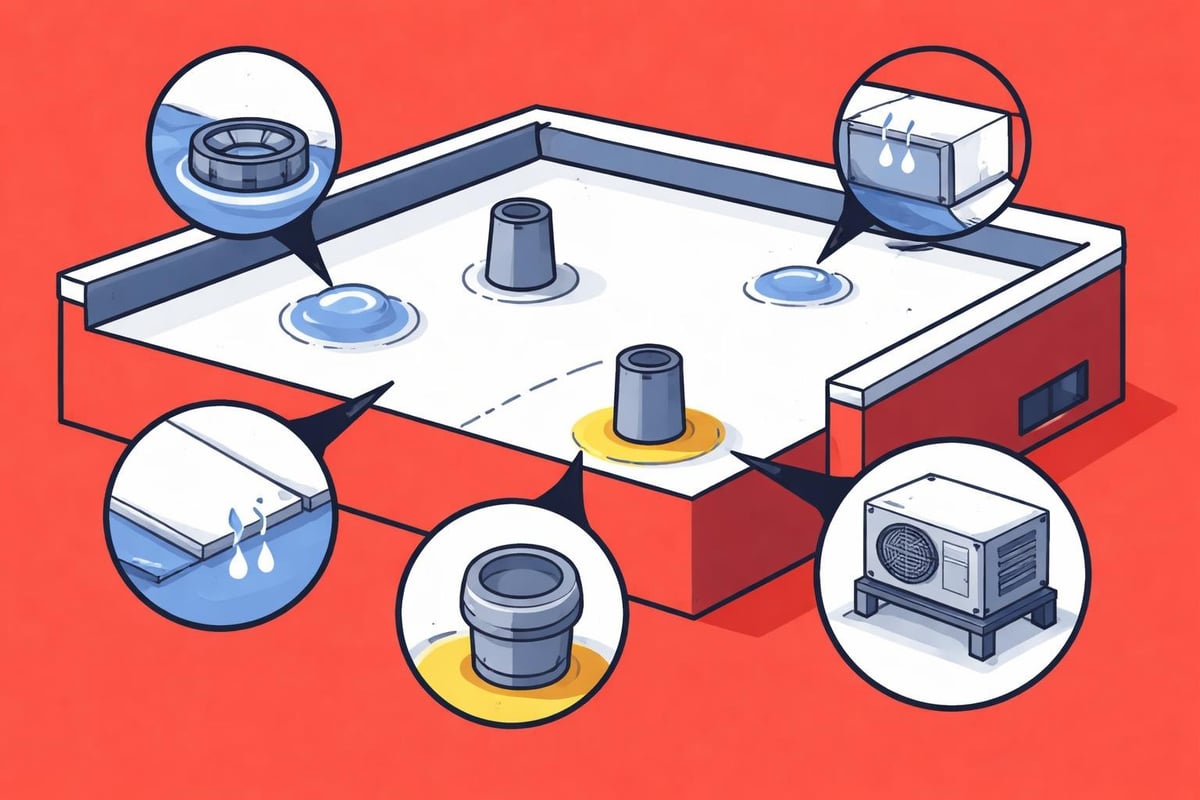
Standing water remaining 48 hours after precipitation indicates drainage inadequacy. Ponding accelerates membrane degradation, supports vegetation growth, and increases structural loading. Correcting drainage problems requires professional evaluation identifying root causes.
Solutions range from additional drains and improved slope to targeted insulation adjustments creating positive drainage. Addressing ponding quickly prevents progressive damage requiring expensive repairs.
Membrane Shrinkage
Modified bitumen and other roofing materials contract over time, pulling fasteners and creating stress at seams. Shrinkage particularly affects older systems and roofs with inadequate initial attachment. Regular inspections identify shrinkage problems before membrane tearing occurs.
Professional contractors address shrinkage through strategic fastener additions and stress-relief cuts preventing catastrophic failures. Early intervention maintains system integrity at minimal cost.
Equipment Damage
HVAC units, satellite dishes, and rooftop equipment create penetrations and concentrated loads challenging membrane integrity. Improper equipment installation or maintenance damages surrounding roofing materials. Curbs, pads, and flashings require regular inspection ensuring continued protection.
Coordination between roofing and mechanical contractors prevents damage during equipment service. Establishing protocols for rooftop work protects membranes while accommodating necessary building system maintenance.
Protecting your commercial roofing investment requires consistent attention, professional expertise, and strategic planning. Implementing a comprehensive maintenance program extends system lifespan, prevents costly emergency repairs, and maintains warranty coverage while protecting your building and business operations. Great Roofing brings decades of commercial roofing experience to Joliet area properties, offering professional maintenance programs tailored to modified bitumen systems and other commercial applications. Contact our family-owned team to develop a customized maintenance strategy that protects your investment and provides peace of mind.