

Asphalt shingles remain the most popular roofing material across the United States, covering approximately 80% of residential properties. While these shingles offer excellent protection under normal weather conditions, hailstorms pose a significant threat to their integrity and longevity. Understanding how to identify and address hail damage to asphalt shingles is essential for homeowners throughout the Joliet area and beyond, where severe weather events can occur with little warning. The damage caused by hail impacts ranges from subtle granule loss to severe fractures that compromise your roof's ability to protect your home, making early detection and professional assessment critical to preventing water intrusion and costly repairs.
Understanding How Hail Impacts Asphalt Shingles
Hailstones create unique damage patterns when they strike asphalt shingles, depending on several variables including ice density, wind speed, and impact angle. The damage mechanism differs fundamentally from other types of roof wear because hail creates localized trauma to the shingle structure.
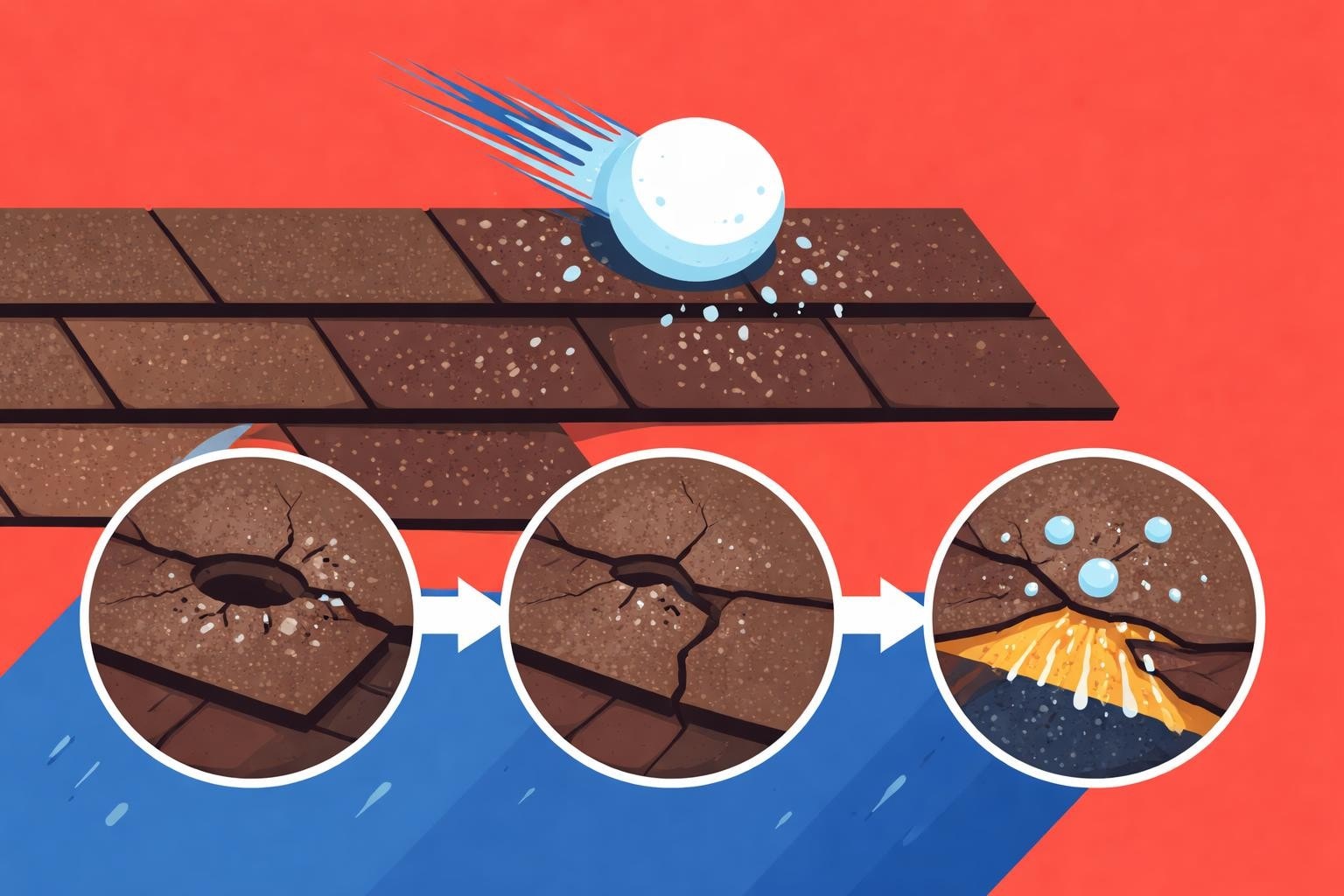
When hailstones strike asphalt shingles, they compress the protective granule layer into the underlying asphalt mat. This compression creates what industry professionals call "bruising," which may not be immediately visible to untrained observers. The impact force can fracture the fiberglass mat beneath the asphalt coating, weakening the shingle's structural integrity.
The Science Behind Impact Damage
According to the Insurance Institute for Business & Home Safety’s impact resistance test protocol, hail damage severity depends on multiple factors:
- Hailstone diameter: Stones one inch or larger typically cause visible damage
- Terminal velocity: Larger hailstones fall faster, creating greater impact force
- Shingle age and condition: Older, weathered shingles sustain damage more easily
- Temperature at impact: Cold shingles are more brittle and susceptible to cracking
- Underlying support: Properly installed decking provides better impact resistance
The most common size threshold for visible damage begins around 1.25 inches in diameter, though damage can occur with smaller hail under certain conditions. Research from Haag Global on hail damage characteristics demonstrates that even sub-severe hail events can accumulate damage over time, gradually reducing your roof's expected service life.

Identifying Visible Signs of Hail Damage
Recognizing hail damage to asphalt shingles requires systematic inspection and knowledge of what to look for. Unlike wind damage that typically affects edges and corners, hail damage appears as random impact points across the roof surface.
Primary indicators include:
- Granule displacement: Dark spots where protective granules have been knocked loose
- Shiny or glossy appearance: Exposed asphalt substrate reflecting light
- Soft spots: Areas that feel spongy when pressed (indicating mat fractures)
- Exposed fiberglass: Severe impacts that penetrate through the asphalt layer
- Dented or cracked shingles: Visible deformations in the shingle surface
Granule loss presents the most common visible sign. These protective ceramic granules shield the asphalt layer from UV radiation and weather exposure. When hail knocks them loose, the underlying asphalt becomes vulnerable to accelerated deterioration.
Secondary Damage Indicators
Beyond the shingles themselves, hail often leaves telltale signs on other roof components. Metal flashing, vents, and gutters frequently show denting that confirms hail activity. Downspouts may accumulate excessive granules washed from damaged shingles.
| Roof Component | Hail Damage Sign | Inspection Priority |
|---|---|---|
| Shingles | Granule loss, soft spots | High |
| Metal flashing | Visible dents | High |
| Ridge caps | Cracking, splitting | High |
| Gutters | Denting, granule buildup | Medium |
| Siding | Impact marks, cracks | Medium |
| Window screens | Tears, punctures | Low |
For homeowners in the Joliet region, where severe thunderstorms frequently produce hail, knowing when to seek professional inspection can prevent minor damage from escalating into major problems. Great Roofing's expertise in storm damage repair helps property owners navigate the assessment process effectively.
The Long-Term Consequences of Untreated Hail Damage
Many homeowners underestimate the progressive nature of hail damage to asphalt shingles. What appears as cosmetic bruising immediately after a storm can evolve into serious structural concerns over subsequent months and years.
Once the protective granule layer sustains damage, UV radiation attacks the exposed asphalt binder. This accelerates oxidation, causing the shingle to become brittle and prone to cracking. Water can penetrate through compromised areas, especially where the fiberglass mat has fractured.
The thermal cycling that occurs during Illinois seasons exacerbates these issues. Summer heat causes expansion while winter cold creates contraction, working damaged areas like a stress fracture. What began as minor granule loss can progress to complete shingle failure within 2-3 years.
Cumulative Impact from Multiple Storms
Recent research published in Frontiers in Materials regarding sub-severe hail impacts reveals that repeated exposure to smaller hailstones creates cumulative damage. Even when individual storms don't produce "severe" hail by insurance standards, the combined effect measurably reduces shingle lifespan.
For properties throughout the Midwest, this cumulative damage pattern makes regular professional inspections essential. Companies like Texcore Construction in Texas and local contractors understand how regional weather patterns influence damage progression and replacement timing.

Professional Inspection and Documentation
While homeowners can perform preliminary roof inspections from ground level, comprehensive hail damage assessment requires professional expertise. Licensed roofing contractors possess the training to identify subtle damage indicators that untrained observers might miss.
What Professional Inspectors Evaluate
Thorough hail damage inspections follow established protocols. The National Roofing Contractors Association’s assessment guidelines outline systematic approaches that ensure accurate documentation:
- Random sampling: Inspecting multiple roof sections, not just accessible areas
- Slope analysis: Different pitches receive varying impact angles
- Directional patterns: Hail typically damages slopes facing the storm direction
- Age assessment: Distinguishing fresh damage from pre-existing wear
- Functional testing: Checking for mat fractures using measured pressure
Professional documentation proves critical for insurance claims. Detailed reports should include photographs, measurements, impact counts per test square, and written descriptions of damage characteristics. This documentation supports your claim and helps adjusters understand the full extent of damage.
When Great Roofing conducts roof certifications, our inspectors apply these industry-standard protocols to provide accurate assessments. This thorough approach ensures nothing gets overlooked during the evaluation process.
Insurance Claims and Coverage Considerations
Understanding your homeowner's insurance policy becomes crucial after discovering hail damage to asphalt shingles. Most policies cover hail damage under the dwelling coverage section, though specific terms vary significantly between providers and policies.
Key insurance considerations:
- Review your policy's coverage limits and deductibles
- Understand depreciation clauses (actual cash value vs. replacement cost)
- Note any wind/hail exclusions or limitations
- Check for matching requirements on visible roof slopes
- Be aware of claim filing deadlines after storm events
Illinois typically experiences peak hail season from April through August, with severe storms capable of producing golf ball-sized hail or larger. After significant storm events, document the date and contact your insurance provider promptly to report potential damage.
Navigating the Claims Process
Insurance adjusters evaluate hail damage using specific criteria to determine whether damage warrants repair or full replacement. They examine shingle surfaces for bruising, test for mat fractures, and count impacts within designated test squares.
The Alpine Intel guide to identifying hail damage provides valuable insights into what adjusters look for during inspections. Having a professional contractor present during adjuster visits ensures accurate damage identification and proper scope documentation.
Great Roofing assists homeowners throughout the storm damage insurance claim process, providing detailed documentation that supports fair claim settlements. This advocacy helps ensure insurance companies recognize all legitimate damage and provide appropriate compensation.
Repair Versus Replacement Decision Factors
Determining whether hail damage to asphalt shingles requires spot repairs or complete replacement depends on several technical and economic factors. This decision significantly impacts both immediate costs and long-term roof performance.
When Repairs Suffice
Limited hail damage affecting only small, isolated sections may qualify for repair rather than full replacement. Viable repair scenarios include:
- Damage confined to less than 25% of total roof area
- Recent roof installation (less than 5 years old)
- Matching replacement shingles readily available
- Damage limited to a single slope not visible from ground level
- No underlying decking or structural damage
However, partial repairs present challenges. Color matching proves difficult due to weathering differences between old and new shingles. Warranty coverage may become complicated when mixing materials from different production batches or manufacturers.
Full Replacement Indicators
| Factor | Repair Threshold | Replacement Threshold |
|---|---|---|
| Damage extent | Less than 25% | Greater than 40% |
| Shingle age | Less than 5 years | Over 10 years |
| Impact density | Fewer than 8 per 100 sq ft | More than 15 per 100 sq ft |
| Multiple slopes | Single slope only | Two or more slopes |
| Granule loss | Minimal, localized | Widespread, significant |
The National Roofing Contractors Association’s research on overlay impact resistance highlights important considerations when evaluating repair options. Their findings emphasize that proper assessment prevents inadequate repairs that fail to address underlying vulnerabilities.

For asphalt shingle roofing systems in the Joliet area, Great Roofing evaluates all these factors to provide honest recommendations that prioritize your home's protection and your financial interests.
Impact-Resistant Shingle Options for Replacement
When hail damage necessitates roof replacement, homeowners should consider upgrading to impact-resistant asphalt shingles. These specialized products incorporate design modifications that improve hail resistance without sacrificing aesthetic appeal or affordability.
Impact-resistant shingles earn Class 4 ratings under UL 2218 testing protocols, the highest impact resistance classification. They feature reinforced construction including:
- Modified asphalt formulations: Specialized polymers increase flexibility
- Heavier mat construction: Thicker fiberglass reinforcement resists fracturing
- Enhanced adhesive strips: Stronger bonding prevents wind uplift after impacts
- Strategic lamination: Multiple layers distribute impact forces
Research from the Insurance Institute for Business & Home Safety on relative impact resistance demonstrates that Class 4 shingles withstand significantly larger hailstones before sustaining functional damage. Some insurance companies offer premium discounts ranging from 10-30% for homes with impact-resistant roofing.
Cost-Benefit Analysis
While impact-resistant shingles cost approximately 10-20% more than standard three-tab or architectural shingles, the investment offers measurable benefits:
- Extended warranty coverage (often 50 years or lifetime)
- Insurance premium reductions that offset higher material costs
- Greater peace of mind during severe weather events
- Potentially higher home resale value
- Reduced likelihood of future replacement needs
For properties in hail-prone regions like Northern Illinois, this upgrade makes financial sense. The initial investment typically recovers within 7-10 years through insurance savings alone, while providing superior protection throughout the shingle's service life.
Preventing Misidentification of Damage
Not all roof damage results from hail. Distinguishing legitimate hail damage to asphalt shingles from other causes prevents unnecessary claims and ensures appropriate repair approaches. Several conditions mimic hail damage characteristics, creating potential confusion during inspections.
Common sources of misidentification:
- Mechanical damage: Foot traffic, equipment impacts, or debris strikes
- Manufacturing defects: Blistering, cracking, or delamination from production issues
- Normal weathering: UV degradation and thermal cycling create surface changes
- Installation errors: Improper nailing, inadequate ventilation, or incorrect product application
- Intentional damage: Unscrupulous contractors creating artificial damage to generate work
The CLM Magazine article on recognizing intentional damage provides valuable guidance for distinguishing natural hail impacts from artificially created damage. Legitimate hail damage shows random distribution patterns, while intentional damage often displays regular spacing or appears exclusively in easily accessible roof areas.
Working with Reputable Contractors
Selecting a trustworthy roofing contractor protects homeowners from fraud while ensuring accurate damage assessment. Red flags include contractors who:
- Appear immediately after storms offering "free inspections"
- Pressure homeowners to file claims before professional assessment
- Offer to pay insurance deductibles or provide rebates
- Lack proper licensing, insurance, or local references
- Provide verbal-only estimates without detailed written documentation
Great Roofing maintains transparent practices throughout the inspection and roof repair process, ensuring honest assessments that serve homeowner interests rather than generating unnecessary work.
Regional Considerations for Illinois Homeowners
The Joliet area and surrounding communities face unique weather patterns that influence hail damage frequency and severity. Understanding these regional factors helps homeowners maintain appropriate vigilance and preparation strategies.
Illinois experiences approximately 10-15 hail events annually, with peak activity during late spring and early summer months. The state's position within "Tornado Alley's" eastern extension creates favorable conditions for severe thunderstorm development, often producing large hail alongside damaging winds.
Local Building Code Requirements
Illinois building codes incorporate specific provisions for roof system installation that affect hail resistance. Proper underlayment installation, adequate ventilation, and correct fastener placement all contribute to overall roof system resilience during severe weather events.
Communities throughout Will County may have additional ordinances governing roof replacement permits, debris disposal, and contractor licensing. Working with established local contractors like Great Roofing, who serve Bolingbrook, Plainfield, and New Lenox, ensures compliance with all applicable regulations.
Maintenance Strategies to Minimize Damage
While no maintenance routine can completely prevent hail damage to asphalt shingles, proper roof care maximizes impact resistance and extends overall service life. Proactive maintenance identifies minor issues before they compromise roof integrity.
Essential maintenance tasks include:
- Annual professional inspections: Scheduled assessments identify emerging problems
- Gutter cleaning: Prevents water backup that accelerates shingle deterioration
- Debris removal: Eliminates branches and leaves that trap moisture
- Attic ventilation checks: Ensures proper airflow prevents premature aging
- Flashing maintenance: Keeps vulnerable transition areas properly sealed
Scheduling inspections during spring provides optimal timing. This allows identification and correction of winter damage before summer storm season arrives, while weather conditions remain favorable for repair work.
Documentation for Future Reference
Maintaining comprehensive roof documentation creates valuable baseline information. Photograph your roof periodically under good lighting conditions, capturing all slopes and special features. Store copies of installation records, warranty documents, and previous inspection reports in accessible locations.
This documentation proves invaluable after storm events, helping insurance adjusters distinguish new damage from pre-existing conditions. It also provides contractors with important information about your roof's construction, material specifications, and maintenance history.
Understanding how to identify, assess, and address hail damage to asphalt shingles protects your home and your financial investment. Regular professional inspections, prompt response to storm events, and working with qualified contractors ensure your roof maintains optimal performance throughout its service life. Great Roofing brings decades of family-owned expertise to every inspection and repair project throughout the Joliet area, combining thorough assessments with honest recommendations that prioritize your home's protection and your peace of mind.