


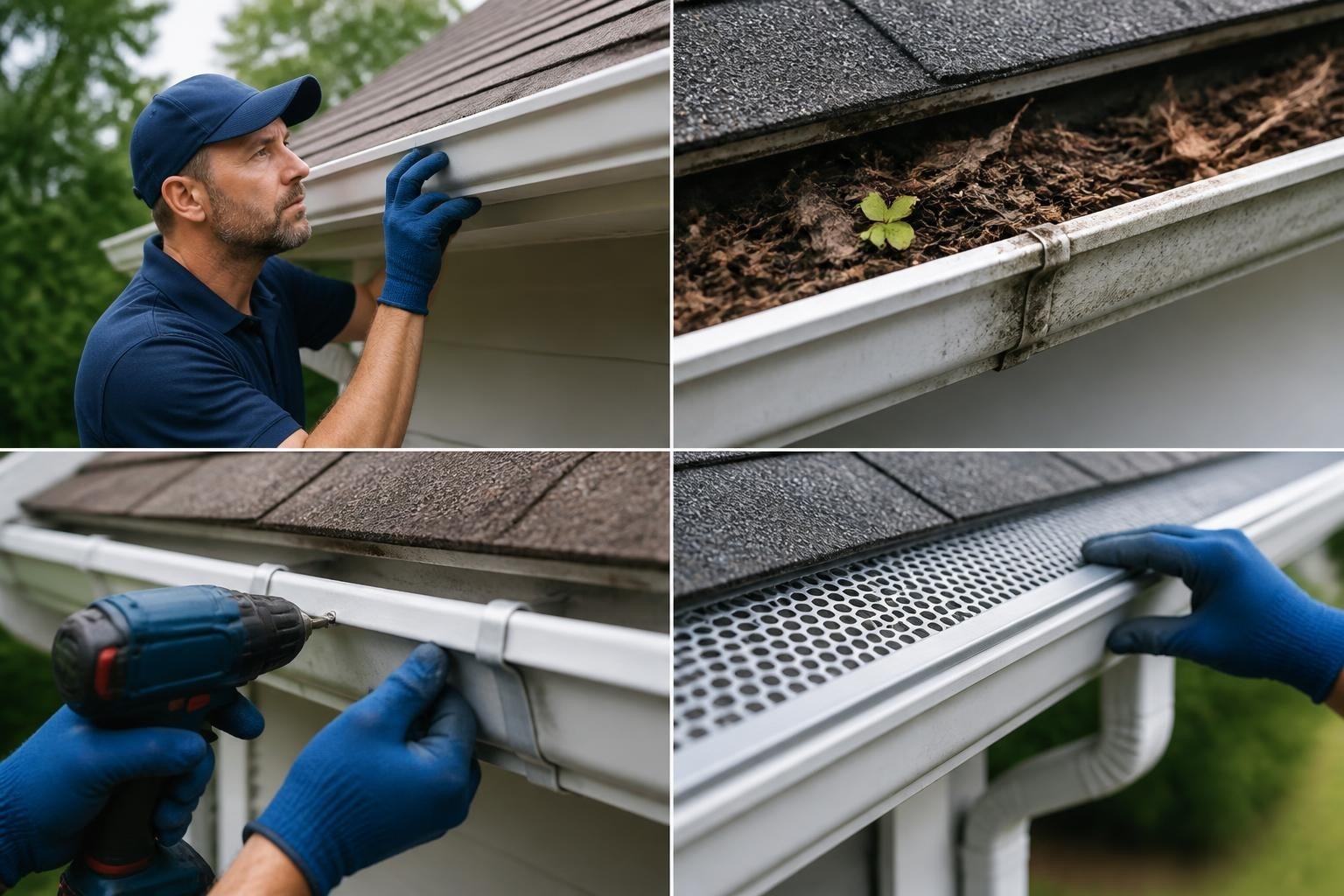
Your home's gutter system plays a critical role in protecting your property from water damage, foundation issues, and structural deterioration. When gutters fail to function properly, even minor problems can escalate into costly repairs affecting your roof, siding, and landscaping. Understanding how to identify damage early and address it appropriately ensures your home remains protected throughout the year. Whether you're dealing with leaks, sagging sections, or detached components, knowing the right approach to repair gutters can save you significant time and money while extending the lifespan of your drainage system.
Understanding Common Gutter Problems
Gutters face constant exposure to weather, debris, and the natural settling of your home's structure. The most frequent issues homeowners encounter include sagging or pulling away from the fascia board, which typically results from loose hangers or deteriorating wood underneath. This problem becomes particularly noticeable after heavy rainstorms when water pools in the affected sections rather than flowing toward downspouts.
Leaks and holes represent another prevalent concern that can develop at seams, joints, or along the gutter body itself. Small punctures may start from rust penetration, while seam separations occur when sealant deteriorates over time. These leaks might seem minor initially, but they direct water behind your gutters and against your home's exterior, creating conditions for rot and mold growth.
Blockages and Overflow Issues
Clogged gutters rank among the most common problems requiring attention. When leaves, twigs, shingle granules, and other debris accumulate, water cannot flow freely through the system. This blockage causes overflow that defeats the entire purpose of your gutter installation.
- Water spilling over gutter edges during rainfall
- Visible plant growth inside gutter channels
- Staining on siding below gutter lines
- Ice dams forming along roof edges in winter
- Basement flooding or foundation pooling
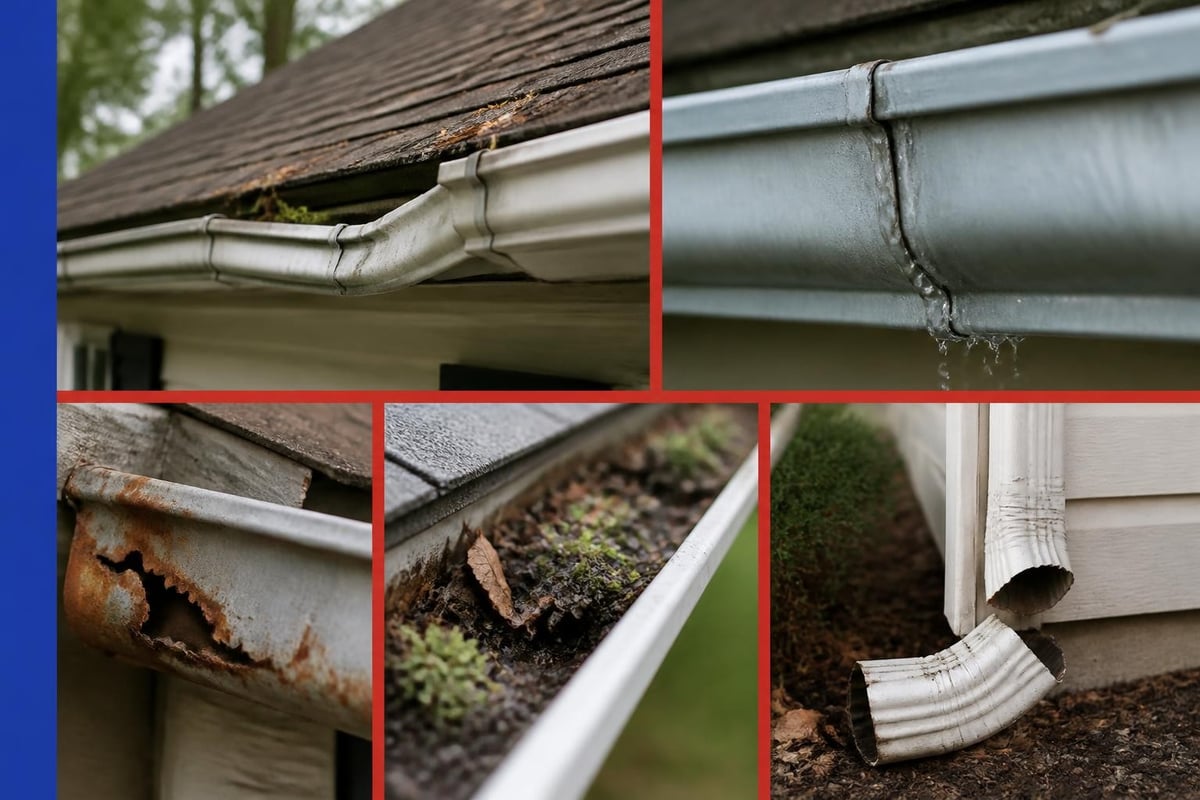
The accumulation pattern varies by property location and surrounding vegetation. Homes near oak trees experience heavier fall debris loads, while pine needles create particularly stubborn blockages that compress into dense mats. According to expert cleaning advice, regular maintenance prevents most overflow situations.
Assessment and Inspection Techniques
Before you repair gutters, conducting a thorough inspection helps identify all problem areas simultaneously. This systematic approach prevents the frustration of making one repair only to discover additional issues afterward. Start your assessment from ground level using binoculars to scan for obvious sagging, separation, or visible holes.
Visual inspection from a ladder provides closer examination capabilities. Position your ladder on stable ground with someone present for safety. Check each gutter section for standing water when it hasn't rained recently, which indicates improper slope. Examine all joints, endcaps, and downspout connections for gaps or separation.
Testing Water Flow
Running water through your gutter system reveals problems that visual inspection might miss. Use a garden hose to simulate rainfall, starting at the end farthest from the downspout. Watch carefully for:
- Water escaping through seams or holes
- Slow drainage suggesting partial blockages
- Overflow at corners or joints
- Pooling in specific sections
- Leaks behind the gutter where it meets fascia
This water test also confirms whether your downspouts flow freely or contain internal obstructions. For comprehensive property protection, consider scheduling a professional roof inspection alongside your gutter assessment, as these systems work together.
DIY Repair Methods
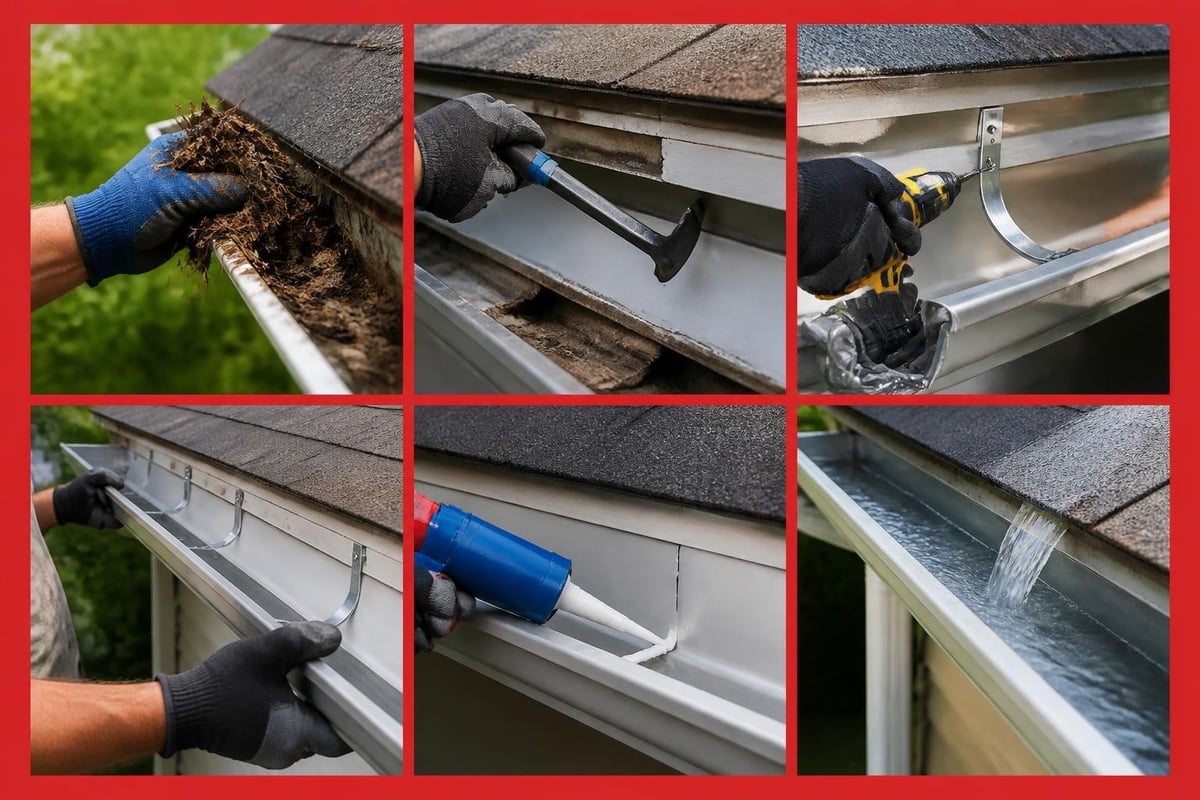
Many gutter repairs fall within the capabilities of homeowners with basic tools and comfort working on ladders. Simple fixes address the majority of common problems without requiring professional assistance. Resealing joints and seams stands as one of the most frequent DIY tasks.
Clean the affected area thoroughly, removing all old sealant, rust, and debris. Allow the surface to dry completely before applying new gutter sealant or silicone caulk rated for exterior use. Apply sealant generously, ensuring complete coverage of the joint interior and exterior for maximum protection.
Reattaching Sagging Sections
When gutters pull away from the fascia board, the issue typically stems from failed hangers or spikes. To repair gutters experiencing this problem, first determine whether the fascia wood remains solid. Rotted fascia requires replacement before reattaching gutters securely.
Hidden hanger installation provides superior holding power compared to old-style spikes. Space hangers every 24 to 30 inches along the gutter length, ensuring proper slope toward downspouts. Each hanger should penetrate through the fascia board into solid rafter tails for maximum strength.
| Repair Type | Difficulty Level | Estimated Time | Tools Required |
|---|---|---|---|
| Seal small leaks | Easy | 30-45 minutes | Sealant, wire brush, putty knife |
| Replace hangers | Moderate | 2-3 hours | Drill, hangers, screws, level |
| Patch holes | Moderate | 1-2 hours | Metal patch, sealant, tin snips, rivet gun |
| Realign slope | Moderate | 3-4 hours | Chalk line, level, hangers, drill |
Professional Repair Considerations
While DIY solutions work for straightforward problems, certain situations demand professional expertise. Extensive damage, structural concerns, or repairs requiring specialized equipment exceed typical homeowner capabilities. This Old House provides guidance on when professional intervention becomes necessary.
Widespread rust or corrosion suggests your gutter system approaches the end of its serviceable life. Patching multiple holes provides only temporary relief when oxidation has compromised the metal integrity. Professional contractors assess whether spot repairs suffice or complete replacement makes better economic sense.
Height and Safety Factors
Multi-story homes or properties with steep roof pitches present safety challenges that justify professional service. Working at heights requires proper equipment, training, and insurance protection. Contractors bring appropriate ladders, staging, and fall protection gear to access difficult areas safely.
Properties in the Joliet area benefit from professional roofing and guttering services that address both systems comprehensively. This integrated approach ensures compatibility between your roof drainage and gutter capacity.
Cost Analysis for Gutter Repairs
Understanding repair costs helps homeowners budget appropriately and make informed decisions about DIY versus professional service. Minor repairs like resealing joints or replacing a few hangers typically cost between $75 and $200 when hiring professionals. This price includes labor, materials, and the expertise to diagnose related issues.
Moderate repairs involving section replacement, extensive rehanging, or downspout realignment generally range from $200 to $600. Geographic location, material type, and accessibility affect these estimates significantly. The detailed cost breakdown from industry experts provides additional context.
Repair Versus Replacement Economics
Deciding whether to repair gutters or replace them entirely requires evaluating several factors. Calculate the percentage of your gutter system requiring attention. When repairs exceed 50% of the total length, replacement often delivers better long-term value.
- Age of existing gutters (typical lifespan 20-25 years for aluminum)
- Cumulative repair costs versus replacement investment
- Condition of fascia boards and roof edge
- Upgrading to larger capacity or seamless gutters
- Matching existing sections versus uniform new installation
Material choices impact both repair costs and longevity. Aluminum gutters dominate residential applications due to their rust resistance and moderate pricing. Copper gutters command premium prices but offer exceptional durability and distinctive appearance. Steel gutters provide strength but require vigilant maintenance against corrosion.
Preventive Maintenance Strategies
Regular maintenance dramatically reduces the frequency and severity of repairs needed over your gutter system's lifespan. Seasonal cleaning forms the foundation of effective prevention, with most homes requiring attention twice annually. Schedule cleanings in late spring after tree flowering and late fall when leaves have dropped.
Remove all debris by hand or with a gutter scoop, working from downspouts backward toward closed ends. Flush remaining particles with a garden hose while checking for proper flow. This cleaning process also serves as a regular inspection opportunity to catch small problems before they escalate.
Gutter Guards and Protection Systems
Installing gutter guards reduces maintenance requirements and extends the intervals between necessary cleanings. Various designs exist, from simple mesh screens to sophisticated reverse-curve systems. Evaluate options based on your local debris types and budget considerations.
Mesh or screen guards block most leaves while allowing water entry. These affordable options install easily but may require occasional cleaning when small particles accumulate on the screen surface. More advanced systems use surface tension to direct water into gutters while debris falls away.
Following essential maintenance tips ensures your investment remains protected year-round. Document your maintenance schedule and any repairs performed, creating a valuable record for future reference or property sales.
Seasonal Repair Timing
Climate and weather patterns influence optimal timing for gutter work. Spring repairs address winter damage from ice, snow, and freezing temperatures. Check for separated seams, bent hangers, and stress cracks that develop during freeze-thaw cycles. Addressing these issues before summer thunderstorms prevents water damage.
Fall preparation proves critical for homes in regions experiencing harsh winters. Ensure all repairs are complete before temperatures drop below freezing, as sealants and adhesives require adequate curing conditions. Clean gutters thoroughly to prevent ice dam formation when snow melts and refreezes.
- Early spring inspection after final thaw
- Pre-summer storm season repairs and reinforcement
- Mid-fall cleaning and damage assessment
- Late fall final preparation for winter weather
- Winter monitoring for ice accumulation issues

Weather considerations extend beyond season selection to specific daily conditions. Never attempt to repair gutters during rain, high winds, or when surfaces are wet or icy. Dry conditions ensure proper sealant adhesion and safe working environments.
Material-Specific Repair Approaches
Different gutter materials require tailored repair techniques for optimal results. Aluminum gutters represent the most common residential installation and respond well to standard sealants and patching materials. Small holes accept aluminum flashing patches secured with gutter sealant and pop rivets.
Vinyl gutters crack rather than rust, with ultraviolet exposure causing the primary degradation. Cracked vinyl sections require complete replacement, as adhesives rarely provide lasting solutions. When one section fails, inspect adjacent areas carefully, as UV damage typically affects similar aged components simultaneously.
Working with Specialty Materials
Copper gutters develop a protective patina over time but may develop pinholes in high-wear areas. Soldering provides the traditional repair method for copper, creating seamless, permanent fixes. This specialized technique requires torch equipment and metalworking skills, making professional service advisable for copper gutter repairs.
Steel gutters need prompt attention when rust appears. Sand affected areas to bare metal, apply rust-inhibiting primer, and seal with appropriate patching materials. Consider whether extensive rust indicates replacement makes better economic sense than ongoing repairs.
The comprehensive repair versus replacement framework helps evaluate material condition objectively. This decision impacts your property's long-term protection and maintenance requirements significantly.
Integration with Roofing Systems
Gutters function as part of your complete roofing system, working in concert with shingles, fascia, and soffit components. Water management begins where quality asphalt shingles direct runoff to gutter channels. When you repair gutters, consider how roof condition affects drainage demands.
Roof pitch and surface area determine water volume your gutters must handle during heavy rainfall. Standard 5-inch K-style gutters suit most residential applications, but some situations require 6-inch channels for adequate capacity. Undersized gutters overflow regardless of repair quality, creating a persistent problem.
Inspect where gutters attach to fascia boards for signs of water infiltration. Staining, soft wood, or peeling paint indicates leaks allowing moisture behind the gutter system. These issues require addressing the water source in addition to repairing visible gutter damage. Properties experiencing storm damage should evaluate both roof and gutter systems comprehensively.
Downspout Repair and Maintenance
Downspouts complete your gutter system by directing collected water away from your foundation. Common downspout issues include detachment from gutter outlets, crushed or dented sections, and inadequate ground-level extensions. These problems undermine even perfectly functioning gutters by allowing water to pool near your foundation.
Reattach loose downspouts using appropriate straps or brackets spaced every 6 to 8 feet along their length. Ensure connections to gutter outlets remain sealed and secure, as these joints experience significant stress from water weight and wind forces. Replace crushed sections rather than attempting repairs, as compromised structural integrity invites future failures.
Extension and Drainage Considerations
Downspout extensions carry water at least 6 feet from your foundation, preferably directing flow toward drainage swales or storm sewers. Buried extensions provide aesthetic advantages but require access points for cleaning and maintenance. Above-ground splash blocks or roll-out extensions offer simpler alternatives with easy maintenance access.
- Hinged extensions that deploy during rainfall
- Buried pipes with pop-up emitters
- Rain barrels for water conservation
- Drainage channels connecting to dry wells
- Grading improvements directing surface water away
Monitor areas where downspouts discharge water during heavy rainfall. Pooling or erosion indicates inadequate drainage requiring landscape grading adjustments. This comprehensive approach to water management protects your foundation investment and prevents basement moisture problems.
Finding Qualified Repair Services
When DIY repairs exceed your comfort level or available time, selecting qualified professionals ensures quality results. Research local contractors specializing in gutter work, checking credentials, insurance coverage, and customer reviews. Companies offering comprehensive guttering services typically maintain the equipment and expertise for efficient repairs.
Request detailed estimates from multiple contractors, comparing not just pricing but scope of work and warranty terms. Quality contractors inspect your entire gutter system, identifying all issues rather than addressing only your initial concern. This thoroughness prevents callback visits for problems that existed but went unnoticed during initial repairs.
Verify licensing and insurance requirements in your jurisdiction. Reputable contractors carry general liability insurance protecting your property and workers' compensation covering their employees. Documentation of these policies demonstrates professionalism and protects you from potential liability.
| Service Provider Questions | Why It Matters |
|---|---|
| Years in business? | Experience with local climate challenges |
| Warranty offered? | Confidence in workmanship and materials |
| Insurance verification? | Protection from liability exposure |
| References available? | Track record of customer satisfaction |
| Written estimate provided? | Clarity on costs and scope |
The complete maintenance guide from industry specialists offers additional perspective on professional service standards. Quality contractors follow these best practices, ensuring repairs address root causes rather than providing temporary fixes.
Advanced Problem Solving
Some gutter issues stem from design limitations rather than simple damage. Inadequate slope prevents proper drainage even when gutters remain structurally sound. Correctly sloped gutters drop 1/4 inch per 10 feet of horizontal run toward downspouts. This seemingly minor angle proves critical for complete water evacuation.
Correcting slope problems requires removing and reinstalling gutter sections with proper alignment. Mark desired slope using a chalk line and level, then adjust hanger positions accordingly. This labor-intensive process often justifies professional assistance, particularly for long gutter runs or complex rooflines.
Addressing Structural Complications
Fascia board deterioration complicates gutter repairs significantly. When the mounting surface has rotted, new hangers cannot achieve secure attachment regardless of type or spacing. These situations require fascia replacement before addressing gutter issues, expanding project scope considerably.
Similarly, roof edge problems like missing drip edge or improper shingle overhang affect gutter performance. Water may bypass gutters entirely or infiltrate behind them when roof details are incorrect. Comprehensive solutions address these integrated systems together rather than treating gutters in isolation.
Homes experiencing recurring gutter problems despite repeated repairs benefit from professional evaluation identifying underlying causes. This diagnostic approach saves money long-term by implementing effective solutions rather than perpetual patch work.
Proper gutter maintenance and timely repairs protect your home's structural integrity while preventing costly water damage to foundations, landscaping, and exterior surfaces. Whether you tackle straightforward fixes yourself or address complex issues through professional service, maintaining functional gutters remains essential for property protection. When you need expert assistance to repair gutters or comprehensive roofing services in the Joliet area, Great Roofing delivers the family-owned expertise and quality workmanship your home deserves. Our team stands ready to assess your gutter system, recommend appropriate solutions, and restore complete protection to your property.