

When homeowners and property managers search for roof best practices, they're looking for reliable guidance that protects one of their most significant investments. Your roof represents approximately 40% of your home's visual curb appeal and serves as the primary defense against weather, moisture intrusion, and energy loss. Understanding what constitutes roof best practices in material selection, installation quality, maintenance protocols, and performance optimization can extend your roof's lifespan by 10-15 years and save thousands in premature replacement costs. Whether you're planning a new installation, evaluating your current roof, or preparing for long-term care, these evidence-based recommendations will help you make informed decisions.
Understanding Roof Best Material Selection
Selecting the optimal roofing material represents your first critical decision in achieving roof best performance. The right choice balances durability, climate appropriateness, architectural compatibility, and budget considerations.
Asphalt Shingle Systems
Asphalt shingles dominate residential roofing markets across Joliet and surrounding communities, accounting for approximately 80% of installations. Modern architectural shingles deliver 25-30 year warranties when properly installed and maintained.
Key selection criteria include:
- Wind resistance ratings (Class F for 110+ mph winds recommended in Midwest regions)
- Impact resistance certifications (Class 4 offers best hail protection)
- Algae-resistant granules for extended aesthetic performance
- Manufacturer warranty transferability for resale value
Three-tab shingles offer budget-friendly options but provide shorter lifespans and less dimensional appearance. Architectural or dimensional shingles represent the roof best choice for most homeowners seeking optimal value, featuring enhanced wind uplift resistance and visual depth. Premium architectural shingles combine performance with curb appeal.

Commercial Roofing Solutions
Modified bitumen and TPO (thermoplastic polyolefin) membranes deliver roof best performance for low-slope commercial applications. Modified bitumen systems feature reinforced membranes with exceptional puncture resistance and proven track records in extreme temperature fluctuations common to Illinois climates.
| Roofing Type | Average Lifespan | Wind Resistance | Maintenance Level | Best Application |
|---|---|---|---|---|
| Architectural Shingles | 25-30 years | Excellent (Class F) | Low | Residential steep-slope |
| Metal Standing Seam | 40-50 years | Superior | Very Low | Residential/Commercial |
| Modified Bitumen | 20-25 years | Good | Moderate | Commercial low-slope |
| TPO Membrane | 15-25 years | Good | Low | Commercial flat roofs |
Installation Excellence Standards
Even premium materials fail prematurely without proper installation. Roof best practices during installation determine whether your system reaches its full potential lifespan or requires early intervention.
Deck Preparation Requirements
Professional contractors begin every quality installation by assessing and preparing the roof deck. Structural soundness verification prevents costly callbacks and ensures proper load distribution. OSB or plywood decking should be securely fastened at 6-inch intervals along panel edges and 12-inch intervals in the field.
Moisture barriers protect vulnerable areas before shingle installation. Ice and water shield application along eaves (extending 24 inches beyond interior wall lines), valleys, and penetrations provides critical waterproofing. The NRCA’s Roofing Guidelines establish these industry-standard best practices that quality contractors follow meticulously.
Ventilation System Integration
Achieving roof best thermal performance requires balanced ventilation that prevents moisture accumulation and reduces attic temperatures. Proper ventilation extends shingle life by 10-15% through temperature reduction and prevents ice dam formation during winter months.
Effective ventilation systems incorporate:
- Continuous soffit intake vents providing unrestricted airflow
- Ridge vents or comparable exhaust systems positioned at roof peaks
- Minimum 1:300 net free ventilation area ratio (1 square foot ventilation per 300 square feet attic space)
- Baffles ensuring clear pathways between intake and exhaust
Understanding attic preparation and ventilation guidance helps homeowners recognize quality installation practices. These systems work together to prevent the moisture buildup that compromises roof deck integrity and shortens material lifespan.
Flashing and Penetration Details
Flashings represent the most common failure points in roofing systems. Roof best installation practices demand meticulous attention to these vulnerable transitions where different planes meet or penetrations interrupt the roof surface.
Step flashing along sidewalls, continuous flashing at roof-to-wall intersections, and properly integrated valley systems channel water away from vulnerable areas. Each chimney, vent pipe, and skylight requires custom-fitted counterflashing that accommodates thermal expansion while maintaining watertight seals.
Energy Performance Optimization
Modern roof best practices extend beyond basic weather protection to encompass energy efficiency and environmental performance. Strategic material selection and system design reduce cooling loads, lower utility expenses, and improve occupant comfort.
Cool Roofing Technology
Cool roofs utilize specially engineered surfaces that reflect solar radiation rather than absorbing heat. These systems can reduce roof surface temperatures by 50-60°F compared to traditional dark surfaces, substantially decreasing heat transfer into conditioned spaces.
The Department of Energy’s Guide to Cool Roofs provides technical specifications for various climate zones. In mixed-humid climates like Illinois, light-colored architectural shingles with solar-reflective granules offer balanced performance, reducing summer cooling loads without creating winter heating penalties.
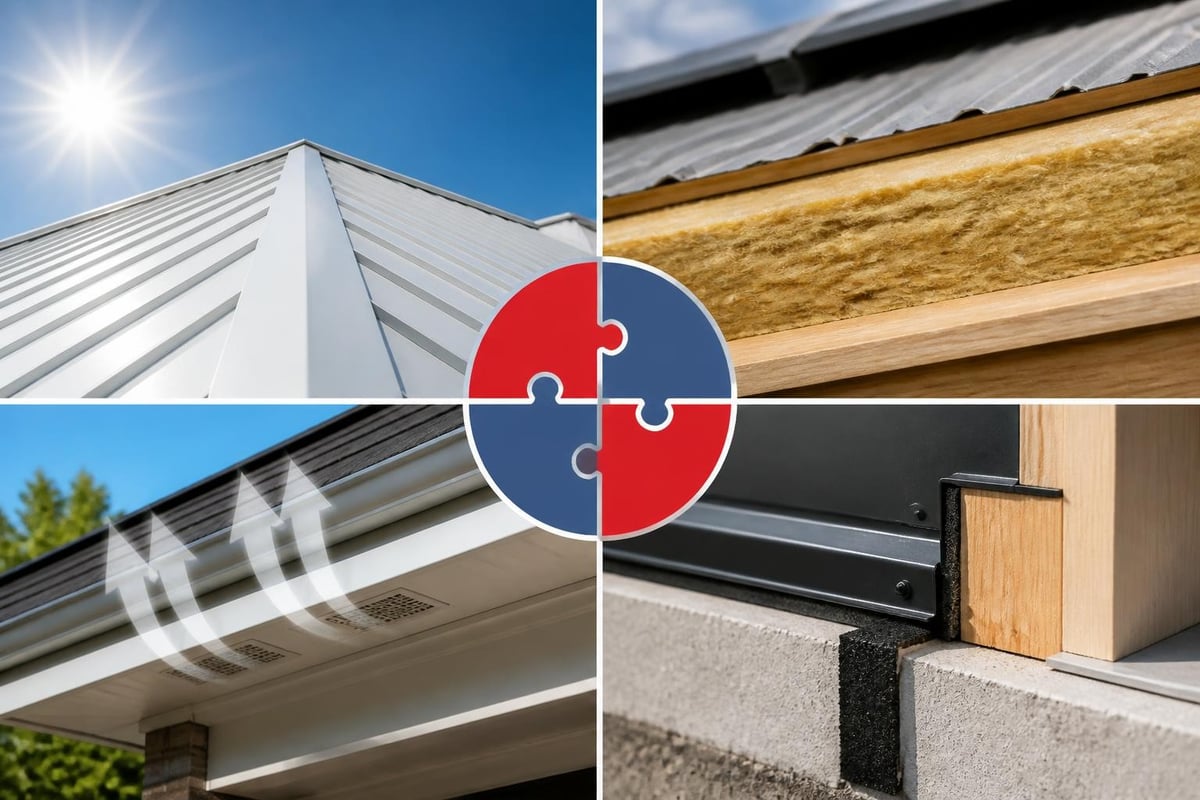
Cool roof benefits extend beyond individual buildings. The EPA’s heat island reduction solutions demonstrate how widespread cool roof adoption mitigates urban heat islands, improving community-wide air quality and reducing peak electricity demand.
Insulation Integration
Thermal resistance (R-value) in roof assemblies determines heat flow rates between interior and exterior environments. Roof best practices call for R-38 to R-60 insulation in attic spaces, depending on local climate zone requirements and heating system efficiency.
Properly installed insulation maintains continuous coverage without compression, which reduces effective R-values. Attention to thermal bridging at framing members and careful sealing of penetrations prevents the energy losses that undermine system performance.
Maintenance Protocols That Extend Lifespan
Regular maintenance represents the most cost-effective strategy for maximizing roof longevity. Roof best practices include scheduled inspections, prompt repairs, and preventive treatments that address minor issues before they escalate into major expenses.
Inspection Scheduling
Professional biannual inspections identify developing problems while they remain inexpensive to address. Spring inspections assess winter damage from ice, snow loads, and freeze-thaw cycles. Fall evaluations prepare roofs for upcoming weather challenges and verify that drainage systems function properly.
Professional inspections should evaluate:
- Shingle condition (curling, cracking, granule loss, missing tabs)
- Flashing integrity at valleys, chimneys, vents, and wall intersections
- Soffit and fascia condition indicating moisture intrusion
- Gutter and downspout functionality
- Attic ventilation effectiveness and moisture signs
Homeowners benefit from understanding common spring roof problems that develop in Midwest climates. Early detection prevents the cascading failures that require premature replacement.
Debris Management
Organic debris accumulation accelerates shingle deterioration by trapping moisture against surfaces and providing growth medium for algae and moss. Roof best maintenance includes regular debris removal, particularly after storms and during autumn when leaves accumulate.
Valley and cricket areas require special attention, as these natural collection points concentrate water flow. Keeping these pathways clear ensures proper drainage and prevents the standing water that compromises waterproofing integrity.
Storm Damage Assessment
Severe weather events demand immediate post-storm evaluations. High winds, hail, and falling debris create damage that may not be immediately visible from ground level but progressively worsens without intervention.
Following significant storms, property owners should document damage through photographs and contact qualified contractors for professional assessments. Understanding the storm damage insurance claim process helps homeowners navigate coverage and repair procedures efficiently.
Quality Contractor Selection
Even perfect materials and meticulous maintenance fail without skilled installation. Selecting qualified contractors represents a roof best practice that influences every subsequent aspect of system performance.
Credential Verification
Licensed, bonded, and insured contractors protect homeowners from liability and demonstrate professional commitment. Manufacturer certifications indicate specialized training in specific product lines and often provide access to extended warranties unavailable through non-certified installers.
Request documentation of:
- Current liability insurance (minimum $1 million coverage recommended)
- Workers' compensation insurance protecting against on-site injuries
- Local business licenses and contractor registrations
- Manufacturer certifications for proposed materials
- Better Business Bureau ratings and complaint resolution history
Benefits of hiring local roofing companies include established community reputations, familiarity with regional climate challenges, and accessibility for warranty service and follow-up needs.
Contract Clarity
Comprehensive written contracts prevent misunderstandings and establish clear performance expectations. Roof best practices demand detailed specifications covering materials (manufacturer, product line, color), installation methods, project timeline, payment schedule, and warranty terms.
Contracts should explicitly address:
- Complete material specifications including underlayment, ventilation components, and flashing details
- Debris removal and site cleanup responsibilities
- Permit acquisition and inspection coordination
- Change order procedures and pricing
- Warranty coverage (manufacturer material warranty and contractor workmanship warranty)

Advanced Performance Considerations
Sophisticated property owners and managers increasingly evaluate roofing systems through life-cycle analysis that considers total ownership costs, environmental impacts, and long-term performance characteristics.
Life-Cycle Cost Analysis
Initial installation costs represent only one component of total roofing expenses. Roof best decision-making incorporates maintenance requirements, energy performance, expected lifespan, and disposal costs into comprehensive evaluations.
A recent peer-reviewed study comparing economic, energy, and environmental performance of innovative roofing solutions demonstrates that premium materials often deliver superior value despite higher upfront costs. Metal roofing systems, for example, may cost 2-3 times more initially but deliver 50+ year lifespans with minimal maintenance, frequently yielding lower annualized costs than budget alternatives requiring replacement every 15-20 years.
| Cost Factor | Budget Shingles | Premium Architectural | Metal Standing Seam |
|---|---|---|---|
| Initial Cost (per sq ft) | $3.50-$4.50 | $4.50-$6.00 | $8.00-$12.00 |
| Expected Lifespan | 15-20 years | 25-30 years | 40-50 years |
| Annual Maintenance | $200-$400 | $150-$300 | $100-$200 |
| Energy Impact | Neutral | 5-10% cooling reduction | 10-20% cooling reduction |
| Total 30-Year Cost | $18,000-$24,000 | $15,000-$19,000 | $14,000-$18,000 |
Moisture Management Excellence
Water intrusion represents the primary cause of premature roof system failure. Roof best practices emphasize comprehensive moisture management strategies that prevent leaks and control condensation.
Beyond surface waterproofing, effective systems incorporate vapor barriers appropriate to climate zones, continuous air sealing preventing warm moist air infiltration into roof assemblies, and ventilation removing moisture that bypasses other control layers. ASHRAE Standard 90.1 guidance establishes energy code requirements for roof assemblies that include crucial moisture control provisions.
Regional Climate Adaptation
Roof best practices vary by climate zone, acknowledging different stress factors and performance priorities. Illinois' mixed-humid climate with cold winters, hot summers, and variable precipitation requires specific adaptations.
Winter Performance
Ice dam prevention ranks among the most critical winter considerations for Midwest homeowners. These formations occur when heat loss melts snow on upper roof sections, with meltwater refreezing at colder eaves and creating barriers that force water under shingles.
Preventing ice dams requires:
- Adequate attic insulation (R-49 to R-60) minimizing heat loss to roof deck
- Comprehensive air sealing preventing warm air bypass into attic spaces
- Balanced ventilation maintaining cold roof deck temperatures
- Ice and water shield protection at vulnerable eave locations
Storm Resilience
Severe weather preparedness represents essential roof best practice in tornado-prone regions. Class F wind resistance ratings, proper fastening patterns, and sealed shingle adhesive strips prevent blow-offs during high wind events.
Understanding current roofing trends for 2025 helps homeowners incorporate storm-resistant technologies and impact-resistant materials that minimize damage from increasingly frequent severe weather. Staying informed about heat-proofing strategies protects roofs during extreme temperature events.
Project Planning Essentials
Successful roof replacements require careful planning that extends beyond material selection and contractor hiring. Roof best practices include realistic budgeting, appropriate timing, and clear communication throughout project execution.
Budget Development
Comprehensive budgets account for all project components, preventing surprise expenses that compromise quality or force corner-cutting. Beyond primary roofing materials and labor, complete estimates include permits, disposal fees, temporary protective measures, landscaping restoration, and contingency reserves for unforeseen conditions.
Exploring roof replacement costs in Joliet provides regional pricing context. Quality installations for typical single-family homes range from $8,000 to $25,000 depending on size, complexity, material selection, and existing condition.
Timing Considerations
Seasonal factors influence installation quality and contractor availability. Spring and fall offer optimal weather conditions with moderate temperatures and lower precipitation probability. Summer installations proceed quickly but require heat-related precautions, while winter projects face weather delays and material handling challenges.
Scheduling flexibility often yields pricing advantages, as contractors offer competitive rates during slower periods. However, urgent replacements following storm damage requiring insurance claims cannot wait for ideal timing and demand prompt professional response.
Implementing roof best practices throughout material selection, installation, maintenance, and contractor engagement ensures optimal performance, maximizes lifespan, and protects your property investment for decades. Whether you're planning a residential roof replacement, addressing commercial flat roof repairs, or simply maintaining your current system, professional guidance makes the difference between adequate and exceptional results. Great Roofing brings three generations of roofing expertise to Joliet-area homeowners and commercial property managers, delivering quality craftsmanship, honest assessments, and reliable service that protects your most important investment.