


Choosing the right contractor for your roofing project represents one of the most significant decisions property owners face. Whether you're planning a residential shingle replacement or a commercial modified bitumen installation, understanding what distinguishes exceptional roof installation companies from mediocre ones can save you thousands of dollars and years of headaches. The roofing industry has evolved dramatically in recent years, with advanced materials, updated building codes, and improved installation techniques raising the bar for quality workmanship.
Essential Credentials and Industry Standards
Professional roof installation companies operate within a framework of regulations, certifications, and industry standards that ensure safety and quality. The most reputable contractors maintain proper licensing, comprehensive insurance coverage, and manufacturer certifications that demonstrate their expertise.
Licensing and Insurance Requirements
Every legitimate roofing contractor should carry both general liability insurance and workers' compensation coverage. General liability protects your property from damage during installation, while workers' compensation ensures you're not liable if someone gets injured on your property. Request certificates of insurance directly from the provider, not just copies from the contractor.
State and local licensing requirements vary significantly:
- Illinois requires contractors to register with the Illinois Department of Financial and Professional Regulation
- Local municipalities may have additional permitting requirements
- Specialized commercial work often demands enhanced credentials
- Federal projects require contractors to meet Davis-Bacon Act wage standards
Understanding building codes and standards is critical for any roofing project. The International Building Code (IBC) and International Residential Code (IRC) establish minimum requirements, but experienced contractors exceed these baselines.
Evaluating Company Experience and Specialization
Not all roof installation companies possess equal expertise across different roofing systems. A contractor specializing in residential asphalt shingles may lack the technical knowledge for commercial flat roofing applications, and vice versa.
| Roofing System | Typical Expertise Required | Average Project Duration |
|---|---|---|
| Asphalt Shingles | 3-5 years minimum | 1-3 days |
| Modified Bitumen | 5+ years commercial experience | 3-7 days |
| TPO/EPDM | Specialized commercial training | 5-10 days |
| Metal Roofing | Manufacturer certification preferred | 2-5 days |
Companies serving the Joliet area should demonstrate familiarity with regional weather patterns, including severe summer storms and winter freeze-thaw cycles that impact roofing performance. Local experience matters because contractors understand municipal requirements, typical substrate conditions, and weather-related challenges specific to Illinois.
Residential vs. Commercial Specialization
The distinction between residential and commercial roofing extends beyond project scale. Commercial roofing contractor work demands different skill sets, equipment, and safety protocols compared to residential installations.
Residential specialists excel at:
- Asphalt shingle installation and repair
- Ventilation system integration
- Aesthetic considerations and curb appeal
- Working around occupied homes with minimal disruption
Commercial specialists focus on:
- Low-slope and flat roofing systems
- Compliance with commercial building codes
- Large-scale project management
- Integration with HVAC and other rooftop equipment
Many property owners benefit from contractors offering both residential and commercial services, particularly for multi-family properties or mixed-use developments.
Material Selection and Warranty Coverage
Top-tier roof installation companies guide clients through material selection based on budget, longevity expectations, and architectural requirements. They maintain relationships with multiple manufacturers rather than pushing a single product line.
Understanding Manufacturer Warranties
Roofing warranties come in two distinct categories: manufacturer material warranties and contractor workmanship warranties. The manufacturer warranty covers defects in the roofing materials themselves, typically ranging from 25 to 50 years for asphalt shingles. However, these warranties often include prorated coverage that decreases value over time.
Key warranty considerations include:
- Material coverage duration: Premium shingles may offer lifetime warranties
- Workmanship guarantees: Quality contractors provide 5-10 year labor warranties
- Transferability: Some warranties transfer to new owners, enhancing property value
- Maintenance requirements: Warranties may be voided without proper maintenance
Contractors certified by manufacturers like GAF, Owens Corning, or TAMKO can offer enhanced warranty coverage unavailable through non-certified installers. These best practices for installation ensure compliance with manufacturer specifications that protect warranty validity.
The Installation Process and Quality Assurance
Understanding the complete installation process helps property owners identify corners that shouldn't be cut. Professional roof installation companies follow systematic approaches that ensure long-term performance.
Pre-Installation Assessment
Before any work begins, reputable contractors conduct thorough inspections documenting existing conditions. This assessment includes:
- Structural evaluation: Checking rafters, trusses, and decking for damage or deterioration
- Ventilation analysis: Ensuring adequate intake and exhaust ventilation
- Substrate preparation: Identifying repairs needed before new roofing installation
- Weather considerations: Planning around forecasts to avoid moisture intrusion
- Access planning: Determining equipment placement and material staging areas
The deck preparation phase critically impacts final results. Following proper roof sheathing installation procedures ensures a solid foundation for the roofing system.
Installation Day Operations
Professional crews arrive prepared with all necessary materials, equipment, and safety gear. They establish clear communication protocols with property owners and maintain organized work sites.
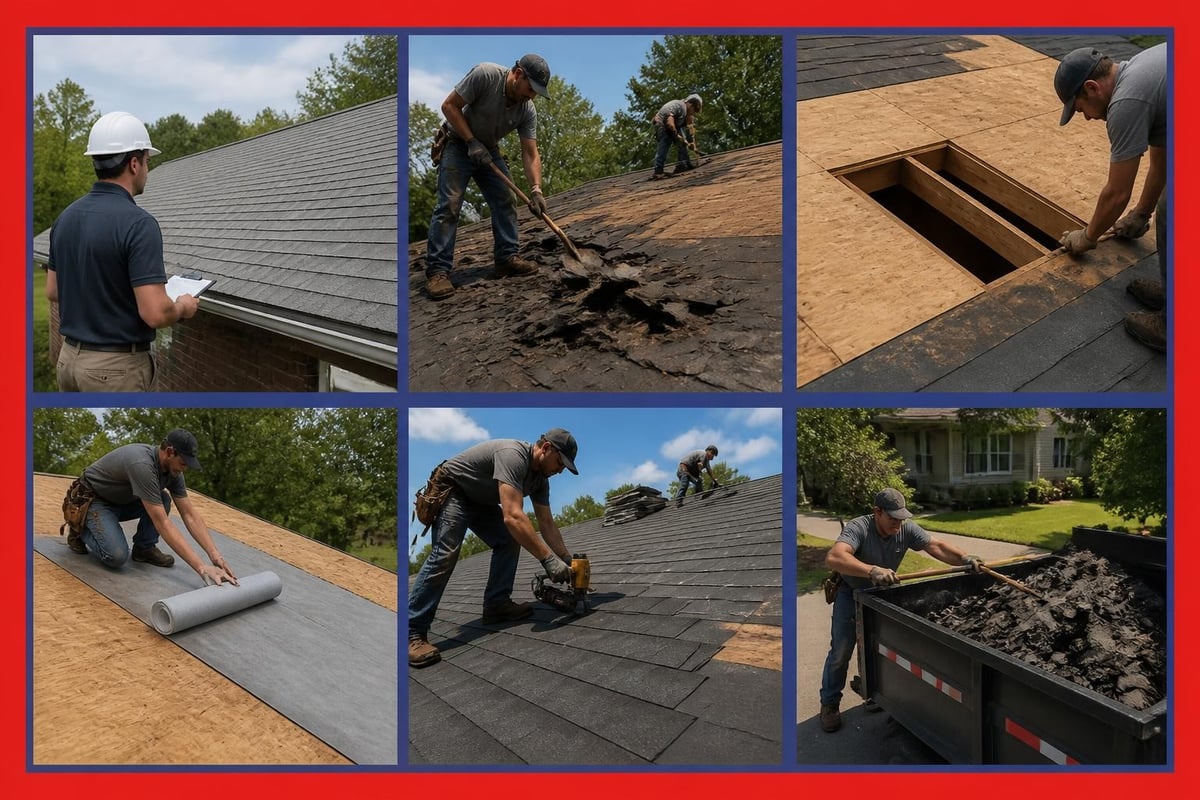
The installation sequence typically follows this pattern:
- Material delivery and staging in designated areas
- Protection of landscaping, vehicles, and adjacent properties
- Systematic removal of old roofing materials
- Inspection and repair of exposed decking
- Installation of ice and water shield in vulnerable areas
- Application of underlayment across the entire roof surface
- Starter strip installation along eaves and rakes
- Shingle installation from bottom to top
- Ridge cap and ventilation component installation
- Thorough cleanup including magnetic sweeps for nails
Quality roof installation companies assign experienced foremen to supervise crews and conduct ongoing quality checks throughout the process. Many homeowners in areas like Bolingbrook and New Lenox appreciate contractors who provide daily progress updates and address questions promptly.
Commercial Roofing Considerations
Commercial projects introduce complexity requiring specialized expertise and equipment. Best practices for commercial roofing installations emphasize proper adhesion, seam integrity, and consideration of facility operations during construction.
Modified Bitumen Systems
Modified bitumen roofing offers exceptional durability for low-slope commercial applications. This multi-layer system incorporates polymer-modified asphalt reinforced with fiberglass or polyester matting.
Installation methods include:
- Torch-applied: Heat welding creates strong seam bonds
- Cold-applied: Adhesives eliminate open flame concerns
- Self-adhering: Peel-and-stick membranes simplify installation
Commercial roof installation companies must coordinate with facility managers to minimize business disruption. For occupied buildings, phased installation approaches allow continued operations while work progresses. Safety protocols become even more critical, as commercial sites often include public access areas and operational equipment that must remain protected.
Red Flags and Warning Signs
Identifying problematic contractors before signing contracts protects property owners from costly mistakes. Several warning signs indicate roof installation companies you should avoid.
Major red flags include:
- Requests for full payment upfront
- Lack of physical business address or local references
- Pressure tactics or "today only" pricing
- No written contract or vague scope descriptions
- Unwillingness to provide proof of insurance
- Extremely low bids significantly under market rates
- Recent business formation with no track record
- Negative reviews mentioning abandoned projects or poor communication
Storm chasers represent a particular concern in regions experiencing severe weather. These transient contractors appear after major storms, often offering suspiciously low prices or claiming to work directly with insurance companies. While many legitimate contractors assist with storm damage insurance claims, established local companies provide accountability that disappears when storm chasers leave town.
Cost Factors and Pricing Transparency
Understanding how roof installation companies calculate pricing helps property owners evaluate quotes effectively. Transparent contractors provide detailed estimates breaking down material costs, labor charges, and additional expenses.
| Cost Component | Typical Percentage | Variables Affecting Price |
|---|---|---|
| Materials | 40-50% | Quality grade, brand selection, waste factor |
| Labor | 30-40% | Crew size, project complexity, safety requirements |
| Disposal | 5-10% | Old material volume, landfill fees, haul distance |
| Permits & Insurance | 5-8% | Local requirements, project scope, coverage levels |
| Overhead & Profit | 10-15% | Company size, warranty offerings, service quality |
Several factors influence total project costs beyond basic square footage. Roof pitch affects installation difficulty, with steeper slopes requiring additional safety equipment and slower work pace. Architectural complexity including multiple valleys, dormers, or skylights increases labor time. Material selection ranges from economical three-tab shingles to premium architectural or designer options.

Many property owners near Joliet find that investing in quality asphalt shingle roofing from reputable contractors costs 15-25% more than discount alternatives but delivers significantly better long-term value through extended lifespan and reduced maintenance requirements.
Technology and Modern Capabilities
Forward-thinking roof installation companies leverage technology to improve accuracy, efficiency, and customer communication. Digital tools have transformed how contractors estimate, plan, and execute roofing projects.
Satellite Measurement Systems
Satellite imaging technology allows contractors to generate precise measurements without physically climbing every roof. These systems calculate square footage, pitch, and complexity factors with remarkable accuracy. Property owners benefit through faster estimates and reduced initial inspection time.
Advanced contractors provide clients with:
- Detailed aerial imagery showing roof condition
- 3D modeling for visualization of material options
- Precise material calculations reducing waste
- Historical condition tracking for maintenance planning
Project Management Platforms
Modern roof installation companies utilize software platforms that keep clients informed throughout their projects. These systems provide real-time updates, photo documentation, and digital communication channels that enhance transparency.
Communication tools include automated notifications for project milestones, weather delays, or material deliveries. Many contractors serving communities like Frankfort and Mokena offer client portals where property owners access project timelines, payment schedules, and warranty documentation.
Maintenance Programs and Long-Term Relationships
The relationship between property owners and roof installation companies shouldn't end when installation completes. Proactive maintenance extends roof lifespan and identifies minor issues before they become major problems.
Preventive Maintenance Services
Professional contractors offer inspection and maintenance programs that protect roofing investments. Annual or biannual inspections identify loose shingles, damaged flashing, or clogged gutters that compromise roof integrity.
Typical maintenance services include:
- Visual inspection of all roof surfaces
- Cleaning debris from valleys and drainage areas
- Checking and resealing penetration flashings
- Inspecting attic ventilation and insulation
- Documenting condition with photographs
- Providing detailed reports with recommendations
These programs prove especially valuable for commercial properties where roof failure creates business interruption costs far exceeding repair expenses. Regular maintenance also maintains warranty compliance for products requiring periodic inspections.
Regional Expertise and Local Knowledge
Roof installation companies with deep roots in their service areas understand regional challenges that transient contractors overlook. Local expertise encompasses building department relationships, weather pattern knowledge, and familiarity with architectural styles common to the area.
Illinois-Specific Considerations
The Joliet region experiences distinctive weather patterns demanding specific roofing approaches. Summer severe weather brings high winds, hail, and intense rainfall that test roof integrity. Winter freeze-thaw cycles create ice dam risks requiring proper ventilation and ice barrier installation.
Local contractors understand these challenges and specify appropriate solutions. They know which underlayment products perform best in Illinois climates, how to detail flashing for wind-driven rain protection, and where ice dams typically form based on home orientation and architectural features.
Homeowners seeking roof repair after hail storms benefit from contractors familiar with local insurance adjusters and claim processes. Established relationships expedite approvals and ensure fair settlements.
Environmental Responsibility and Sustainability
Modern roof installation companies increasingly prioritize environmental stewardship through material selection, waste management, and recycling programs. Sustainable practices benefit both the environment and property owners' long-term costs.
Recycling and Waste Reduction
Asphalt shingle recycling diverts millions of tons of material from landfills annually. Progressive contractors partner with recycling facilities that process old shingles into paving materials, reducing environmental impact while potentially lowering disposal costs.
Efficient material ordering minimizes waste through precise measurements and strategic planning. Leftover materials from one project often transfer to other jobs rather than becoming waste. Some contractors donate usable materials to organizations like Habitat for Humanity, supporting community development while reducing landfill contributions.
Energy-efficient roofing products including cool roof shingles and reflective coatings reduce cooling costs during Illinois summers. While not as critical in northern climates as southern regions, proper ventilation combined with reflective materials can decrease attic temperatures by 20-30 degrees, reducing air conditioning loads.
Integration with Other Home Systems
Experienced roof installation companies coordinate roofing work with related systems to ensure comprehensive performance. These integrations affect long-term comfort, energy efficiency, and structural protection.
Ventilation and Insulation Coordination
Proper attic ventilation ranks among the most critical yet frequently overlooked aspects of roofing systems. Balanced intake and exhaust ventilation prevents moisture accumulation, extends shingle life, and maintains energy efficiency.
Professional contractors calculate ventilation requirements based on attic square footage and install appropriate combinations of:
- Ridge vents for continuous exhaust
- Soffit vents for fresh air intake
- Gable vents for supplemental circulation
- Power fans for enhanced airflow in complex roof structures
Ventilation effectiveness depends on unobstructed soffit-to-ridge airflow. Contractors check that insulation doesn't block soffit vents and install baffles maintaining clear air channels between rafters.
Quality Verification and Post-Installation Inspection
Reputable roof installation companies conduct thorough final inspections before considering projects complete. This quality assurance process protects both contractor reputation and client satisfaction.
Multi-Point Final Inspection
Comprehensive final inspections examine every aspect of completed installations:
- Shingle alignment: Verifying straight courses and proper exposure
- Flashing integrity: Checking seals around chimneys, vents, and valleys
- Fastener patterns: Ensuring proper nail placement and quantity
- Ridge cap installation: Confirming secure attachment and weather protection
- Ventilation operation: Testing airflow through intake and exhaust points
- Cleanup completion: Verifying magnetic sweeps and debris removal
- Gutter function: Checking that drainage systems operate properly
- Attic inspection: Looking for any interior signs of water intrusion
Many contractors provide waterproof roof guarantees that demonstrate confidence in their workmanship. These assurances extend beyond manufacturer warranties to cover installation quality.
Property owners should personally walk the property with contractors during final inspection, asking questions about maintenance requirements and warranty coverage. This interaction establishes clear expectations and documents project completion.
Selecting the Right Contractor for Your Project
With thousands of roof installation companies operating across Illinois, choosing the right partner requires careful evaluation. Successful selection balances multiple factors including experience, pricing, communication quality, and company stability.
The Decision-Making Framework
Start by identifying contractors serving your area with proven track records. Request estimates from three to five companies, ensuring each provides detailed written proposals. Compare not just pricing but scope descriptions, material specifications, and warranty offerings.
Evaluation criteria should include:
- Years in business and financial stability
- References from recent projects similar to yours
- Insurance coverage amounts and policy dates
- Written warranties covering both materials and labor
- Communication responsiveness during estimate process
- Professionalism of estimate presentation
Check online reviews across multiple platforms, looking for patterns in feedback rather than isolated comments. A few negative reviews among hundreds of positive ones often reflect unrealistic client expectations rather than contractor deficiencies. However, consistent complaints about communication, cleanup, or incomplete work warrant serious concern.
Visit completed projects if possible, examining workmanship quality and speaking with past clients about their experiences. Many homeowners who just completed their own projects in areas like Orland Park or Brookfield eagerly share insights about contractor performance.
Real estate considerations also factor into contractor selection. Properties being prepared for sale benefit from contractors who can provide roof certifications that facilitate transactions. For properties requiring exterior improvements beyond roofing, contractors offering siding installation services provide coordination advantages.
Just as property buyers work with specialized professionals like estate agencies for finding quality homes, selecting experienced roof installation companies ensures your property investment receives expert care. Similarly, contractors should protect homes from all threats, coordinating when necessary with specialists like pest control services to address roof damage from wildlife or insects. For backup power systems ensuring work can continue during outages, some forward-thinking contractors coordinate with emergency power solutions providers, particularly for critical commercial installations.
Selecting from among the many roof installation companies requires careful evaluation of credentials, experience, and commitment to quality workmanship. The right contractor brings technical expertise, transparent communication, and accountability that protects your investment for decades. When you're ready to move forward with your roofing project in the Joliet area, Great Roofing combines family-owned dedication with professional expertise in both residential and commercial applications, delivering the quality craftsmanship your property deserves.