


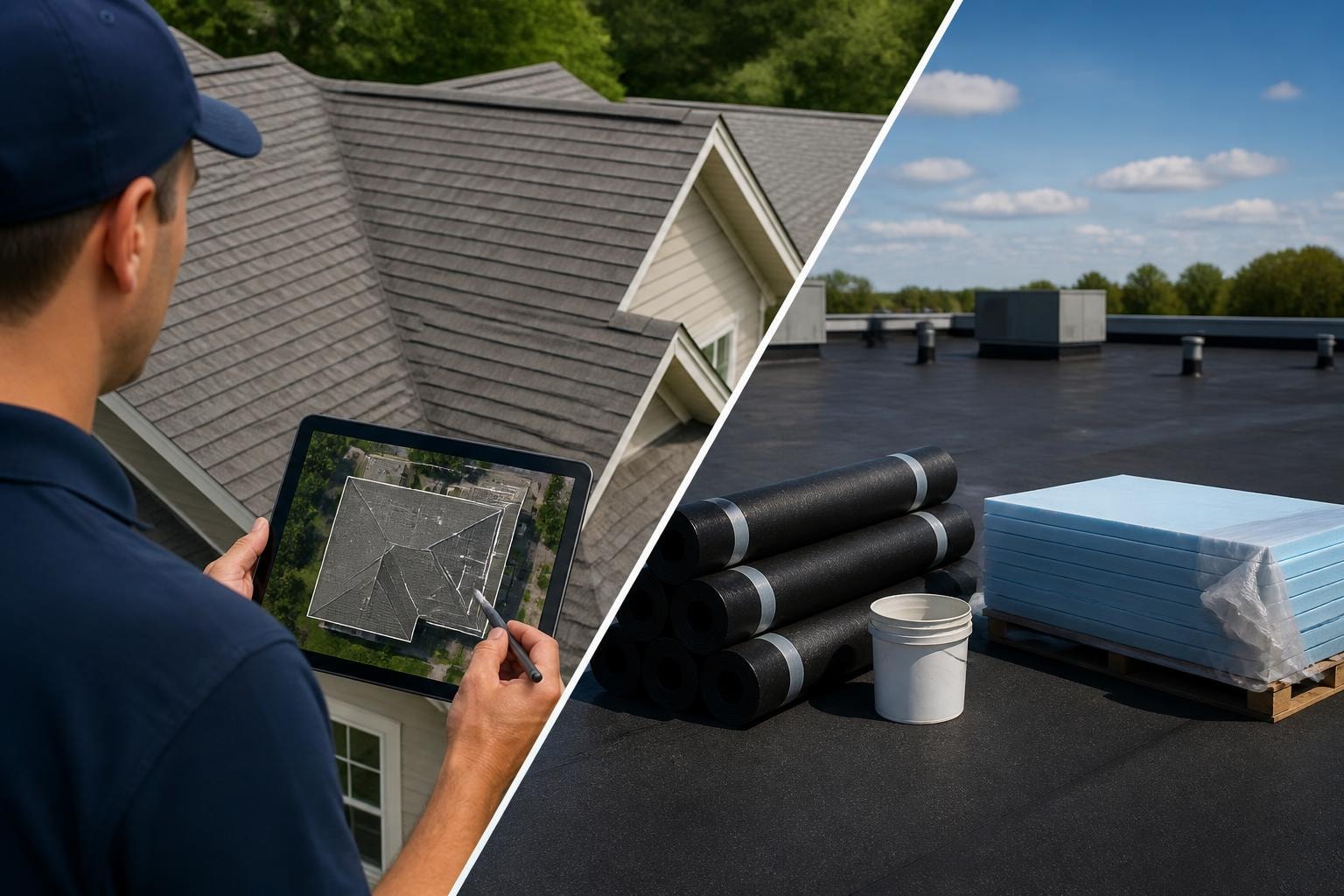
Calculating the roofing area accurately stands as one of the most critical steps in any successful roofing project, whether you're planning a complete replacement or estimating materials for repairs. For homeowners and property managers in Joliet and surrounding areas, understanding how contractors determine your roof's total square footage directly impacts project costs, material requirements, and installation timelines. This comprehensive guide breaks down everything you need to know about roofing area measurements, from basic calculation methods to advanced digital tools that professionals use to deliver precise estimates for both residential and commercial properties.
Why Accurate Roofing Area Measurements Matter
The foundation of every successful roofing project begins with precise measurements. When contractors calculate your roofing area incorrectly, the consequences ripple through every aspect of the installation process.
Underestimating your roofing area leads to material shortages that halt work mid-project, forcing delays while additional supplies are ordered and delivered. These interruptions extend project timelines and can leave your property vulnerable to weather damage during the waiting period.
Overestimating creates different problems:
- Excess material costs that inflate your budget unnecessarily
- Wasted resources that impact project profitability
- Storage challenges for unused materials
- Environmental concerns from disposal
For commercial properties with modified bitumen systems, precision becomes even more critical. These projects involve significant material investments, and calculation errors of just a few percentage points can translate to thousands of dollars in budget overruns.
Professional contractors understand that accurate roofing area calculations build client trust and project efficiency. When you receive a detailed estimate based on proper measurements, you can make informed decisions about material quality, budget allocation, and project timing with confidence.
Basic Methods for Calculating Roofing Area
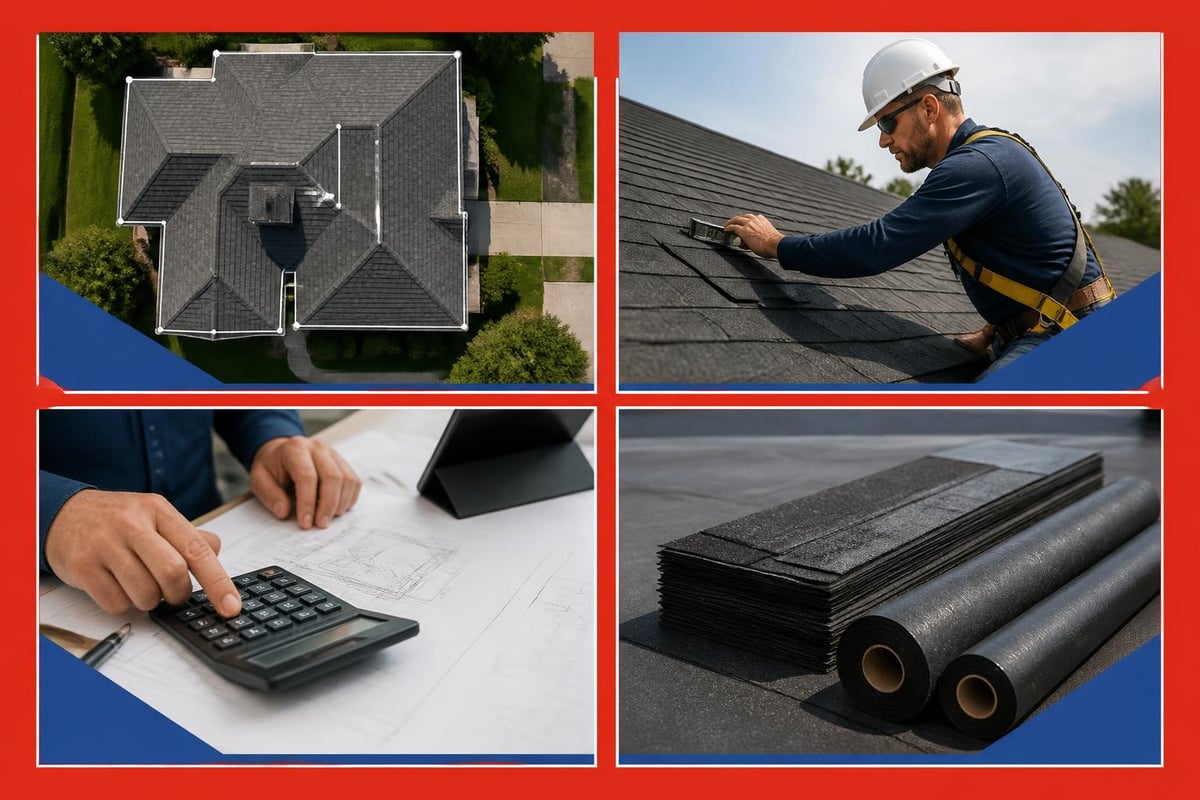
Understanding how professionals measure your roofing area helps you evaluate quotes and communicate effectively with contractors. The process combines geometry, building measurements, and pitch adjustments to determine accurate square footage.
The Footprint Method
The simplest approach starts with your building's footprint, which represents the ground-level dimensions of the structure. For a basic rectangular home measuring 40 feet by 30 feet, the footprint equals 1,200 square feet.
However, this footprint measurement represents only horizontal coverage. Your actual roofing area exceeds this number because roofs slope upward from the edges to the peak. Calculating roof area requires applying a pitch multiplier that accounts for this slope.
Understanding Pitch Multipliers
Roof pitch describes the steepness of your roof, typically expressed as a ratio like 6:12, meaning the roof rises 6 inches for every 12 inches of horizontal run. Each pitch corresponds to a specific multiplier that converts footprint measurements into actual roofing area.
| Roof Pitch | Pitch Multiplier | Impact on Area |
|---|---|---|
| 3:12 | 1.031 | 3% increase |
| 4:12 | 1.054 | 5% increase |
| 6:12 | 1.118 | 12% increase |
| 8:12 | 1.202 | 20% increase |
| 10:12 | 1.302 | 30% increase |
| 12:12 | 1.414 | 41% increase |
For our 1,200 square foot footprint example with a 6:12 pitch, multiply 1,200 by 1.118 to get 1,341.6 square feet of actual roofing area. This additional 141.6 square feet significantly impacts material requirements and costs.
Breaking Down Complex Roof Designs
Most residential and commercial buildings feature more complex roof structures than simple rectangles. L-shaped homes, properties with additions, or buildings with multiple roof planes require segmented calculations.
The step-by-step approach to measuring roof area involves dividing complex roofs into manageable sections. Calculate each section's footprint separately, apply the appropriate pitch multiplier for that section, then sum all sections to determine total roofing area.
Common architectural features to measure separately:
- Main roof sections
- Dormers and their unique pitches
- Attached garages
- Covered porches
- Bay window overhangs
- Vestibules and entryways
This segmented approach ensures accuracy even on the most complex residential properties throughout the Joliet area.
Professional Measurement Tools and Technologies
The roofing industry has evolved significantly beyond ladders and tape measures. Modern contractors leverage sophisticated digital tools that deliver unprecedented accuracy while improving safety and efficiency.
Satellite Measurement Systems
Digital measurement platforms use high-resolution satellite imagery to calculate roofing area without physical roof access. These systems combine aerial photographs with advanced algorithms to determine dimensions, pitch, and total square footage.
AI-powered satellite measurements provide contractors with comprehensive reports that include not just total roofing area but also detailed breakdowns of each roof plane, valley measurements, and ridge lengths. This technology proves particularly valuable for commercial properties where roof access presents safety challenges or logistical complications.
Advantages of Digital Measurement Tools
Modern measurement platforms deliver multiple benefits that improve project outcomes for both contractors and property owners. These systems reduce human error inherent in manual measurements while eliminating safety risks associated with climbing onto steep or damaged roofs.
Key benefits include:
- Speed: Comprehensive measurements generated within hours instead of days
- Accuracy: Precision typically within 1-2% margin of error
- Safety: No personnel required on potentially hazardous roofs
- Documentation: Detailed reports with visual diagrams for client presentations
- Consistency: Standardized measurements across all projects
For roof inspection and estimation purposes, these tools enable faster response times when property owners need quotes, particularly important after storm events when timing matters.

Accounting for Material Waste and Overage
Calculating the base roofing area represents just the starting point for material ordering. Professional contractors add waste factors to ensure adequate materials arrive on site for efficient installation.
Standard Waste Percentages
Different roofing materials and installation conditions require varying waste allowances. Shingle roofing typically requires a 10-15% overage to account for cuts, damaged pieces, and starter strips along edges and ridges.
Factors that increase waste requirements:
- Complex roof designs with multiple valleys and hips
- Steep pitches requiring additional cutting
- Architectural shingles with specific pattern matching
- First-time installations by less experienced crews
- Projects requiring multiple material lots with potential color variation
Commercial modified bitumen systems often use lower waste factors around 5-10% because the material characteristics and installation methods generate less trim waste.
The Impact on Material Orders
For a residential property with 1,500 square feet of roofing area, a 10% waste factor adds 150 square feet to the material order, bringing the total to 1,650 square feet. In roofing terminology, this equals approximately 17 squares (one square equals 100 square feet).
This seemingly small addition ensures crews have adequate materials to complete the installation without delays. Running short by even half a square can halt progress and require emergency material deliveries that disrupt schedules and increase costs.
Calculating Roofing Area for Different Property Types
Measurement approaches vary significantly between residential and commercial properties due to differences in size, complexity, and roofing systems.
Residential Roofing Area Calculations
Single-family homes in Joliet typically range from 1,200 to 3,500 square feet of roofing area. These properties often feature:
- Asphalt shingle systems with varying pitches
- Multiple roof planes intersecting at valleys and hips
- Architectural details like dormers and skylights
- Garage sections with different pitch angles
Homeowners investigating services for roof replacement benefit from understanding how these features impact total roofing area and consequently, project costs. A straightforward ranch-style home with a simple gable roof requires far less material and labor than a two-story colonial with multiple dormers and complex valley systems.
Commercial Property Considerations
Commercial roofing area calculations involve different considerations than residential projects. Low-slope or flat roofs common on commercial buildings use modified bitumen or other membrane systems that require precise edge measurements and parapet wall considerations.
Commercial measurement factors include:
| Factor | Impact on Calculation |
|---|---|
| Parapet walls | Add vertical surface area |
| HVAC equipment | Requires flashing and material routing |
| Roof penetrations | Skylights, vents, pipes affect layout |
| Drainage systems | Slope variations impact measurements |
| Access points | Hatches and ladders need special treatment |
These elements make commercial roofing area calculations more complex than simple footprint-times-pitch-multiplier formulas used for residential properties.
DIY Measurement Tips for Property Owners
While professional measurements ensure accuracy for actual installation projects, property owners can perform preliminary roofing area calculations for budgeting and planning purposes.
Safe Ground-Level Measurement Techniques
You can gather basic dimensional information without ever climbing on your roof. Measure your building's exterior walls at ground level to determine the footprint dimensions. For single-story structures, this provides the primary data needed for calculations.
Using an online roof area calculator allows you to input these dimensions along with estimated pitch information to generate preliminary square footage estimates. These tools help you understand potential project scope before requesting professional quotes.
Estimating Roof Pitch from Ground Level
Several methods allow pitch estimation without roof access. The shadow method uses basic trigonometry by measuring your roof's shadow length at specific times and comparing it to the building height. Smartphone apps with inclinometer functions can also estimate pitch when aimed at the roof line from a distance.
For more complex homes, particularly those requiring roof repair or full replacement, professional measurements remain essential. Ground-level estimates provide useful ballpark figures but lack the precision needed for accurate material ordering and detailed project planning.
Regional Considerations for Joliet Properties
Local building characteristics and weather patterns influence roofing area calculations and material requirements in the Joliet area and broader Midwest region.
Midwest Roof Design Patterns
Homes in Joliet commonly feature moderate to steep roof pitches designed to shed snow and handle significant precipitation. These steeper pitches, typically ranging from 6:12 to 10:12, substantially increase actual roofing area compared to footprint measurements.
A 1,500 square foot footprint with an 8:12 pitch yields 1,803 square feet of roofing area, while the same footprint at a 4:12 pitch produces only 1,581 square feet. This 222 square foot difference impacts material costs by several hundred dollars on typical shingle replacement projects.
Storm Damage Assessment Needs
The Midwest experiences severe weather events that necessitate accurate roofing area documentation for insurance claims. When storm damage occurs, having precise measurements helps property owners and contractors communicate effectively with insurance adjusters about replacement scope and costs.
Weather-related factors affecting Joliet roofs:
- Heavy snow loads requiring steeper pitches
- Ice dam vulnerabilities along roof edges
- Wind-driven rain penetration risks
- Hail damage requiring full replacement documentation
Understanding your exact roofing area before storm events streamline the claims process and ensure adequate coverage for necessary repairs or replacement.
Converting Roofing Area to Material Quantities
Once you know your precise roofing area, converting that measurement to actual material quantities requires understanding industry standards and packaging conventions.
Shingle Bundle Calculations
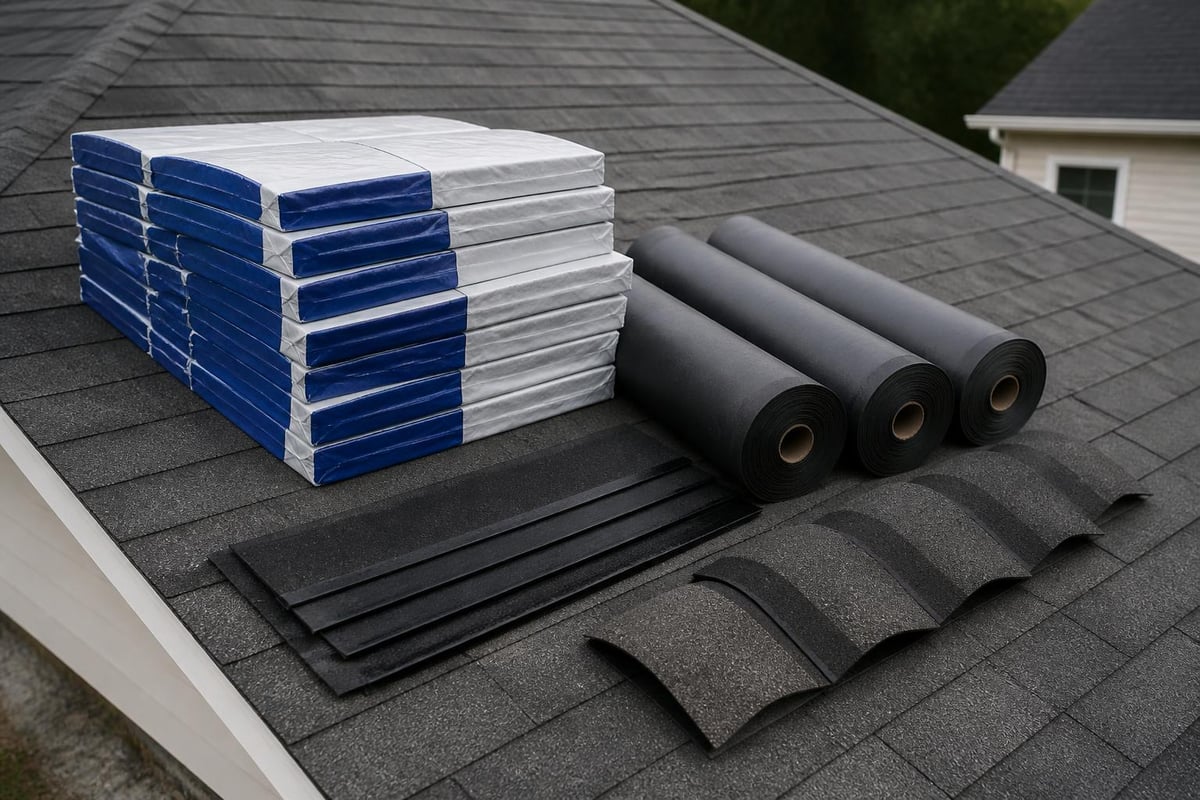
Asphalt shingles are packaged in bundles, with three bundles typically covering one square (100 square feet) of roof surface. For a property with 2,000 square feet of roofing area plus 10% waste factor, you need 2,200 square feet or 22 squares, which equals 66 bundles of shingles.
However, different shingle types vary in coverage. Architectural shingles with dimensional profiles may require different bundle counts than standard three-tab shingles. Always verify coverage specifications with your specific product before finalizing orders.
Additional Materials Based on Roofing Area
Beyond shingles, other materials scale directly with roofing area measurements:
- Underlayment: Synthetic underlayment typically comes in 1,000 square foot rolls
- Ice and water shield: Applied to vulnerable areas like valleys and eaves
- Starter strips: Run along all roof edges (measured in linear feet)
- Ridge cap shingles: Cover ridge and hip runs (also linear feet)
- Ventilation products: Ridge vents sized to total ridge length
Professional contractors use comprehensive measurement toolkits that calculate these supplementary materials alongside primary roofing area determinations, ensuring complete material lists for efficient project execution.
Advanced Measurement Considerations
Experienced contractors account for numerous subtle factors that impact roofing area calculations and material requirements beyond basic square footage.
Roof Complexity Multipliers
Highly complex roofs with numerous valleys, hips, dormers, and roof plane intersections require additional material beyond simple waste factors. These architectural features create more cuts, increase installation difficulty, and generate higher material consumption.
Professional estimators apply complexity adjustments when roofs exceed basic configurations. A home with eight roof planes, six valleys, and four dormers might warrant a 15-20% total material addition compared to the 10% standard on simple gable roofs with equivalent roofing area.
Seasonal and Installation Factors
Installation timing affects material calculations in subtle ways. Cold-weather installations may require additional materials due to reduced workability and higher breakage rates. Similarly, re-roofing projects involving multiple existing layers present different challenges than new construction tear-offs.
Understanding roof pitch implications helps property owners appreciate why steeper roofs command premium pricing beyond just increased material quantities. Safety equipment requirements, slower installation speeds, and specialized skills all factor into project costs on high-pitch applications.
When to Call Professionals for Measurement
While this guide provides comprehensive information about roofing area calculations, certain situations demand professional expertise to ensure accuracy and safety.
Safety Considerations
Roof access presents serious safety risks, particularly on steep pitches, aged structures, or damaged roofs. Professional contractors carry appropriate insurance, safety equipment, and training to perform measurements safely. Property owners attempting DIY measurements risk falls, further roof damage, or injury.
Complex Architectural Features
Properties with unusual designs, multiple elevation changes, or commercial applications require professional assessment. These structures present measurement challenges that exceed basic calculation formulas and benefit from experienced estimation using advanced tools.
Working with established contractors ensures accurate roofing area determination that supports reliable quotes, appropriate material ordering, and successful project execution. Family-owned operations bring decades of experience measuring diverse property types throughout the region, from simple residential replacements to complex commercial installations.
Accurate roofing area calculations form the foundation of every successful roofing project, directly impacting material costs, installation timelines, and overall project quality. Whether you're planning a residential shingle replacement or commercial modified bitumen installation, understanding how professionals measure and calculate your roof's square footage helps you make informed decisions and communicate effectively throughout the project. Great Roofing brings three generations of measurement expertise and quality craftsmanship to every Joliet-area project, combining traditional attention to detail with modern measurement technologies to deliver accurate estimates and exceptional results. Contact us today for a professional roofing area assessment and free project consultation.