


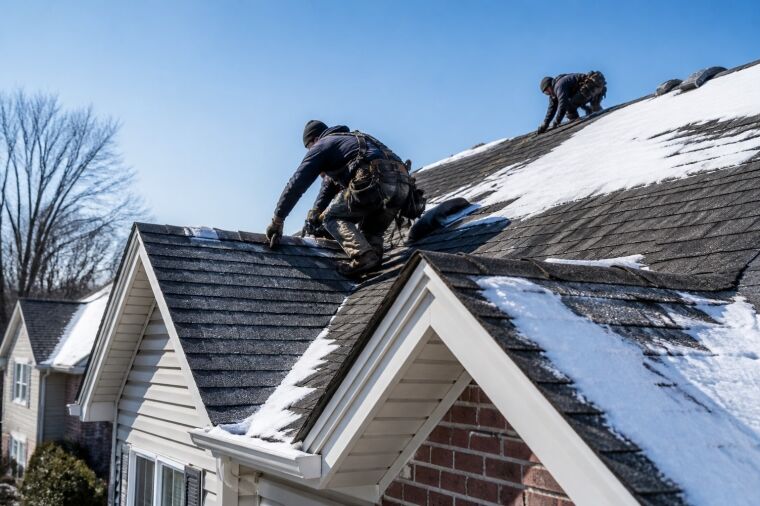
Roofing in winter weather is safe and effective when the work is done by a crew trained in cold-weather methods, and most repairs and many full replacements can proceed in the Joliet area through the winter months. The real limits are temperature, moisture and wind, which is why a clear dry day at 40 degrees is a better work window than a damp day at 45. Understanding those limits helps you judge whether a contractor's proposal is sound or simply convenient.
Can You Put On a New Roof in the Winter?
Yes, a new roof can be installed in winter, provided the crew works within manufacturer temperature guidelines and adjusts its methods for the cold. Roofing materials do not stop performing because the calendar says January. What changes is the care required during handling, fastening and sealing.
For homeowners in Joliet and the south suburbs, winter work often means shorter days, more weather-related schedule shifts and materials that need protection from cold and moisture. It can also mean easier scheduling, because fewer homeowners book projects in the off-season. Great Roofing outlines how its crews approach winter roofing for local properties.
What Temperature Is Too Cold to Put On a Roof?
Asphalt shingle installation is generally recommended only when temperatures are at or above the manufacturer's stated minimum, and many crews will still work below that with extra precautions. Below freezing, shingles become brittle, nails can crack them, and the factory sealant strips struggle to activate.
Temperature is only one factor. These conditions can force a stop even when the thermometer reads acceptably:
- Ice or frost on the deck. Moisture trapped under underlayment can cause problems later, and wet surfaces are a fall hazard.
- High wind. Cold shingles are stiff and difficult to control, and gusts can lift or crease them.
- Active snow or freezing rain. Work should pause until the deck is dry.
- Wind chill and crew safety. Fatigue and numb hands increase the risk of mistakes and falls.
A reputable contractor will tell you plainly when a day is not workable rather than pushing through. Ask how they decide to stop and how they protect an open roof if weather turns mid-project.

How Do Asphalt Shingles Perform When Installed in Cold Weather?
Asphalt shingles can be installed successfully in cold weather, but they need more careful handling because cold stiffens the material and slows the self-sealing process. A common concern is that shingles installed in winter will never seal. In practice, the adhesive strips typically bond once warmer, sunny days arrive, and a good crew compensates in the meantime.
Cold-weather techniques that experienced installers use include:
- Hand-sealing shingles with roofing cement in addition to relying on the factory strip, especially in exposed areas and along edges.
- Storing bundles in a protected spot and bringing out only what the crew will install soon.
- Adjusting nail depth and pressure so a nail gun does not crack brittle shingles.
- Following manufacturer fastening patterns exactly, since a poorly seated nail matters more when shingles are stiff.
If a contractor proposes winter shingle work, ask whether they hand-seal and how they verify sealing in the following weeks. Great Roofing is IKO Roof PRO certified and offers 50 years of material warranty coverage, so confirming how winter installation affects warranty terms is a fair question to put to any roofer, including us.
Winter Roofing Versus Summer Roofing
Winter and summer each carry real trade-offs, and the better season depends on how urgent your roof problem is. Summer offers ideal sealing conditions and long daylight hours, but it is also the busiest season, and storm-damaged roofs tend to compete for crew time. Winter is slower, but weather windows are narrower.
| Factor | Winter | Summer |
|---|---|---|
| Shingle sealing | Slower, often needs hand-sealing | Fast, reliable |
| Daylight hours | Short | Long |
| Contractor availability | Often more open | Often booked out |
| Weather delays | More frequent | Less frequent, though storms occur |
| Material handling | Brittle in cold | Can soften in heat |
Neither season is wrong. A roof that is actively leaking should not wait for spring, and a roof with years of life left may be a candidate for a planned spring or fall replacement.
Do Metal Roofs Help with Ice Dams?
Metal roofs can help shed snow and reduce the buildup that feeds ice dams, but they do not solve the underlying cause, which is heat escaping from the attic. Smooth metal panels let snow slide off more readily than textured shingles, which can lower the risk of heavy accumulation near the eaves.
The National Weather Service explains that ice dams commonly form when snow melts during the day and refreezes as temperatures fall overnight. That cycle is driven by a warm roof deck, regardless of the covering on top. A metal roof over a leaky, under-insulated attic can still develop ice at the eaves.
The most dependable prevention is in the attic. The same agency recommends attic insulation of at least R-30, with R-38 preferable in northern climates, paired with good airflow so the roof deck stays cold. For Joliet homes, that means checking insulation depth and ventilation before assuming a new roof alone will end ice dam problems. Great Roofing is AirVent certified, which is relevant when ventilation is part of the fix.
Roofing in Winter Weather: Common Hazards and How Pros Manage Them
Professional crews manage winter hazards through planning, equipment and the willingness to stop work. The main risks are slips, cold-related fatigue, brittle materials and moisture getting into the roof system.
- Fall protection. Harnesses, anchors and clear access paths matter more on frosty surfaces. Crews should clear snow and ice from work areas before stepping onto the roof.
- Moisture control. Underlayment and decking must be dry before covering. Any open section at day's end should be protected from snow and meltwater.
- Material staging. Bundles should be kept off wet ground and covered, so shingles and underlayment do not absorb moisture.
- Daylight planning. With fewer working hours, projects are scoped in smaller sections so no part of the roof is left exposed overnight.
For commercial properties with low-slope roofs, modified bitumen systems have their own cold-weather requirements. Some adhesives and torch or cold-applied methods are sensitive to temperature and moisture, so flat roof work in deep winter is typically limited to repairs and emergency work unless conditions allow. Property managers should ask how a contractor will handle temporary protection and when permanent work will be completed.
What to Do When You Need an Emergency Roof Repair in Winter
If your roof is leaking or damaged in winter, the first priority is to limit interior water damage, then call a contractor for a temporary or permanent fix. Do not climb onto an icy roof yourself.
Steps to take right away:
- Contain the water. Move belongings, place buckets and lay plastic sheeting under active drips.
- Document the damage. Take dated photos of ceilings, walls and any visible roof damage for insurance purposes.
- Call a roofer promptly. Ask about temporary tarping or sealing to hold until conditions allow a permanent repair.
- Contact your insurer if storm damage is involved. Great Roofing can help homeowners work through storm damage insurance claims.
For leaks, missing shingles and storm-related problems, residential roof repair is often the right first step, since a targeted repair can protect the home through the winter and give you time to plan a replacement for milder weather if one is needed.
Snow Load, Snow Removal and Roof Safety
Heavy snow adds weight to a roof, and removing it carelessly can damage the roof covering or injure you. Flat and low-slope commercial roofs deserve particular attention because snow and ice can accumulate and block drainage. Risk-management guidance from The Hanover covers snow loads, roof inspections and drainage, which is a useful reference for building owners.
If you clear snow from a pitched residential roof, use a long-handled roof rake from the ground. Massachusetts safety guidance recommends leaving 2 to 3 inches of snow on the roof rather than scraping down to the shingles, which can tear granules and damage the surface. Never use sharp tools, salt or hot water on shingles, and stay away from power lines and eaves where ice can fall.
Warning signs that call for professional attention include sagging ceilings, new cracks in drywall, doors that suddenly stick, and ice forming along gutters and soffits. For a seasonal checklist, Great Roofing's guide on preparing a Joliet roof for winter storms covers what to inspect before the cold sets in.
How to Judge a Winter Roofing Contractor Before You Hire
A trustworthy winter contractor can explain exactly how they adapt to cold weather and what conditions would make them pause. Vague answers or pressure to sign immediately are warning signs.
Questions worth asking:
- What minimum temperature and weather conditions will you work in?
- Will you hand-seal shingles, and how do you confirm they seal later?
- How do you protect the roof if weather changes mid-job?
- Who will be my point of contact throughout the project?
- What happens to the warranty if the roof is installed in cold weather?
- What is your cleanup process, and how do you protect landscaping?
Credentials matter as well. Look for manufacturer certifications, verifiable reviews and local reputation. Great Roofing is a family-owned and operated company with an A+ rating from the BBB, a Platinum Award for Joliet roofing, siding and soffit contracting for two consecutive years, and VSI certified employees. You can read customer reviews to see how local homeowners describe the experience.
Is $30,000 Too Much for a Roof?
A $30,000 roof is not automatically too much, because price depends on roof size, pitch, complexity, material and what must be repaired or replaced. A large, steep or multi-section home, or a commercial flat roof system, can reasonably reach that range, while a modest ranch with a simple roofline typically costs far less.
What matters is whether the quote is itemized. Compare scope line by line: tear-off, decking repair, underlayment, ice and water protection, ventilation, flashing, shingle or membrane type, cleanup and warranty. Two quotes with a large gap often differ in scope, not just profit. If a bid is far above the others, ask what drives the difference. If you want a shingle tear-off priced for your specific home, a written estimate is the only reliable way to compare.
What Is the 25% Rule for Roofing?
The 25% rule is a guideline some building codes and insurers apply when repairs affect a large share of a roof, which can require the entire roof to be brought up to current code if a significant portion is repaired or replaced within a set period. Rules vary by municipality and by insurer, so the exact threshold and its enforcement depend on local code.
For Joliet-area owners, this matters when planning staged repairs. Replacing a roof in pieces over several seasons may trigger a requirement to replace the whole thing. Before authorizing a large partial repair, ask your contractor and your local building department how the rule is applied, and confirm any insurance policy language that affects coverage.
FAQ
Can I wait until spring to replace my roof?
If the roof is not leaking and shows only minor wear, waiting until spring is often reasonable. Active leaks, missing shingles or storm damage should be addressed sooner, at minimum with a temporary repair to protect the interior.
Will winter installation void my shingle warranty?
Not necessarily, but warranty terms differ by manufacturer, and some specify installation conditions. Ask your contractor to confirm in writing how cold-weather installation is handled under the warranty before work begins.
Is it safe to do roof repairs in snow?
Small repairs can be done safely when the crew clears snow and ice from the work area and uses proper fall protection. Work should pause during active snow, freezing rain or high wind, and repairs on a wet or icy deck should wait.
If you suspect winter damage or want to plan ahead, start by photographing any stains, missing shingles or ice buildup, then have a qualified roofer inspect before the next storm. Great Roofing serves homeowners and commercial property owners in Joliet and the south Chicagoland area, staying in contact at every step and making it right if you are not satisfied. If you already have a leak or storm damage, ask about residential roof repair, and when you are ready to plan a replacement, you can schedule a complimentary estimate with Great Roofing.