

Your roof represents one of the most significant investments in your property, whether residential or commercial. Regular professional maintenance can extend its lifespan by 10 to 15 years, prevent costly emergency repairs, and protect your property from water damage that can reach into the tens of thousands of dollars. Understanding what roofing maintenance companies offer and how to select the right partner for your property's needs is essential for maximizing this investment and avoiding preventable damage.
What Roofing Maintenance Companies Actually Do
Professional roofing maintenance companies provide comprehensive care that goes far beyond what most property owners can accomplish on their own. These services encompass systematic inspections, preventive repairs, debris removal, and documentation that creates a historical record of your roof's condition over time.
Comprehensive Inspection Services
The foundation of any maintenance program is thorough inspection. Qualified roofing maintenance companies examine every component of your roofing system, from shingles or membrane surfaces to flashing, gutters, downspouts, and ventilation systems. According to NRCA’s roofing maintenance guidelines, professional inspectors follow standardized protocols that identify potential problems before they escalate into major failures.
During inspections, technicians document:
- Surface conditions including wear patterns, granule loss, or membrane deterioration
- Penetration integrity around vents, chimneys, skylights, and HVAC equipment
- Flashing condition at valleys, edges, and transitions
- Drainage performance to ensure water flows properly away from the structure
- Structural indicators such as sagging, ponding, or unusual wear patterns

Preventive Maintenance and Minor Repairs
Beyond inspections, roofing maintenance companies perform routine upkeep that prevents small issues from becoming expensive problems. This includes cleaning gutters and downspouts, removing debris that can trap moisture, resealing penetrations, and replacing damaged shingles or membrane sections. Professional maintenance technicians follow industry-standard procedures to ensure repairs integrate seamlessly with existing systems.
Regular maintenance addresses common vulnerabilities:
- Cleaning and clearing all drainage components quarterly or after storms
- Inspecting and resealing roof penetrations annually
- Trimming overhanging branches that can damage surfaces
- Checking and tightening loose fasteners before they create larger openings
- Applying protective coatings where appropriate for the roofing material
Why Professional Maintenance Matters More Than DIY
While property owners can handle some basic tasks like clearing visible debris, professional roofing maintenance companies bring expertise, equipment, and safety protocols that make a substantial difference in outcomes. The average homeowner lacks the training to identify early warning signs of membrane deterioration, improper drainage, or structural concerns that may not be obvious from ground level.
Safety and Liability Considerations
Roof work involves significant fall risks. Professional contractors carry comprehensive insurance, use proper safety equipment, and train their teams in OSHA-compliant procedures. When you hire qualified roofing maintenance companies, you transfer the liability and safety burden to insured professionals who manage these risks daily.
| Risk Factor | DIY Approach | Professional Service |
|---|---|---|
| Fall injuries | Homeowner assumes all risk | Contractor carries liability insurance |
| Property damage | No coverage for mistakes | Work guaranteed and insured |
| Code compliance | May violate local requirements | Ensures all work meets codes |
| Warranty preservation | Can void manufacturer warranties | Maintains warranty validity |
Technical Expertise and Problem Detection
Experienced technicians recognize subtle indicators that signal developing problems. A slight depression in a commercial membrane, minor granule loss patterns on residential shingles, or early rust spots on flashing can reveal underlying issues that will worsen rapidly without intervention. Consumer Reports emphasizes that professional maintenance catches these problems when repairs cost hundreds rather than thousands.
The technical knowledge professional roofing maintenance companies possess includes understanding how different materials age, recognizing installation defects, and knowing which repairs provide lasting solutions versus temporary fixes. This expertise proves particularly valuable for commercial properties with modified bitumen systems or residential homes with specialized materials.
Types of Maintenance Programs Available
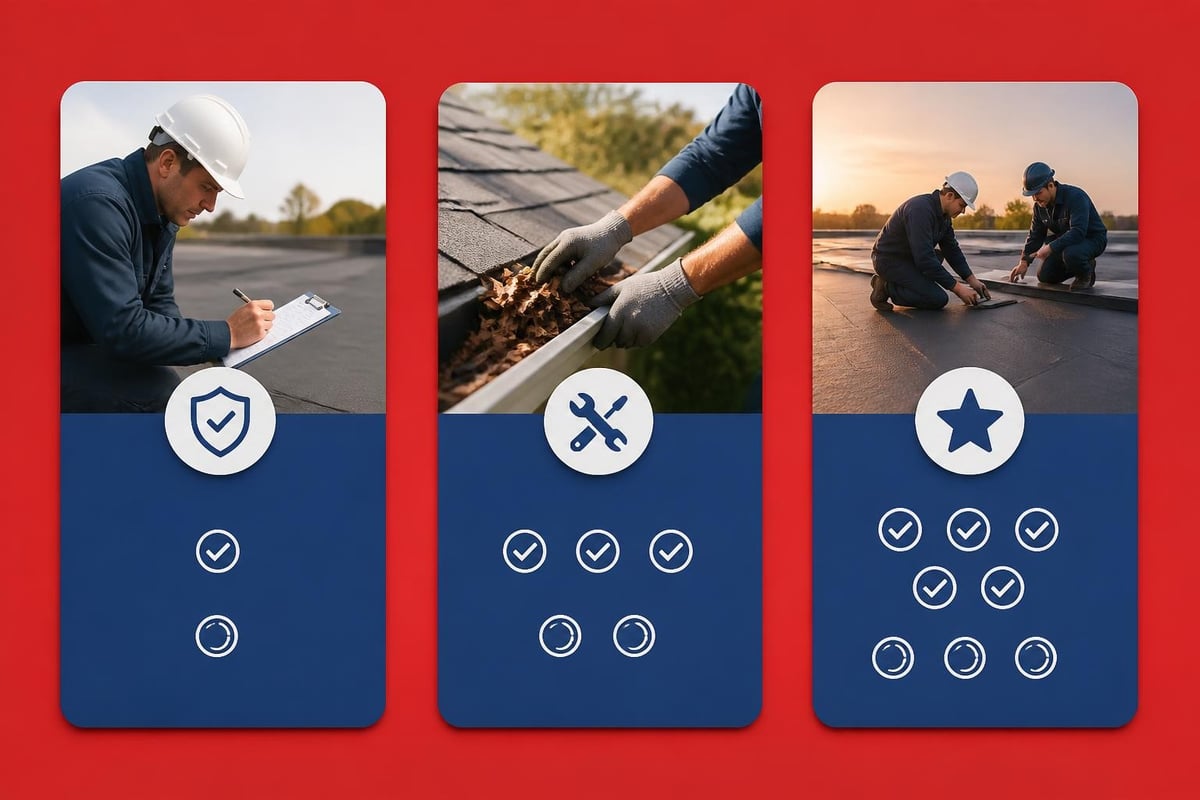
Roofing maintenance companies typically offer several program structures designed to fit different property types, budgets, and risk tolerances. Understanding these options helps you select the most cost-effective approach for your situation.
Annual Inspection Programs
The most basic service involves scheduled annual inspections, usually conducted in spring or fall. Technicians examine the entire roofing system, document findings with photos and written reports, and provide cost estimates for any recommended repairs. This approach works well for newer roofs in good condition or property owners who prefer to manage repairs separately.
Benefits of annual programs:
- Lower upfront costs
- Flexibility in repair timing and contractor selection
- Documented condition reports for insurance or sale purposes
- Early warning system for developing issues
Comprehensive Maintenance Contracts
Full-service maintenance contracts bundle inspections with routine upkeep tasks like gutter cleaning, minor repairs, and emergency response. These programs typically include two to four visits annually, with the frequency depending on your roof type, local climate, and surrounding vegetation. For commercial properties or residential roofs nearing mid-life, comprehensive programs often deliver better value than reactive repair approaches.
These contracts commonly cover:
- Bi-annual or quarterly inspections
- All debris and drainage cleaning
- Minor repairs up to a specified dollar amount per visit
- Priority emergency response during storms
- Detailed maintenance logs and warranty documentation
Storm Response and Emergency Services
Many roofing maintenance companies offer storm damage assessment programs specifically designed for areas prone to severe weather. These services provide rapid post-storm inspections to document damage for insurance claims, emergency tarping or temporary repairs, and coordination with adjusters. The FORTIFIED Roof program demonstrates how proactive maintenance combined with resilience upgrades reduces storm damage significantly.
Creating an Effective Maintenance Schedule
The ideal maintenance frequency depends on multiple factors including roof age, material type, local climate, and surrounding environment. Roofing maintenance companies can help develop customized schedules that balance protection with budget considerations.
Residential Roof Maintenance Timing
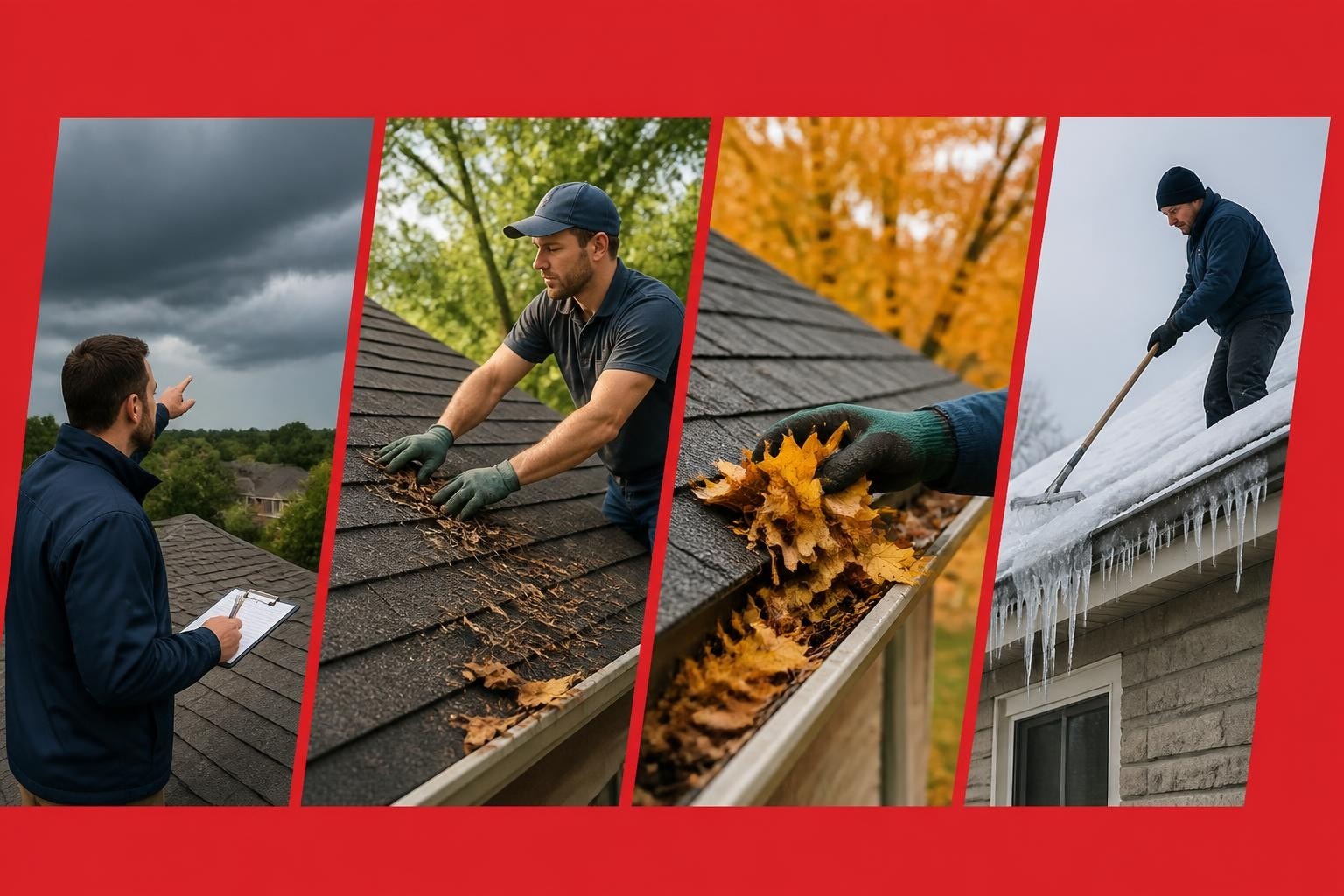
For typical asphalt shingle roofs in the Joliet area, most professionals recommend at least two inspections annually plus additional checks after severe storms. Spring inspections assess winter damage from ice dams and freeze-thaw cycles, while fall visits prepare the system for upcoming winter weather. Properties with significant tree coverage may need more frequent gutter cleaning and debris removal.
Recommended residential schedule:
- Spring (April-May): Complete post-winter inspection, gutter cleaning, minor repairs
- Summer (July-August): Verify attic ventilation, check for storm damage, assess shingle condition
- Fall (September-October): Pre-winter preparation, final gutter cleaning, trim overhanging branches
- After severe storms: Emergency inspection for damage documentation
Commercial Roof Maintenance Requirements
Commercial properties with flat or low-slope roofs require more frequent attention than residential installations. IBHS best practices recommend quarterly inspections for commercial roofs, particularly modified bitumen and single-ply membrane systems that can develop leaks from ponding water or membrane shrinkage. Regular maintenance extends the service life of these systems substantially and helps building owners budget for eventual replacement.
Professional commercial roofing maintenance addresses specific challenges:
- Drainage monitoring to prevent ponding water that accelerates deterioration
- Membrane integrity checks for splits, blisters, or separation at seams
- HVAC equipment coordination to maintain proper clearances and flashing
- Foot traffic management in high-access areas
- Energy efficiency preservation for reflective or cool roof systems
Key Selection Criteria for Maintenance Companies
Choosing the right roofing maintenance provider significantly impacts the value you receive and the longevity of your roof. Not all companies offer the same level of service, documentation, or technical expertise.
Licensing, Insurance, and Certifications
Verify that any roofing maintenance companies you consider carry proper licensing for your state and municipality, comprehensive general liability insurance, and workers' compensation coverage for all employees. Request certificates of insurance and verify they're current. Look for manufacturer certifications that demonstrate specialized training in the roofing materials protecting your property.
Professional credentials to prioritize:
- State contractor license with proper classification
- General liability insurance ($1-2 million minimum)
- Workers' compensation coverage
- Manufacturer certifications for your roof type
- Industry association memberships (NRCA, local trade groups)
- Safety training documentation
Experience with Your Roof Type
Different roofing materials require specialized knowledge. A company experienced in residential shingle roof maintenance may lack expertise in commercial modified bitumen systems, and vice versa. Ask potential contractors about their specific experience with your roof type, request references from similar properties, and inquire about ongoing training programs for their technicians.
| Roof Type | Maintenance Specialization Required |
|---|---|
| Asphalt shingles | Granule loss assessment, seal integrity, flashing details |
| Modified bitumen | Seam inspection, blister detection, drainage analysis |
| TPO/PVC membrane | Seam integrity, mechanical attachment, reflectivity preservation |
| Metal roofing | Fastener condition, panel expansion, coating maintenance |
| Tile or slate | Individual unit replacement, underlayment assessment, structural load |
Documentation and Communication Standards
Quality roofing maintenance companies provide detailed reports after every visit, including photographs, written descriptions of conditions found, and clear recommendations prioritized by urgency. This documentation proves invaluable for insurance claims, warranty verification, budgeting for future repairs, and property sale negotiations.
Expect comprehensive reports that include:
- Date-stamped photographs of all roof areas and problem zones
- Written condition assessment using consistent grading criteria
- Specific repair recommendations with cost estimates
- Historical comparison to previous inspections
- Warranty compliance verification
- Maintenance performed during the visit
Cost Structures and Budget Planning
Understanding how roofing maintenance companies price their services helps property owners budget appropriately and evaluate proposals accurately. Costs vary significantly based on property size, roof complexity, accessibility, and the comprehensiveness of services included.
Typical Pricing Models
Most maintenance providers use one of three pricing approaches. Per-visit fees charge a set amount for each inspection or service call, typically ranging from $150 to $500 for residential properties depending on size and complexity. Annual contracts bundle multiple visits at a reduced per-visit rate, usually offering 15-25% savings compared to individual service calls. Some companies offer per-square-foot pricing for larger commercial properties, calculated based on roof area and visit frequency.
Cost comparison for a typical 2,500 sq ft residential roof:
- Single inspection: $200-350
- Annual contract (2 visits): $350-600
- Comprehensive program (4 visits plus minor repairs): $800-1,200
- Commercial roof (per 1,000 sq ft annually): $300-800
Return on Investment
While maintenance represents an ongoing expense, it delivers measurable returns through extended roof life, prevention of interior damage, and maintained property value. The EPA’s moisture control guidance documents how regular roof maintenance prevents water intrusion that leads to mold, structural damage, and dramatically higher repair costs.
Consider these financial benefits:
- Extended lifespan: Proper maintenance adds 10-15 years to roof life (20-40% increase)
- Prevented damage: Catching small leaks early avoids $5,000-15,000 interior repairs
- Energy savings: Maintained ventilation and sealed penetrations reduce heating/cooling costs
- Insurance premiums: Some insurers offer discounts for documented maintenance programs
- Property value: Well-maintained roofs enhance resale value and buyer confidence

Common Maintenance Services and Their Value
Understanding what specific tasks roofing maintenance companies perform helps property owners appreciate the value delivered and identify any gaps in proposed service agreements.
Gutter and Drainage Management
Properly functioning drainage systems protect both your roof and your building's foundation. Maintenance programs include cleaning gutters and downspouts, verifying slope and alignment, checking for proper attachment, and ensuring water flows away from the structure. Clogged gutters cause ice dam formation in winter, roof edge deterioration, and foundation water infiltration.
Flashing Inspection and Repair
Flashing failures account for the majority of roof leaks. Professional maintenance includes examining all flashing locations including chimneys, walls, valleys, skylights, and roof penetrations. Technicians reseal gaps, replace deteriorated sections, and ensure proper overlap and attachment. This preventive work stops leaks before they damage ceilings, walls, and insulation.
Ventilation System Assessment
Adequate attic ventilation prevents ice dams, reduces cooling costs, and extends shingle life by controlling heat buildup. Maintenance visits verify that intake and exhaust vents remain clear, properly sized, and functioning as designed. Blocked or inadequate ventilation can void manufacturer warranties and shorten roof life by 30-50%.
Surface Condition Monitoring
Regular examination of roofing surfaces identifies wear patterns, material deterioration, and localized damage from falling branches or wildlife. For shingle roofs, this includes granule loss assessment and seal integrity checks. For membrane systems, technicians look for punctures, blisters, and seam separation. Early detection allows targeted repairs rather than premature replacement.
Red Flags When Evaluating Maintenance Companies
Certain warning signs indicate contractors who may not deliver quality service or may engage in predatory practices. Awareness of these red flags protects property owners from poor service or outright scams.
Pressure Tactics and Scare Strategies
Legitimate roofing maintenance companies provide honest assessments without pressuring immediate decisions. Be wary of contractors who claim your roof is in imminent danger after a brief visual inspection, demand immediate payment for emergency repairs, or offer dramatic discounts if you sign today. Quality contractors give you time to review findings, obtain second opinions, and make informed decisions.
Warning signs to avoid:
- Unsolicited door-to-door solicitation immediately after storms
- Pressure to file insurance claims for questionable damage
- Requests for full payment before work begins
- Lack of local references or established business address
- Refusal to provide written estimates or contracts
- Offers that seem too good to be true compared to other proposals
Missing Documentation or Credentials
Professional contractors readily provide proof of insurance, licensing, references, and credentials. Hesitation or excuses when you request this information suggests the company may lack proper coverage or qualifications. Always verify licenses with state and local authorities and request current insurance certificates directly from the carrier.
Vague or Inconsistent Proposals
Quality maintenance proposals clearly detail what services are included, visit frequency, response time commitments, work guarantees, and costs. Vague descriptions like "complete roof maintenance" or "as-needed repairs" leave too much room for disagreement later. Ensure contracts specify exactly what's covered and what generates additional charges.
Integrating Maintenance with Repair and Replacement Planning
Effective roofing maintenance companies help property owners develop long-term strategies that balance ongoing care with inevitable repair needs and eventual roof replacement. This integrated approach optimizes timing and budgeting for major investments.
Mid-Life Assessment and Planning
For roofs approaching their halfway point (10-15 years for asphalt shingles, 8-12 years for modified bitumen), maintenance inspections should include detailed assessments that inform replacement planning. Contractors can identify whether continued maintenance represents good value or whether replacement should move forward in your capital planning.
Professional assessments consider:
- Remaining service life based on current condition and deterioration rate
- Cost-effectiveness of repairs versus replacement timing
- Technological improvements in newer systems
- Energy efficiency gains from modern materials
- Coordination with other building improvements or renovations
Warranty Compliance and Documentation
Many manufacturer warranties require documented professional maintenance to remain valid. Working with qualified roofing maintenance companies ensures you meet these requirements and maintain comprehensive records that support warranty claims if needed. This documentation also enhances property value and facilitates insurance claims when damage occurs.
Emergency Response Integration
Regular maintenance relationships with local contractors provide faster response when emergencies strike. Companies familiar with your property can dispatch teams immediately after severe storms, provide temporary protection while coordinating permanent repairs, and leverage existing relationships to prioritize your needs during high-demand periods following widespread storm damage.
Regional Considerations for the Joliet Area
Climate and weather patterns specific to the Joliet region influence optimal maintenance strategies and timing. Understanding these local factors helps property owners maximize the value of professional maintenance programs.
Seasonal Weather Challenges
Joliet's climate presents distinct challenges across seasons. Winter freeze-thaw cycles stress roofing materials and create ice dam conditions that can force water under shingles. Spring brings heavy rains that test drainage systems. Summer heat accelerates shingle aging, while fall storms with high winds can damage vulnerable areas. Roofing maintenance companies familiar with regional conditions time services to address these seasonal threats proactively.
Local Building Code Requirements
Municipal regulations in Joliet and surrounding communities may specify maintenance requirements, particularly for commercial properties. Professional contractors maintain current knowledge of these regulations and ensure all work complies with local codes. This compliance protects property owners from citations and ensures work meets minimum safety and performance standards.
Working with established local roofing services provides advantages including familiarity with regional building departments, established relationships with local suppliers for quick material access, and proximity for rapid emergency response. Companies serving the Joliet area understand the specific challenges posed by local weather patterns and building characteristics common in the region.
Professional roofing maintenance delivers measurable returns through extended system life, prevented damage, and protected property value. Selecting qualified contractors, establishing appropriate service schedules, and maintaining comprehensive documentation ensures your investment receives the protection it deserves. Great Roofing brings family-owned dedication and specialized expertise in both residential and commercial systems to property owners throughout Joliet and surrounding communities, providing the professional maintenance services that keep your roof performing optimally for decades.