

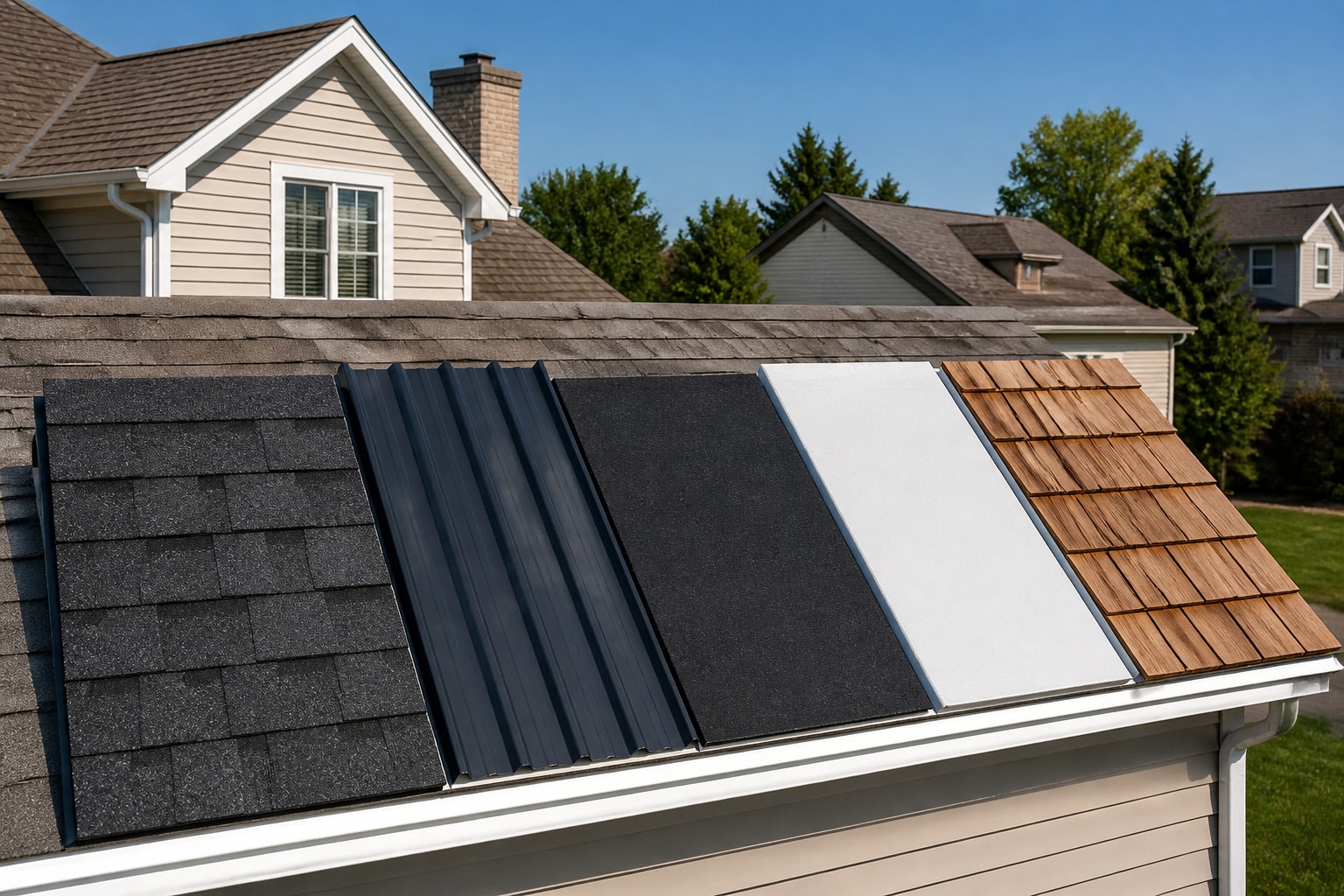
The most common roofing materials in Joliet are asphalt shingles for homes and modified bitumen or single-ply membranes for flat commercial roofs, with metal as a longer-lasting premium option for both. The right choice depends on your roof's slope, your budget, and how well the material handles Illinois freeze-thaw cycles, summer heat, hail and wind.
This guide walks through the main material types, what each costs and how long it lasts, which components make up a complete roof system, and how to decide between them. It also covers the questions Joliet property owners ask most, including whether a new roof can go over an old one.
What Roofing Materials Are Needed to Roof a House?
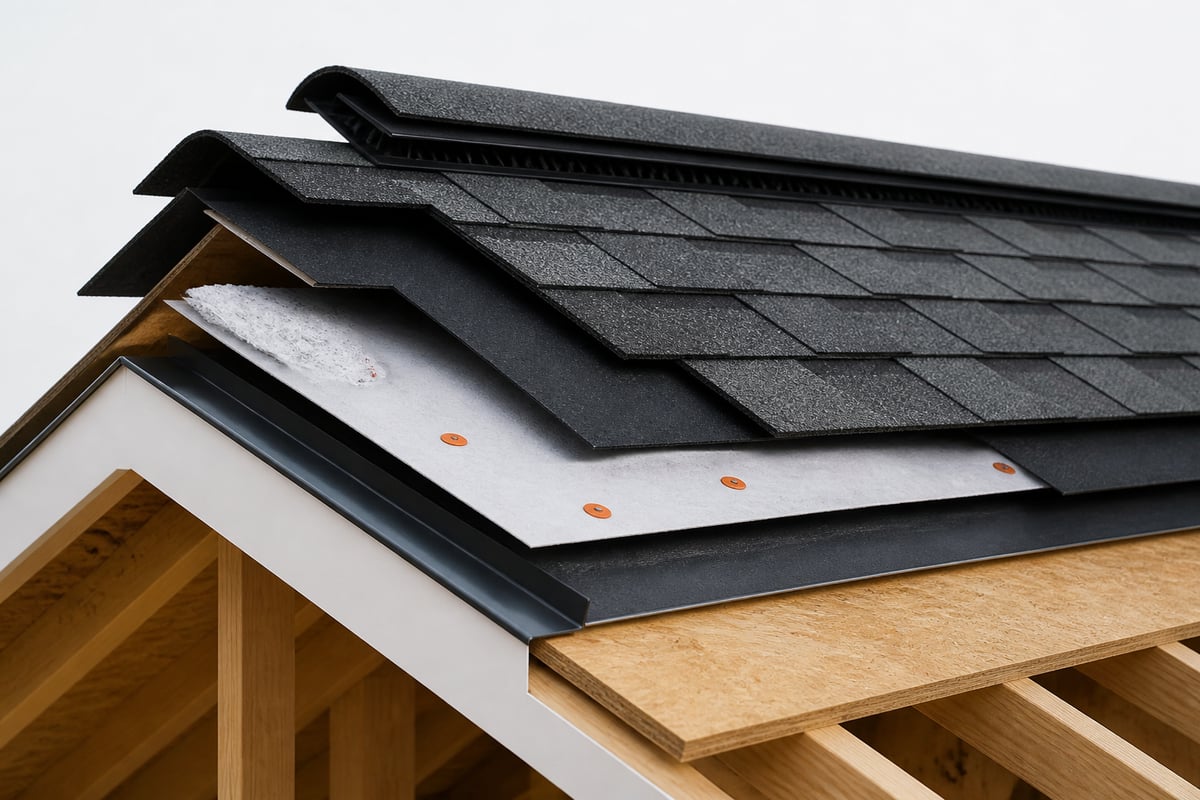
A complete house roof needs more than shingles: it is a layered system of decking, underlayment, waterproofing, the visible roof covering, flashing and ventilation.
Each layer does a specific job:
- Roof decking: plywood or OSB sheathing that forms the structural base.
- Underlayment: a felt or synthetic layer that sheds water that gets past the surface material.
- Ice and water shield: a self-sealing membrane applied at eaves and valleys, which matters in a region where ice dams form every winter.
- Starter strip and drip edge: these keep the first course of shingles sealed and direct water into the gutters.
- Primary covering: shingles, metal panels, tile, or membrane, depending on the roof type.
- Flashing: metal pieces around chimneys, skylights, vents and wall intersections.
- Ridge caps and ventilation: these finish the peak and let the attic breathe.
Ventilation is easy to treat as an afterthought, yet an unbalanced attic shortens shingle life and drives up energy costs. The guide to attic ventilation explains how intake and exhaust airflow work together.
Which Residential Roofing Materials Suit Joliet Homes?
Asphalt shingles suit most Joliet homes because they balance cost, appearance and performance, while metal, tile and wood serve narrower needs.
Asphalt Shingles
Asphalt shingles dominate residential roofing across the Midwest. A 2025 guide from Copeland Insurance estimates them at $1.50 to $5.00 per square foot with a typical lifespan of 15 to 30 years. Those are broad estimates rather than Joliet quotes, but they show why shingles are a common default choice.
Architectural (laminated) shingles cost more than basic three-tab shingles and hold up better against wind and hail. If you are comparing grades, this overview of good asphalt shingles explains what separates a durable product from a bare-minimum one.
Metal Roofing
Metal panels shed snow easily, resist fire and can last decades longer than shingles. The same Copeland guide puts metal at $7 to $18 per square foot with a 40 to 70 year lifespan. EcoWatch gives a similar picture, citing 40 to 75 years for metal against 10 to 30 for asphalt, which shows how much estimates vary by source and product. Details on panel types and finishes are on the metal roofing materials page.
Clay and Concrete Tile
Tile is extremely durable but heavy, and many Joliet-area homes were not framed to carry it without reinforcement. It also costs considerably more to install, so it is uncommon locally.
Wood Shakes
Cedar shakes offer a distinctive look but need regular maintenance, and moisture and fire concerns limit their appeal in this climate.
Synthetic Slate and Composite
Composite products imitate slate or shake at lower weight. They suit homeowners who want a premium appearance without the structural demands of natural stone.
How Do Residential Roofing Materials Compare?
Side by side, asphalt wins on upfront cost, metal wins on lifespan, and tile and wood trade practicality for appearance.
| Material | Typical cost per sq. ft. | Typical lifespan | Main trade-off |
|---|---|---|---|
| Asphalt shingles | $1.50 to $5.00 | 15 to 30 years | Shorter life than other options |
| Metal panels | $7 to $18 | 40 to 70 years | Higher upfront cost |
| Clay or concrete tile | Higher than metal in most markets | Long-lasting | Heavy; may need structural reinforcement |
| Wood shakes | Varies widely | Shorter than metal | Maintenance and fire concerns |
Asphalt and metal figures come from the Copeland Insurance guide cited above. Tile and wood figures are not sourced here, so request a written quote for your specific roof.
Which Roofing Materials Work for Commercial and Flat Roofs?
Commercial and low-slope roofs rely on membrane and built-up systems, with modified bitumen and single-ply membranes the most common choices.
- Modified bitumen: asphalt-based sheets reinforced with polymers and installed in layers, either torch-applied, cold-applied or self-adhered. The multi-layer construction resists punctures and foot traffic, which suits rooftops with HVAC equipment.
- TPO and PVC single-ply: white or light-colored heat-welded membranes that reflect sunlight and lower cooling costs. PVC offers stronger chemical resistance, which matters for restaurants with grease exhaust.
- EPDM rubber: a durable synthetic rubber membrane, common on larger flat roofs.
- Built-up roofing (BUR): alternating layers of felt and bitumen topped with gravel, a long-standing option with a strong track record.
- Metal panels: standing seam systems work on low-slope commercial buildings when drainage is designed correctly.
Property managers weigh roof type against building use, drainage and budget. Flat roofs fail most often at seams, penetrations and drains, so a thorough inspection matters as much as the membrane itself. For existing leaks, see this page on commercial flat roof repair, and for asphalt-based systems, the bitumen shingle roof page covers the family of products.
How Does Joliet's Climate Affect Roofing Material Choice?
Joliet's climate punishes roofs with repeated freeze-thaw cycles, humid summers, heavy snow and periodic hail, so materials must handle both thermal stress and impact.
Four local factors shape the decision:
- Freeze-thaw cycling: water enters small cracks, freezes and expands. Brittle or aging materials fail faster.
- Ice dams: heat escaping through the attic melts snow, which refreezes at the eaves. Proper insulation, ventilation and ice and water shield prevent most damage.
- Hail and wind: spring storms can bruise shingles and lift edges. Impact-rated shingles and correct fastening make a measurable difference. Learn how to recognize hail damage on a shingle roof.
- Summer heat: attic temperatures speed up shingle granule loss, which is why ventilation matters year-round.
If a storm has already damaged your roof, documentation is the first step in an insurance claim. The storm damage insurance claim page outlines how that process works.
What Is the 25% Rule for Roofing?
The 25% rule is a guideline some building codes and insurers use: if more than 25% of a roof needs repair or replacement within a set period, the entire roof may need to be replaced to meet current code.
Not every jurisdiction applies it the same way, and some codes use different thresholds or no threshold at all. Before committing to a partial repair on a damaged roof, confirm the local requirements with your contractor or the municipal building department. Also check your insurance policy, since insurers set their own rules for partial versus full replacement after a covered loss.
Can You Install a New Roof Over an Old One?
Yes, a second layer of shingles can sometimes go over an existing layer, but a full tear-off is usually the better investment.
Layering saves on disposal costs, yet it comes with real drawbacks. It hides decking damage, adds weight, traps heat and can void some manufacturer warranties. Most codes cap the number of layers at two. Metal and some membrane systems have their own rules about what substrate they can go over.
Tear-off lets the crew inspect the decking, replace rotted boards and install fresh underlayment and flashing, which is where long-term performance comes from. Read more about the roof tear-off process before you decide.
What Does a Roof Replacement Cost?
Roof replacement cost depends on material, roof size, pitch, complexity and labor, with labor typically accounting for more than half of the total.
A 2025 shingle guide from EcoWatch estimates a national average of $8,000 to $9,000 for a new shingle roof, with labor accounting for more than half of that total. Local prices vary with roof size, the number of valleys and penetrations, and tear-off requirements. Treat any national figure as a starting point and request a written, itemized estimate.
Cost factors to ask about:
- Tear-off and disposal of old materials
- Decking repairs or replacement
- Underlayment and ice and water shield coverage
- Flashing, vents and ridge ventilation
- Warranty terms on both materials and workmanship
For homeowners planning a shingle project, Residential Roof Replacement from Great Roofing covers full replacement with asphalt shingle systems, including tear-off, installation and clean-up.
What Material Is My Roof Made Of?
You can usually identify your roof material by its texture, shape and the way it reflects light, and a roofer can confirm it during an inspection.
- Asphalt shingles: flat, rectangular pieces with a gritty surface; granules often collect in gutters as they age.
- Metal: smooth ribbed panels or standing seams with a distinct sheen.
- Tile: curved or flat heavy pieces in clay or concrete tones.
- Wood shakes: uneven, weathered planks that turn silver-gray.
- Modified bitumen or single-ply: a flat or low-slope roof with a rolled sheet surface, either smooth or granulated, or a white membrane with welded seams.
Check your records, a previous inspection report or the home's closing documents if you are unsure. Knowing the material helps when you describe a leak or request a repair, such as roof repair for asphalt roofs.
How Do You Choose Between Roofing Materials?
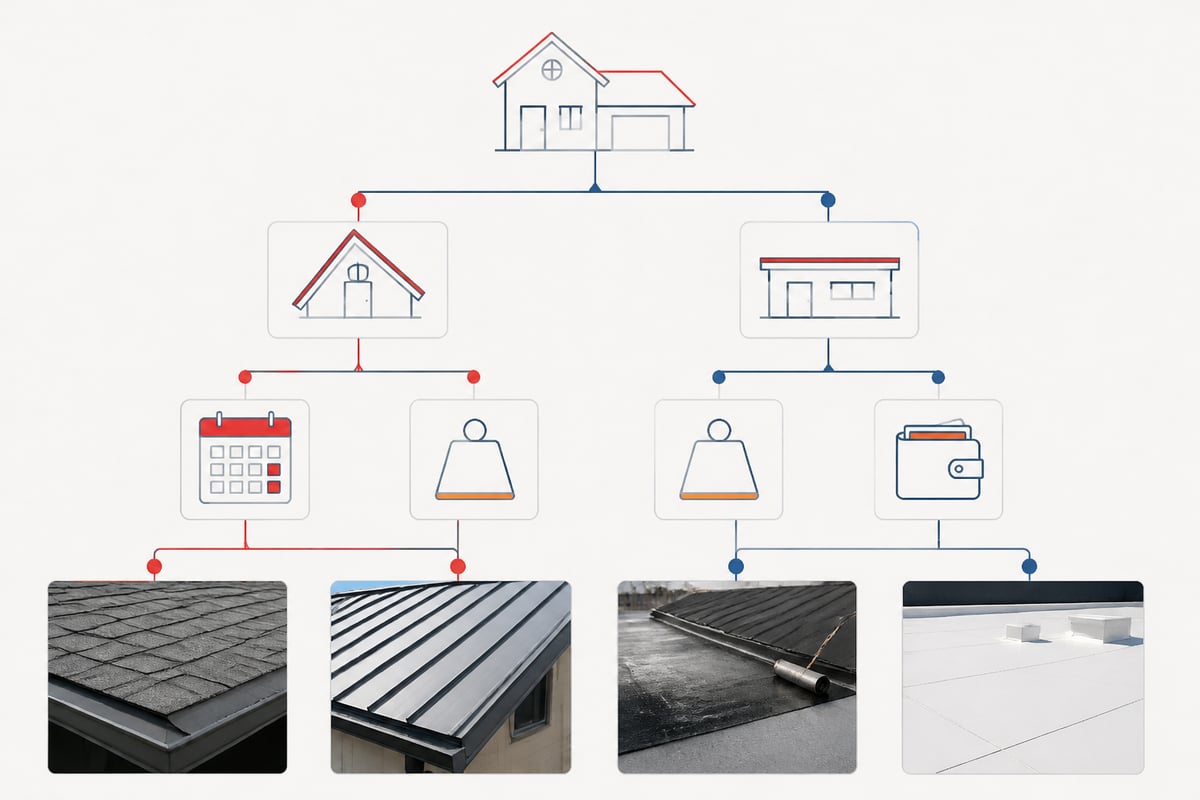
Choose by matching the material to your roof's slope, your planned time in the building, your budget and the local weather risks.
Work through these steps:
- Confirm roof slope. Steep roofs accept shingles, metal and tile; low-slope roofs need membranes or modified bitumen.
- Set a lifespan target. If you plan to stay 25 years or more, metal's higher upfront cost may pay back. For shorter horizons, asphalt is often more economical.
- Check the structure. Heavy materials like tile require framing that can carry them.
- Review warranty terms. Material warranties and workmanship warranties are separate, and both matter.
- Request written quotes. Compare scope, not just price, including tear-off, underlayment and ventilation.
Great Roofing is IKO Roof PRO certified, AirVent certified and offers 50 years of material warranty coverage, and the team stays in contact from sales through production. If hail or wind has damaged your roof, its public adjusters handle storm damage insurance claims. Browse the full list of roofing services to see how repair, replacement, siding and gutters fit together.
What Maintenance Extends the Life of Roofing Materials?
Regular inspection, clean gutters and prompt small repairs extend the life of nearly every roofing material.
Build a simple routine:
- Inspect the roof twice a year, in spring and fall, and after major storms.
- Keep gutters clear so water does not back up under the eaves; see these notes on repairing gutters.
- Trim overhanging branches that scrape the surface or drop debris.
- Look for lifted shingles, cracked flashing and exposed fasteners.
- Address interior stains right away, since the visible spot is often far from the actual entry point.
Small repairs cost far less than the water damage that follows neglect. For minor issues, minor roof repair can prevent a bigger replacement down the road.
FAQ
How long do roofing materials last in Illinois?
Asphalt shingles generally last 15 to 30 years, and metal can last 40 to 70 years or more, according to the Copeland Insurance guide. Illinois weather, ventilation quality and installation workmanship can push results toward either end of those ranges.
When should I replace my roof instead of repairing it?
Replacement makes sense when damage spreads across large areas, leaks recur, shingles curl or lose granules widely, or the roof is near the end of its expected lifespan. A written inspection from a licensed roofer will show whether repairs will hold.
Does my roofing material affect my insurance?
It can. Insurers often consider material type, age and condition when setting premiums, and impact-resistant materials may qualify for discounts with some carriers. Ask your agent how your policy treats roof age and storm damage.
Start by walking your property after the next storm and photographing any missing shingles, damaged flashing or interior stains, since that record helps any repair or insurance conversation. When you are ready to compare options for a roof in Joliet or the south Chicagoland area, Great Roofing, a family-owned, veteran-founded contractor with an A+ BBB rating, can inspect your roof and explain which material fits your property. For shingle projects, see Residential Roof Replacement to learn how a full replacement works. You can schedule a complimentary estimate with Great Roofing and get a clear plan for your roof.