

Big hail moves fast in the Chicago suburbs. It shows up on the radar as a smear of pink and purple over Will County, and an hour later your roof, your cars, and your basement are all telling different versions of the same bad story. If you have owned a home in Joliet, Shorewood, Plainfield, New Lenox, or anywhere in Chicagoland for more than a few summers, you already know the sound — that sudden switch from rain to something that hits the windows like handfuls of gravel.
Here is the part nobody says out loud: the homeowners who come out of a hailstorm in the best shape are not the lucky ones. They are the ones who spent about two hours getting ready, two days early. This guide explains why those 48 hours matter so much, what hail actually does to a home in our area, and how to get a free, printable checklist that walks you through every step before the storm arrives.
Quick answer
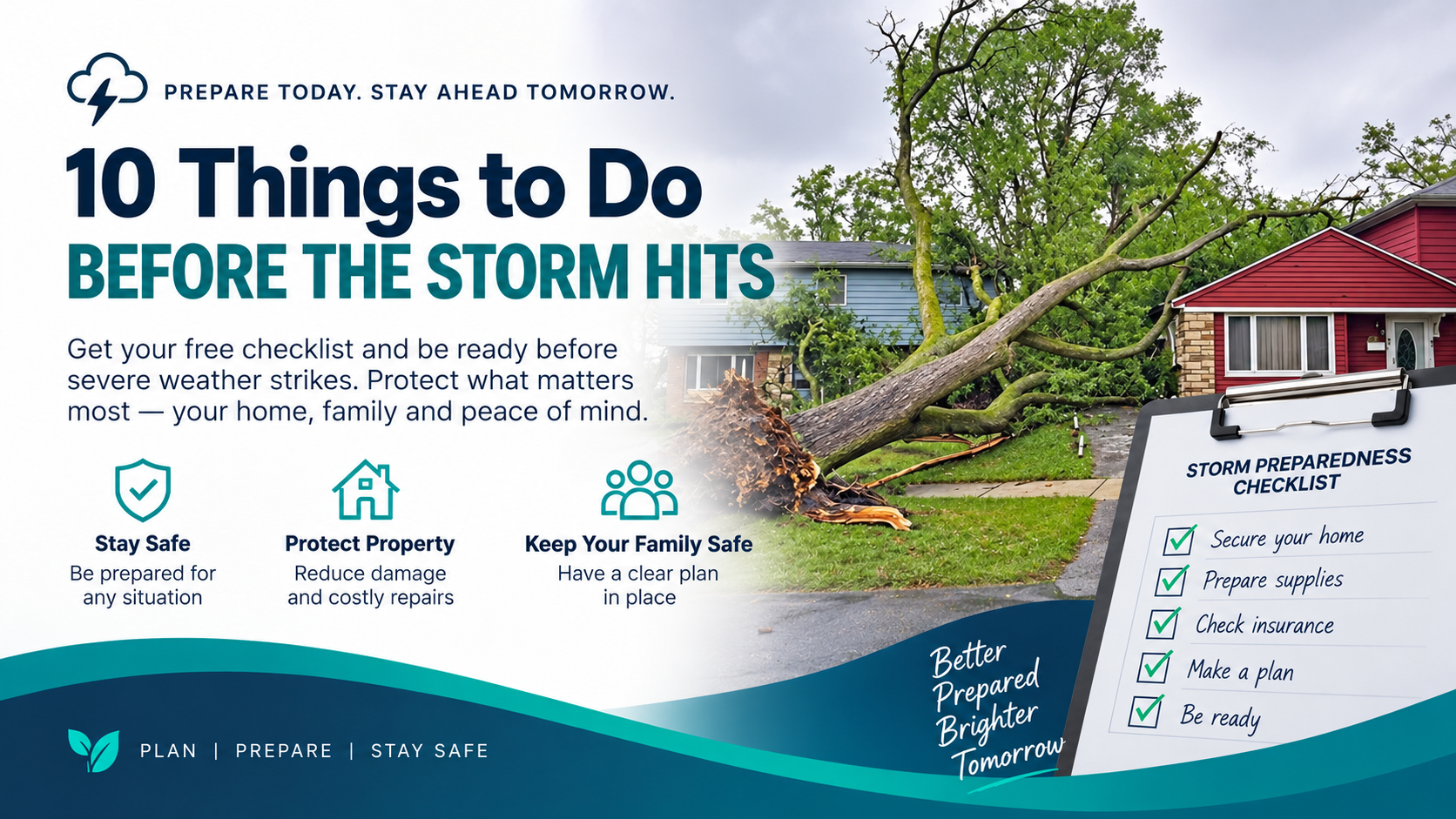
The single most important thing you can do to prepare for a hail storm is act early — in the 48-hour window before it arrives, not after. Simple, mostly free steps taken two days ahead can protect your roof, your vehicles, and your basement, and can save you thousands in repairs and claim headaches. Our free one-page checklist lays out all ten steps, in the exact order to do them.
Why hail preparation matters in Joliet & Chicagoland
Northern Illinois sits in an active severe-weather corridor, and late spring through summer is prime hail season. When a storm rolls through Will County, the damage rarely arrives one bill at a time. The roof takes a beating, any vehicle left in the open gets dented, and heavy rain that follows the hail goes looking for the lowest point it can find — often the basement.
What makes hail so costly is that so much of the damage is preventable and so little of it is obvious. A homeowner who prepares in advance walks away with a sound roof, undamaged cars, and the documentation an insurer needs to pay a claim quickly. A homeowner who does nothing is left arguing weeks later about whether the damage was storm-related or ordinary wear — and paying the difference out of pocket. The gap between those two outcomes is almost never luck. It is preparation.
How much can hail damage cost a Chicagoland home?
Hail is one of the most expensive weather events a suburban homeowner faces. Auto hail claims frequently run into the thousands for a single vehicle, and a full roof replacement in the Chicago suburbs is typically a five-figure project. Add water intrusion from an overwhelmed gutter or a failed sump pump, and a single storm can turn into one of the largest repair bills a household sees in a decade. Against numbers like that, a couple of hours of free preparation is the highest-return work you can do on your home all year.
What hail actually does to your roof
Hail damage is not always the dramatic, obvious kind. Stones can bruise shingles, crack their protective coating, and knock the granules loose that shield the material from the sun — and much of that is invisible from the ground. Left alone, those small impacts shorten a roof’s life by years and open the door to leaks long after the storm has passed. That is why a professional inspection matters: the damage that costs you the most is often the damage you cannot see from your driveway.
Free · one page · nothing to buy
Get the free storm-prep checklist
Ten steps to protect your roof, cars, and basement — on one page you can print and keep on the fridge. We will email it to you.
Takes about 20 seconds — the one-page PDF lands in your inbox.
Why the 48 hours before a storm matter most
Almost everything that protects your home has to happen before the first stone falls. Once hail is coming down, your only job is to get everyone to a safe part of the house — the preparation window has already closed. That is why timing, not effort, is what separates the homeowners who barely notice a storm from the ones who spend months recovering from it.
You rarely get more than a day or two of warning, so the work naturally splits into two passes: the calm planning you do two days out, and the hands-on preparation you do the day before. Neither pass takes long, and most of it costs nothing. The hard part is simply knowing what to do and doing it in the right order — which is exactly what the free checklist is for.
What’s inside the free 48-hour storm-prep guide
The checklist takes everything our crews wish every homeowner knew and puts it on a single printable page, in the order you should work through it. Without giving away the whole list, here is the kind of thing it covers:
- The mostly free, fifteen-minute tasks that protect the most for the least effort.
- The insurance paperwork that quietly decides how much your claim actually pays.
- The prep step most homeowners forget every year — until their basement floods.
- How to be ready for a power outage safely, before the lights go out.
- Exactly what to do the instant hail starts falling, and the common reaction that gets people hurt.
- How to tell a legitimate local roofer from an out-of-town storm-chaser.
It is free, it fits on one page, and there is nothing to buy. Fill out the short form and we will email it straight to you so it is ready before the next storm rolls through Chicagoland.
Send me the storm-prep checklist
Free, one page, and nothing to buy. Enter your name and email and we will send the printable PDF straight to your inbox.
Or call 708-649-1302 for a free inspection.
How to choose a hail-damage roofer in Illinois (and avoid scams)
After a big storm, strangers start knocking on doors across Joliet, Plainfield, and Naperville. Some are legitimate contractors. Many are storm-chasers who followed the weather in from out of state and will be long gone before the shingles they nailed on start to fail.
Two things protect you. First, in Illinois a licensed roofer has a license number that starts with 104 — ask for it, then look it up on the Illinois Department of Financial and Professional Regulation website. A real contractor hands it over without hesitating. Second, if anyone offers to “pay” or “waive” your insurance deductible, that practice is illegal in Illinois and is a clear signal to close the door. Choosing a trusted local roofer while the sun is out is far smarter than deciding while a pickup truck idles at your curb.
Why Joliet homeowners trust Great Roofing
Great Roofing is a licensed Illinois roofing contractor serving Joliet and the surrounding Chicagoland communities, including Shorewood, Crest Hill, Plainfield, New Lenox, Lockport, Romeoville, and Naperville. Our crews handle hail and wind-damage inspections, insurance-claim documentation, and full roof replacements, and we carry an A+ rating with the Better Business Bureau alongside a 4.9 satisfaction rating from local homeowners.
Frequently asked questions about hail preparation
How much time do I have to prepare before a hail storm?
Usually 24 to 48 hours from the first serious forecast. Use the earlier hours for planning and paperwork, and the final day for hands-on preparation. Our free checklist breaks that window into a simple, do-this-then-that order so you are not deciding on the fly.
Does homeowners insurance cover hail damage to my roof?
Most standard homeowners policies in Illinois cover sudden hail and wind damage, but your payout depends on your deductible and whether your roof is insured at replacement cost or actual cash value. Review those terms before a storm and confirm the specifics with your agent, since coverage varies by policy.
How do I know if my roof has hail damage?
From the ground, look for dented gutters or flashing, bruised or dislodged shingles, and granules collecting at the base of downspouts; indoors, check the attic for new water stains. Because much hail damage is not visible from below, a professional inspection is the reliable way to confirm it.
Should I climb on my roof to check for damage myself?
No. Wet or hail-struck roofs are slippery and unstable, and walking on shingles can cause more damage. Inspect from the ground and leave the roof itself to a licensed professional.
How do I avoid storm-chasing roofing scams in Illinois?
Verify the contractor’s Illinois license number — legitimate ones begin with 104 — and never work with anyone who offers to pay or waive your insurance deductible, which is illegal in Illinois. Choose a local, established roofer before the storm rather than a door-knocker after it.
Is a roof inspection after a storm free?
Great Roofing offers free hail and storm-damage roof inspections for homeowners in Joliet and the surrounding Chicagoland area, including full documentation to support an insurance claim.
What should I do immediately after a hail storm passes?
Once it is safe, photograph any new damage to your roof, siding, windows, and vehicles, note the date and time, and set aside any debris that fell. Then schedule a professional inspection before filing a claim, so your documentation is complete and accurate.