

Commercial buildings face unique roofing challenges that demand prompt attention and professional expertise. Unlike residential properties, commercial structures typically feature flat or low-slope roofing systems that experience different wear patterns and require specialized repair approaches. Business owners in Joliet and surrounding areas must understand when repairs are necessary, what options exist, and how to maximize their investment through proper maintenance. This comprehensive guide explores the essential aspects of maintaining commercial roof integrity, from identifying early warning signs to implementing long-term protection strategies.
Understanding Commercial Roofing Systems and Their Vulnerabilities
Commercial buildings typically utilize roofing systems fundamentally different from residential structures. Modified bitumen, EPDM, TPO, and built-up roofing (BUR) systems dominate the commercial landscape, each with distinct characteristics and repair requirements.
Modified bitumen systems consist of asphalt-based materials reinforced with fiberglass or polyester, offering excellent durability and weather resistance. These systems commonly develop issues at seams, flashings, and penetrations where water infiltration begins. The NRCA’s authoritative technical resources and roofing guidelines provide detailed specifications for proper repair procedures across various commercial roofing types.
Common Damage Patterns in Commercial Roofs
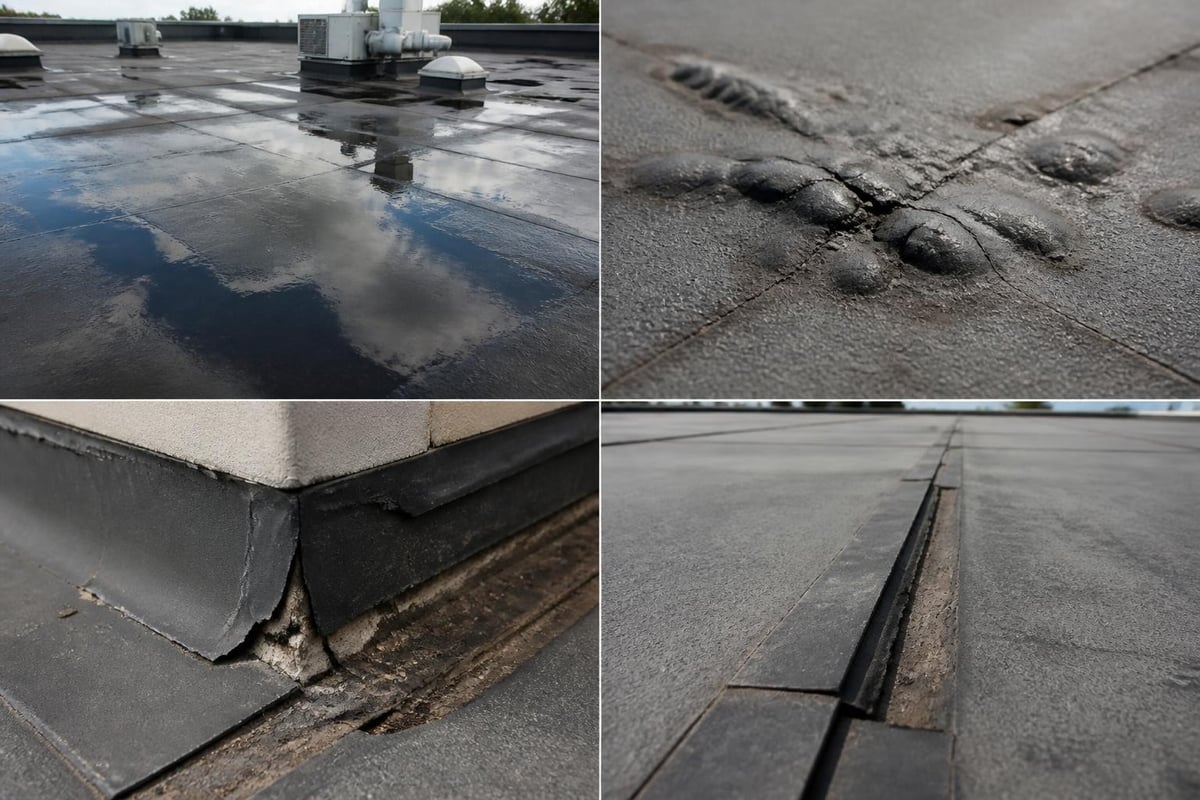
Commercial roofing repair needs typically emerge from several predictable sources:
- Ponding water on flat surfaces leading to membrane deterioration
- Thermal cycling causing expansion and contraction stress
- Penetration failures around HVAC units, vents, and skylights
- Traffic damage from maintenance personnel and equipment
- Storm impacts including hail, wind-driven debris, and ice accumulation
- UV degradation breaking down protective coatings and membranes
The flat or low-slope configuration of most commercial roofs makes proper drainage absolutely critical. When water remains on the surface for more than 48 hours after rainfall, it qualifies as ponding and requires immediate attention. This standing water accelerates membrane aging, promotes vegetation growth, and creates entry points for leaks.
Inspection Protocols and Damage Assessment
Regular inspection forms the foundation of effective commercial roofing repair strategy. Professional assessments should occur at minimum twice annually, ideally in spring and fall, with additional checks following severe weather events.
Professional Inspection Components
A comprehensive commercial roof inspection includes several critical elements that trained professionals systematically evaluate:
| Inspection Area | Key Checkpoints | Frequency |
|---|---|---|
| Membrane Surface | Cracks, blisters, punctures, wear patterns | Semi-annual |
| Seams and Laps | Separation, lifting, deterioration | Semi-annual |
| Flashings | Loose edges, gaps, corrosion, sealant failure | Semi-annual |
| Drainage | Clogged drains, scuppers, gutters, ponding areas | Quarterly |
| Penetrations | HVAC curbs, vents, pipes, skylights | Semi-annual |
| Fasteners | Loose plates, exposed fasteners, rust | Annual |
The Whole Building Design Guide roofing systems resources offer comprehensive guidance on establishing inspection protocols that align with building envelope best practices and manufacturer warranty requirements.
During inspections, professionals document findings with photographs, measurements, and detailed notes. This documentation proves invaluable for tracking deterioration patterns, planning budgets, and substantiating insurance claims when storm damage occurs.
Technology-Enhanced Inspection Methods
Modern commercial roofing repair begins with advanced diagnostic tools. Infrared thermography detects moisture trapped beneath membranes by identifying temperature differentials. Nuclear moisture meters provide precise readings of moisture content without damaging the roofing system. Drone photography captures high-resolution images of large roof areas, making comprehensive documentation more efficient and safer.
These technologies enable contractors to identify problems invisible to the naked eye, allowing targeted repairs rather than unnecessary wholesale replacement. Early detection through regular professional assessment typically reduces overall repair costs by 40-60% compared to addressing failures after leaks develop.
Repair Methodologies for Common Commercial Roofing Problems
Different damage types require specific commercial roofing repair approaches. Understanding these methodologies helps building owners make informed decisions and evaluate contractor proposals effectively.
Membrane Repairs and Patching
Small punctures, tears, and localized damage often respond well to patching when caught early. The repair process depends on the roofing material:
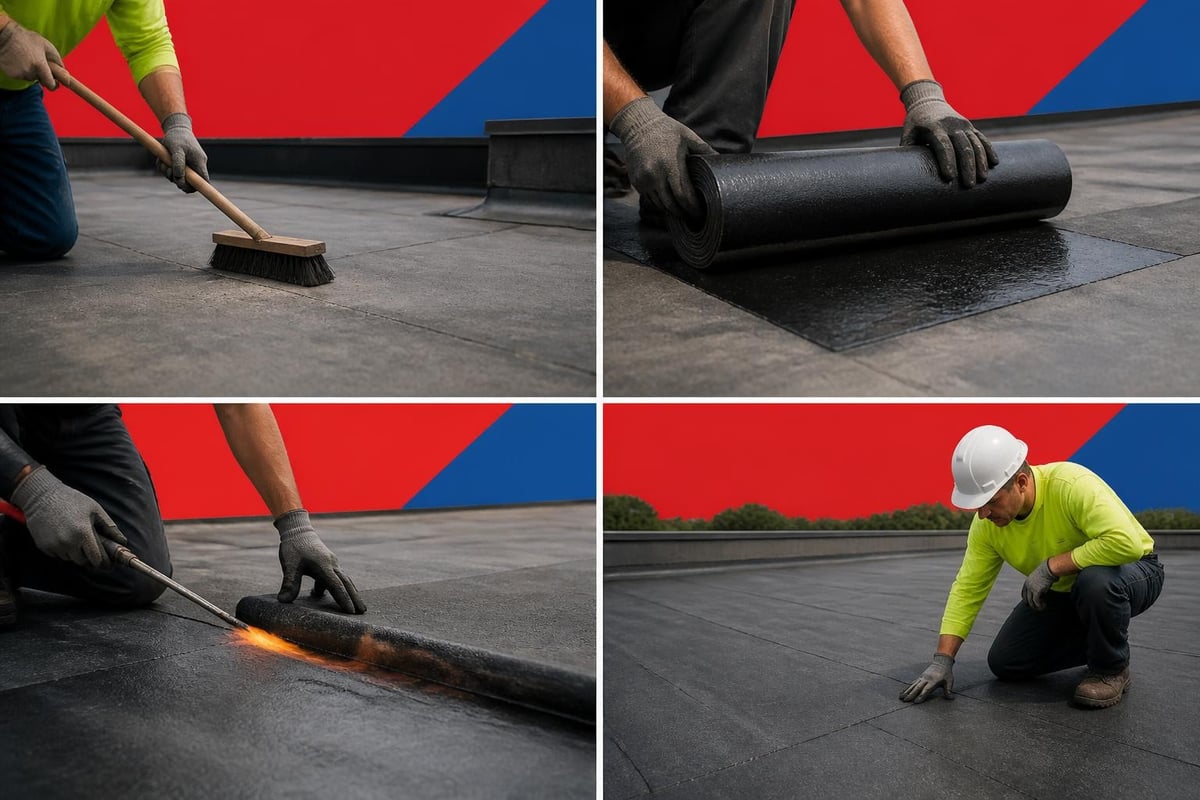
For modified bitumen systems, heat welding provides the most durable repair. Technicians cut the damaged section to sound material, prepare the surface, and torch-apply a patch that extends at least six inches beyond the damaged area in all directions. Two-ply patches on critical areas offer additional security.
EPDM and TPO membranes require solvent or heat welding based on the specific material. Proper surface preparation including cleaning and priming ensures adhesion. Patches must be sized appropriately and installed following manufacturer specifications to maintain warranty coverage.
Seam and Flashing Restoration
Seam failures represent one of the most common commercial roofing repair needs. As systems age, adhesives degrade and mechanical fasteners loosen. Seam restoration involves:
- Removing failed sealants and cleaning all surfaces thoroughly
- Applying appropriate primers based on membrane type
- Installing new sealant or performing heat welding
- Adding reinforcement strips on high-stress areas
- Inspecting adjacent seams for early failure signs
Flashing repairs demand particular attention to detail. The transition between vertical and horizontal surfaces creates inherent stress points. Professional roofing contractors understand that flashing work requires specialized materials and techniques to ensure waterproof integrity.
Addressing Drainage and Ponding Issues
Proper water management determines commercial roof longevity more than any other single factor. Buildings with excellent drainage routinely achieve 30-40% longer service life than those with chronic ponding problems.
Drainage System Solutions
When commercial roofing repair involves drainage improvements, several options exist:
- Tapered insulation systems create positive slope toward drains
- Additional drain installation reduces water travel distance
- Sump pans and crickets channel water away from problem areas
- Scupper enlargement or addition provides emergency overflow capacity
- Internal drain cleaning and upgrading improves flow capacity
The Insurance Institute for Business & Home Safety’s commercial loss-control resources emphasize that functional drainage systems significantly reduce insurance claims and business interruption from water damage.
Re-sloping existing roofs presents challenges but often proves more cost-effective than premature replacement. Contractors evaluate structural capacity before adding tapered systems, as the additional weight requires engineering assessment on some buildings.
Cost Considerations and Budgeting Strategies
Commercial roofing repair expenses vary dramatically based on damage extent, access difficulty, roofing system type, and local market conditions. Understanding cost drivers helps building owners budget appropriately and evaluate proposals.
Typical Repair Cost Ranges
| Repair Type | Cost per Square Foot | Factors Affecting Price |
|---|---|---|
| Minor patching | $4-8 | Access, material type, warranty requirements |
| Seam restoration | $3-6 | Linear footage, seam condition, reinforcement needs |
| Flashing replacement | $8-15 | Complexity, height, wall condition, material |
| Drainage improvements | $12-25 | Structural work, penetrations, insulation additions |
| Coating application | $1.50-4 | Surface preparation, coating type, layers |
These figures represent 2026 averages for the Joliet area and Midwest region. Actual costs depend on project specifics, contractor expertise, and material selections. For detailed pricing specific to your situation, consulting with experienced roofing repair experts provides accurate estimates.
Long-Term Financial Planning
Smart building owners incorporate commercial roofing repair into comprehensive facility maintenance budgets. Industry best practices recommend allocating 1-3% of roof replacement cost annually for maintenance and repairs. This proactive approach prevents major failures and extends overall system life.
Many contractors offer maintenance agreements bundling regular inspections with priority repair scheduling and discounted service rates. These programs typically cost $0.15-0.40 per square foot annually and often prove cost-effective for buildings over 10,000 square feet.
Preventive Maintenance Programs
The most effective commercial roofing repair strategy prevents problems before they develop into failures. Comprehensive maintenance programs address issues during early stages when corrections remain simple and inexpensive.
Essential Maintenance Activities
A robust preventive program includes scheduled tasks performed at appropriate intervals:
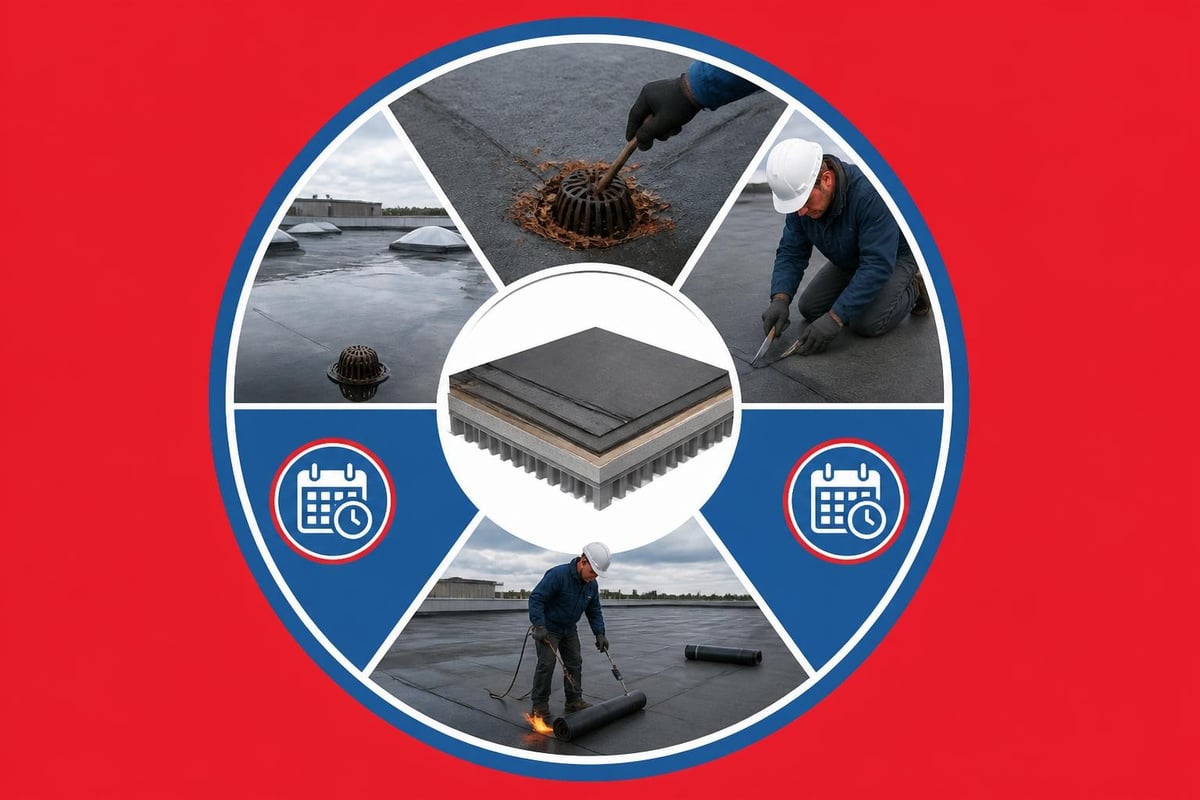
Quarterly tasks focus on keeping drainage systems functional. Technicians clear debris from drains, gutters, and scuppers while checking that water flows freely. Vegetation removal prevents root penetration and moisture retention. Surface debris elimination reduces membrane wear from foot traffic.
Semi-annual inspections examine the entire roofing system systematically. Professionals assess membrane condition, test seams, evaluate flashings, and document changes since the previous visit. This consistent monitoring reveals deterioration patterns before leaks develop.
Annual maintenance addresses minor issues identified during inspections. Sealant renewal, fastener tightening, and small repairs prevent escalation. The ENERGY STAR operations and maintenance best practices demonstrate how roof maintenance contributes to overall building performance and energy efficiency.
Documentation and Record-Keeping
Maintaining detailed roof maintenance records proves invaluable for warranty compliance, insurance claims, and budgeting. Documentation should include:
- Complete inspection reports with photographs
- Repair work orders and completion certificates
- Material specifications and warranty information
- Weather event logs and post-storm assessments
- Budget tracking and cost history
This historical data helps identify chronic problem areas, justify capital expenditures, and defend against liability claims. Many building owners find that thorough documentation reduces insurance premiums through demonstrated risk management.
Emergency Repairs and Temporary Solutions
Despite best preventive efforts, unexpected commercial roofing repair needs arise from severe weather, equipment failures, or sudden membrane deterioration. Understanding emergency response protocols minimizes business disruption and property damage.
Immediate Response Procedures
When roof leaks occur, quick action limits interior damage and contents loss. Building operators should implement these immediate steps:
- Document the damage with photographs before any repairs
- Contain water intrusion using temporary barriers and collection systems
- Protect contents by moving equipment and materials from affected areas
- Contact emergency repair services for temporary weatherproofing
- Notify insurance carriers within policy-specified timeframes
Temporary repairs using tarps, plastic sheeting, or quick-setting sealants provide short-term protection while permanent solutions are planned. However, these measures should never substitute for proper commercial roofing repair performed by qualified professionals.
Working with Insurance Claims
Commercial roof damage often involves insurance claims requiring careful navigation. Understanding storm damage insurance claim processes helps building owners secure appropriate settlements.
Insurers typically require thorough documentation including pre-loss condition evidence, damage extent verification, and repair estimates from licensed contractors. Successful claims depend on demonstrating that damage resulted from covered perils rather than deferred maintenance or normal wear.
Coating and Restoration Systems
For aging commercial roofs showing widespread but superficial deterioration, restoration systems offer alternatives to complete replacement. These approaches extend service life while addressing multiple issues simultaneously.
Roof Coating Applications
Reflective roof coatings provide both repair and enhancement benefits. Silicone, acrylic, and polyurethane formulations seal minor cracks, improve weather resistance, and enhance energy performance. The EPA’s guidance on cool roofs explains how reflective coatings reduce cooling costs and urban heat island effects.
Application requirements include thorough surface preparation, primer application on certain substrates, and multiple coating layers totaling 20-40 mils dry film thickness. Proper installation following manufacturer specifications ensures warranty coverage and optimal performance.
The Cool Roof Rating Council’s product performance ratings help building owners select coatings appropriate for their climate and existing roof type. Products with high solar reflectance and thermal emittance values deliver maximum energy savings.
Spray Polyurethane Foam Systems
SPF roofing creates seamless, insulated, and waterproof membranes that restore and improve existing commercial roofs. The foam conforms to irregular surfaces, eliminates seams, and adds significant insulation value. Commercial roofing repair using SPF addresses multiple concerns including:
- Ponding water elimination through sloped foam application
- Superior insulation improvements reducing energy costs
- Seamless waterproofing without vulnerable laps or fasteners
- Lightweight installation minimizing structural load
The ASTM standard for spray polyurethane foam repair and recoat provides authoritative guidance on proper procedures and quality standards. Qualified applicators must follow these specifications to ensure system performance and longevity.
Selecting Qualified Commercial Roofing Contractors
The success of any commercial roofing repair project depends heavily on contractor selection. Building owners should evaluate potential contractors using multiple criteria beyond simple price comparison.
Essential Contractor Qualifications
Licensing and insurance represent non-negotiable requirements. Contractors must carry current general liability coverage of at least $2 million and workers' compensation insurance for all employees. Verify coverage directly with insurance carriers rather than accepting certificates at face value.
Manufacturer certifications indicate that contractors have received factory training on specific roofing systems. These credentials often provide access to enhanced warranties and technical support. For modified bitumen systems common in the Joliet area, certification from major manufacturers ensures proper installation techniques.
Experience with similar projects matters significantly. Commercial roofing repair differs substantially from residential work in scope, complexity, and technical requirements. Review contractor portfolios focusing on projects similar in size and system type to your building.
Evaluating Proposals and References
Comprehensive proposals should detail scope of work, materials specifications, project timeline, payment schedule, and warranty coverage. Vague or incomplete proposals indicate potential problems during project execution.
Reference checks reveal contractor performance on actual projects. Contact at least three recent clients with similar work and ask specific questions:
- Did the project finish on schedule and within budget?
- Were there unexpected issues, and how did the contractor handle them?
- Has the repaired roof performed as expected?
- Would you hire this contractor again?
Working with established local contractors like those offering quality roofing construction services provides advantages including familiarity with regional weather patterns, local building codes, and readily available follow-up service.
Material Selection and System Compatibility
Successful commercial roofing repair requires matching new materials to existing systems. Incompatible products create failures regardless of installation quality.
Compatibility Considerations
Different roofing materials exhibit varying chemical compositions and physical properties. Solvents in some sealants dissolve certain membrane types. Thermal expansion rates differ between materials, creating stress at interfaces. Adhesion characteristics vary based on substrate preparation and environmental conditions.
Manufacturers publish compatibility charts specifying which repair products work with particular roofing systems. Following these guidelines prevents premature failures and maintains warranty coverage. When uncertainty exists, testing small areas before full application identifies potential problems.
Quality Material Standards
Specify materials meeting or exceeding industry standards for durability and performance. Look for products with:
- ASTM compliance demonstrating performance characteristics
- FM Approvals for fire resistance and wind uplift ratings
- Energy Star qualification for reflective coatings and membranes
- Long-term warranties backed by financially stable manufacturers
Higher-quality materials typically cost 15-30% more initially but deliver substantially longer service life and better performance. Total lifecycle costs favor premium products in most commercial applications.
Timing and Scheduling Considerations
Commercial roofing repair scheduling affects both work quality and business operations. Strategic timing minimizes disruption while ensuring optimal installation conditions.
Weather and Temperature Requirements
Most roofing materials require specific temperature ranges for proper installation. Modified bitumen work needs temperatures above 40°F, with ideal conditions between 50-80°F. Coating applications demand dry conditions and moderate temperatures, typically 50-90°F depending on product formulation.
Moisture content affects adhesion dramatically. Substrates must be completely dry before repair work begins. Plan projects during extended dry periods when forecast models show stable weather patterns lasting at least 48-72 hours.
Operational Impact Management
Minimize business disruption by scheduling work during slow operational periods. Retail properties might prefer winter repairs, while schools schedule work during summer breaks. Manufacturing facilities often coordinate repairs with planned maintenance shutdowns.
Phased approaches allow portions of buildings to remain fully operational while work proceeds in sections. This strategy proves especially valuable for larger commercial properties where complete closure creates significant financial impact.
Communication with building occupants prevents surprises and safety incidents. Notify tenants about noise, odors, restricted access areas, and expected duration well in advance of project commencement.
Warranty Protection and Compliance
Commercial roofing repair work should include appropriate warranty coverage protecting building owners from defects and premature failures. Understanding warranty types and requirements helps secure maximum protection.
Warranty Categories
Material warranties from manufacturers cover defects in roofing products themselves. These typically range from 10-30 years depending on product quality and system type. Coverage often includes prorated replacement costs based on remaining warranty term.
Workmanship warranties from contractors guarantee proper installation for specified periods, usually 1-10 years. These warranties address failures resulting from installation errors rather than material defects. Comprehensive workmanship warranties demonstrate contractor confidence and commitment to quality.
System warranties combine material and labor coverage into single comprehensive protection. Manufacturers offer these enhanced warranties when certified contractors install complete roof systems using specified components. System warranties provide 10-30 year coverage for both materials and labor, creating single-source accountability.
Maintaining Warranty Coverage
Warranties contain specific requirements that building owners must fulfill to maintain coverage. Common conditions include:
- Regular professional inspections at manufacturer-specified intervals
- Prompt repairs of any damage or deterioration
- Exclusive use of approved contractors for all work
- Prohibition of unauthorized roof penetrations or modifications
- Documentation of all maintenance activities
Failure to meet these requirements typically voids warranty protection. Implementing systematic maintenance programs ensures compliance while protecting the building investment. Understanding roofing repair costs helps budget for ongoing maintenance that preserves warranty validity.
Protecting your commercial property requires proactive attention to roofing system maintenance and timely repairs when issues emerge. By implementing regular inspections, addressing problems early, and working with qualified professionals, building owners maximize roof longevity while minimizing unexpected failures and costly emergency repairs. Great Roofing brings family-owned dedication and specialized expertise in commercial modified bitumen systems to Joliet-area businesses, delivering the quality workmanship and responsive service your property deserves. Contact our team today to schedule a comprehensive roof assessment and discuss how we can protect your commercial investment for years to come.