

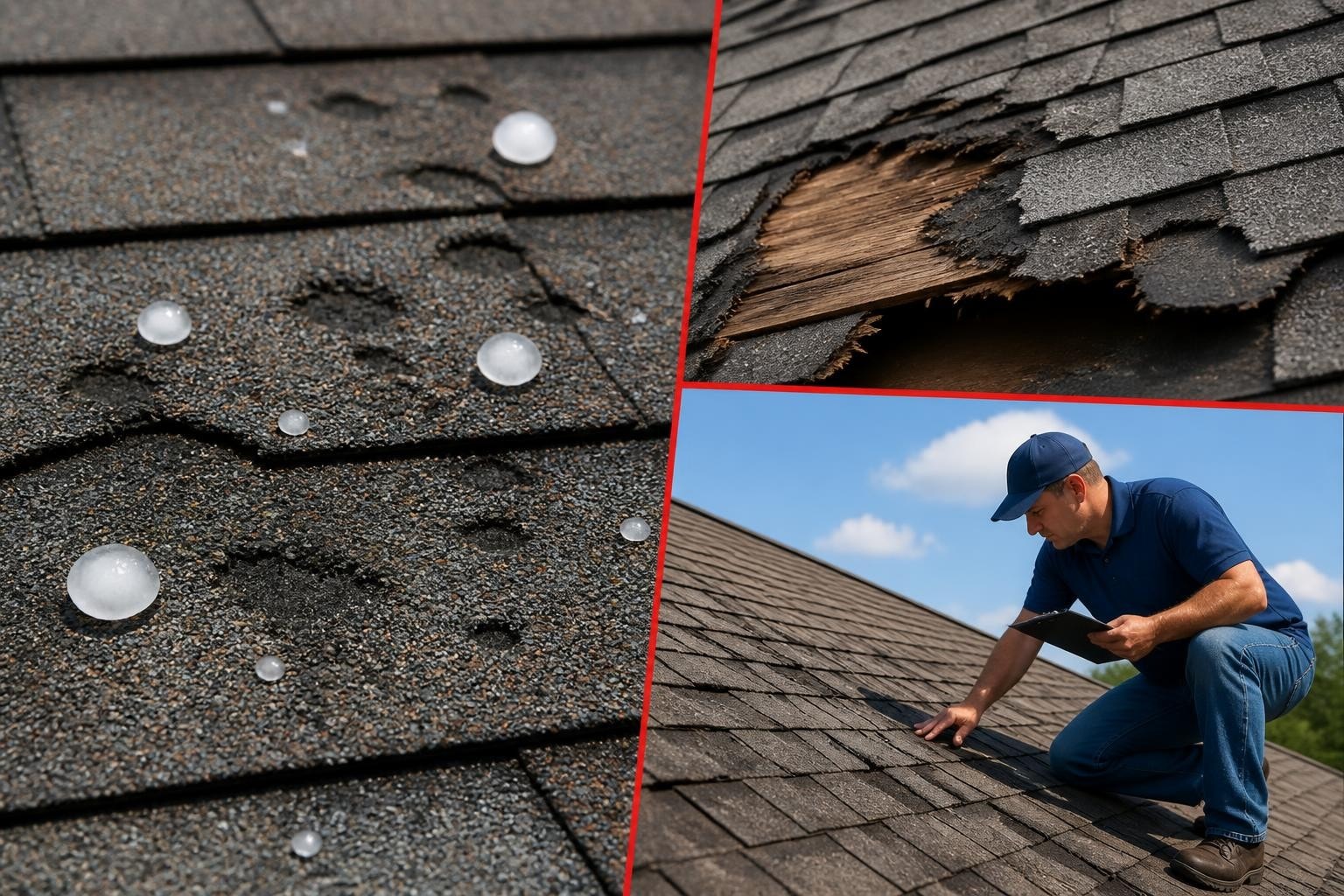
Hailstorms can strike with little warning, leaving behind thousands of dollars in property damage. For homeowners and commercial property owners in areas prone to severe weather, understanding how hail impacts roofing systems is essential for protecting your investment. While some hail damage is immediately visible, much of it remains hidden until professional inspection reveals the extent of structural compromise. Recognizing the signs early and taking swift action can mean the difference between a simple repair and a complete roof replacement. This comprehensive guide explores everything property owners need to know about identifying, assessing, and addressing roof damage from hail storm events.
Understanding How Hail Damages Roofing Systems
Hailstones create unique damage patterns that vary significantly based on several factors. The size, density, and velocity of hailstones directly correlate with the severity of impact on roofing materials.
Size and Impact Severity
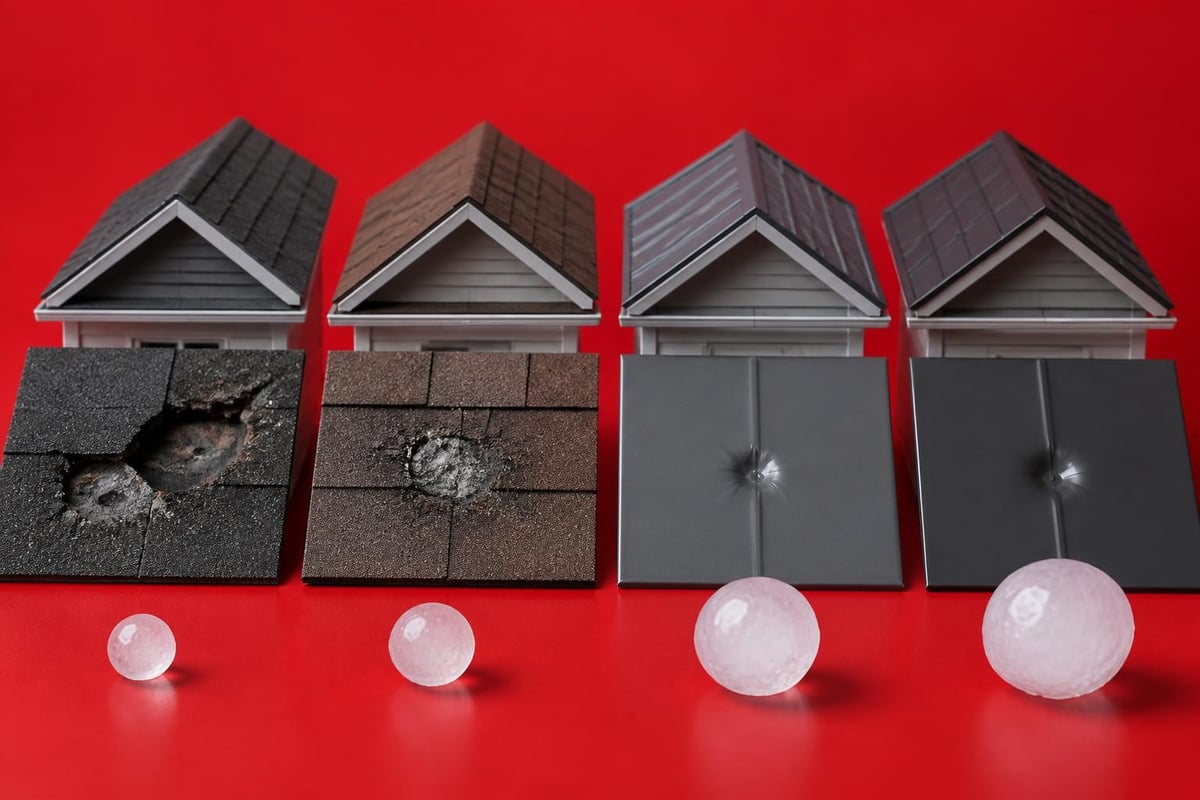
Hailstones range from pea-sized pellets to softball-sized projectiles. According to the National Roofing Contractors Association’s analysis of hail damage, stones larger than one inch in diameter typically cause measurable damage to standard roofing materials. The relationship between hail size and damage potential includes:
- Pea-sized (0.25 inches): Minimal impact on most roofing systems
- Quarter-sized (1 inch): Can dent metal roofing and damage aged shingles
- Golf ball-sized (1.75 inches): Creates bruising on asphalt shingles and may crack tiles
- Baseball-sized (2.75 inches): Causes severe punctures, cracks, and structural damage
Storm velocity amplifies the destructive force. Hailstones falling at terminal velocity combined with strong wind gusts can penetrate protective layers and compromise waterproofing membranes.
Material-Specific Vulnerabilities
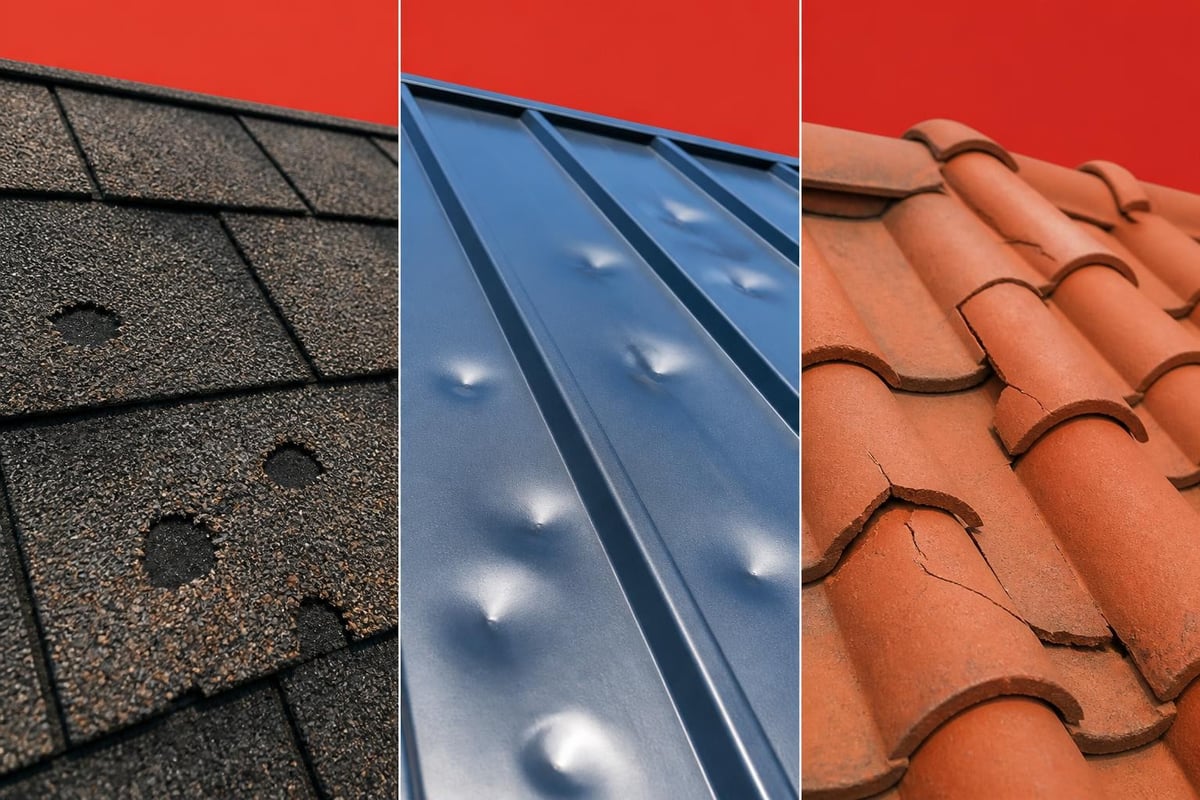
Different roofing materials respond uniquely to hail impact. Asphalt shingles, the most common residential roofing material, sustain damage through granule loss and mat bruising. When hailstones strike asphalt shingles, they dislodge the protective granules that shield against UV radiation and weathering.
Metal roofing typically shows cosmetic denting rather than functional damage. Clay and concrete tiles crack or shatter upon direct impact. Wood shakes split along grain lines, while modified bitumen systems on commercial buildings may develop punctures or tears in the membrane layers.
Identifying Visible Signs of Hail Damage
Early detection of roof damage from hail storm events prevents secondary water damage and escalating repair costs. Property owners should conduct systematic inspections following any severe weather event.
Exterior Warning Signs
From ground level, several indicators suggest potential hail damage requiring professional assessment:
- Dented gutters and downspouts showing circular impact marks
- Damaged siding or trim with visible pockmarks
- Cracked or missing shingles along roof edges and ridges
- Granule accumulation in gutters and downspouts
- Damaged roof vents or chimney caps
Shingle bruising appears as dark spots or circular depressions where hail has compressed the underlying mat. Bob Vila’s comprehensive guide on hail damage emphasizes that recent damage shows clean, shiny spots where granules have been knocked away, while older damage appears weathered.
Interior Damage Indicators
Checking inside your property reveals damage that may not be visible from ground level. Water stains on ceilings indicate compromised waterproofing, while damp insulation in attic spaces signals active leaks. Peeling paint near rooflines and musty odors in upper floors suggest moisture penetration following hail events.
| Damage Location | What to Look For | Urgency Level |
|---|---|---|
| Ceiling | Brown stains, sagging drywall | Immediate |
| Attic | Wet insulation, light penetration | High |
| Upper walls | Paint bubbling, wallpaper peeling | Medium |
| Ventilation | Condensation, poor airflow | Medium |
Professional roof inspection services use specialized tools to detect hidden damage that escapes visual inspection.
Professional Roof Assessment Procedures
While homeowners can identify obvious damage, comprehensive assessment requires professional expertise. Qualified roofing contractors follow systematic evaluation protocols to document all damage.
Inspection Methodology
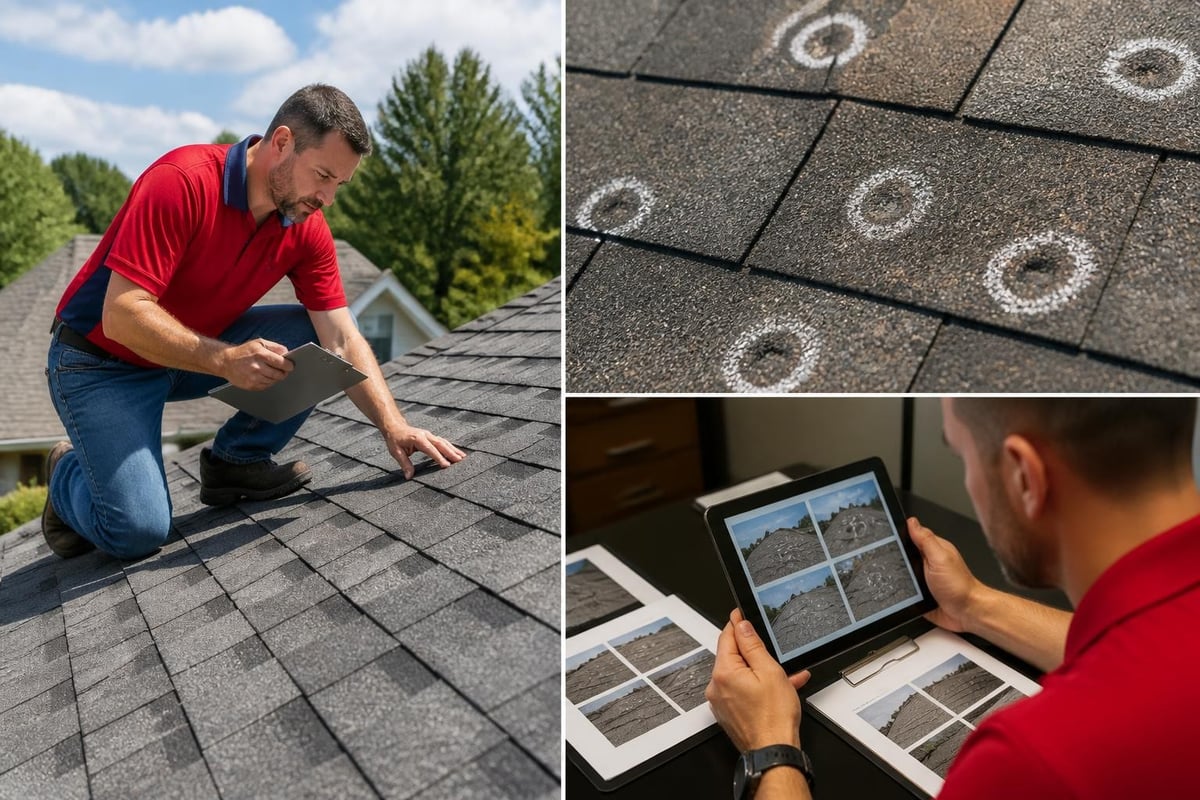
Professional inspectors examine every roof section, documenting damage patterns photographically. They measure hailstone impact density by counting strikes per square foot in test areas. According to InterNACHI’s forensic analysis guidelines, inspectors look for:
- Consistent damage patterns across multiple roof planes
- Random distribution of impact marks
- Correlation between roof damage and damage to other exterior surfaces
- Fresh versus pre-existing damage differentiation
Thermal imaging technology reveals moisture intrusion invisible to standard inspection. Inspectors also assess structural components including decking, flashing, and underlayment integrity.
Documentation Requirements
Thorough documentation supports insurance claims and repair planning. Professional assessments include detailed written reports describing damage location, severity classification, and photographic evidence. Inspectors note manufacturer specifications, installation dates, and previous repair history.
Critical documentation elements:
- Date and location coordinates
- Weather event correlation
- Damage severity mapping
- Material condition assessment
- Repair versus replacement recommendations
This comprehensive documentation becomes essential when filing storm damage insurance claims with carriers who require substantiated evidence.
Navigating Insurance Claims for Hail Damage
Understanding insurance policies and claims procedures ensures property owners receive appropriate coverage for roof damage from hail storm events. Most homeowners policies cover hail damage, but specific terms vary significantly between carriers.
Policy Coverage Details
Standard homeowners insurance typically includes hail damage under the dwelling coverage section. However, policies differ in depreciation calculations and deductible structures. Replacement cost value (RCV) policies pay full replacement costs without depreciation deductions, while actual cash value (ACV) policies factor in age-related depreciation.
When considering whether to file, Kiplinger’s financial analysis suggests evaluating repair costs against deductibles and potential premium increases. Filing claims for minor damage below your deductible provides no benefit and may flag your account.
Claims Process Steps
- Document the damage immediately with photographs and videos
- Contact your insurance carrier within the policy-specified timeframe
- Schedule an adjuster inspection to assess damage scope
- Obtain independent contractor estimates for comparison
- Review the adjuster's report for accuracy and completeness
- Negotiate discrepancies with documented evidence
- Approve final settlement before authorizing repairs
Insurance adjusters may underestimate damage extent or attribute existing wear to the hail event. Having professional roofing contractors present during adjuster inspections ensures accurate damage assessment and appropriate compensation.
Repair Options and Replacement Considerations
Once damage assessment is complete, property owners face decisions about repair scope and timing. The appropriate response depends on damage severity, roof age, and overall system condition.
Partial Repair Scenarios
Limited hail damage affecting isolated sections may qualify for spot repairs. This approach works when:
- Damage covers less than 25% of total roof area
- The existing roof is relatively new (under 10 years)
- Matching materials remain available from original manufacturers
- Surrounding shingles maintain structural integrity
Partial repairs cost significantly less than full replacement but may create aesthetic mismatches. Color variations between aged and new materials often remain visible even with identical product specifications.
Full Replacement Indicators
Extensive roof damage from hail storm events often necessitates complete replacement. The Nebraska Department of Insurance guidelines recommend full replacement when damage affects multiple roof planes or exceeds 30% coverage density.
Replacement becomes necessary when:
- Shingle mat integrity is compromised across large areas
- Granule loss exposes underlying fiberglass extensively
- Multiple leaks have developed or appear imminent
- The roof has reached or exceeded expected lifespan
- Insurance settlements favor replacement economics
Working with experienced roof installation companies ensures proper material selection and warranty coverage. Modern impact-resistant shingles offer enhanced hail protection for properties in high-risk zones.
Material Selection for Hail Resistance
Choosing appropriate roofing materials significantly impacts future hail damage susceptibility. Industry testing protocols rate materials on impact resistance scales.
Impact Resistance Ratings
Underwriters Laboratories (UL) classifies roofing materials using UL 2218 impact resistance standards. This testing drops steel balls of varying sizes onto roofing samples to simulate hail impact.
| UL Class | Ball Size | Hail Equivalent | Protection Level |
|---|---|---|---|
| Class 1 | 1.25 inches | Small hail | Minimal |
| Class 2 | 1.5 inches | Medium hail | Moderate |
| Class 3 | 1.75 inches | Large hail | Good |
| Class 4 | 2 inches | Very large hail | Excellent |
Class 4 rated products offer maximum protection and often qualify for insurance premium discounts. High-quality residential shingles with Class 4 ratings combine aesthetic appeal with superior storm protection.
Material Comparison Analysis
Asphalt shingles with impact-resistant construction use modified asphalt formulations and reinforced backing. These products cost 10-20% more than standard shingles but significantly reduce hail damage risk.
Metal roofing systems naturally resist hail penetration, though denting may occur with severe impacts. Aluminum and steel roofing with appropriate gauge thickness provides excellent long-term durability.
Synthetic slate and shake products offer Class 4 protection while mimicking natural material aesthetics. These engineered materials resist cracking and splitting under hail impact.
For commercial applications, modified bitumen systems with reinforced membranes withstand hail better than traditional built-up roofing. Property owners should consult with commercial roofing specialists about appropriate material specifications.
Preventive Measures and Risk Reduction
Proactive strategies minimize roof damage from hail storm events and extend roofing system lifespan. Property owners in hail-prone regions should implement comprehensive protection plans.
Pre-Storm Preparation
Regular maintenance identifies vulnerabilities before severe weather strikes. Quarterly inspections catch minor issues like loose shingles, damaged flashing, or deteriorated sealants that hail can exploit.
- Schedule annual professional inspections
- Trim overhanging tree branches that could amplify damage
- Secure or remove roof-mounted equipment temporarily
- Verify adequate attic ventilation to prevent moisture buildup
- Document current roof condition photographically
According to research on hailstorm damage patterns, preventive maintenance reduces average repair costs by 40% compared to neglected roofing systems.
Post-Storm Response Protocol
Immediate action following hailstorms prevents secondary damage from developing. Property owners should:
- Conduct safe exterior walkarounds documenting visible damage
- Place temporary tarps over obvious punctures or openings
- Contact roofing professionals for emergency assessment
- Document damage before any cleanup activities
- Notify insurance carriers within policy timeframes
- Avoid unauthorized contractors soliciting door-to-door
The Colorado Roofing Association’s protective measures guide emphasizes that temporary emergency repairs prevent escalating water damage while permanent solutions are arranged.
Understanding Long-Term Implications
Even minor roof damage from hail storm events creates cascading problems when left unaddressed. Compromised shingles allow moisture penetration that degrades structural components over months and years.
Progressive Deterioration Patterns
Initial hail damage removes protective granules, exposing asphalt to direct UV radiation. Accelerated aging occurs in damaged areas, causing brittleness and cracking. Water infiltration during subsequent rain events saturates decking and insulation.
Deterioration timeline:
- Weeks 1-4: Granule loss becomes more pronounced
- Months 2-6: Exposed asphalt begins weathering and oxidizing
- Months 6-12: Edge curling and tab lifting develops
- Year 2+: Water damage manifests in interior spaces
Addressing damage promptly through quality roofing repairs prevents expensive structural remediation later.
Property Value Considerations
Unrepaired hail damage significantly impacts property valuations and marketability. Home inspections reveal roofing deficiencies that buyers use for negotiation leverage. Properties with documented storm damage history may face insurance underwriting challenges.
Maintaining comprehensive repair records and demonstrating proper restoration protects property values. Professional roof replacement through insurance claims often results in upgraded systems that increase property appeal.
Working with Qualified Contractors
Selecting appropriate roofing professionals ensures quality repairs and valid warranty coverage. The hail damage restoration industry attracts both reputable contractors and opportunistic operators.
Contractor Qualification Criteria
Verify contractors maintain proper licensing, insurance, and bonding before authorizing work. Request proof of general liability coverage and workers compensation insurance to protect against liability exposure.
Essential contractor qualifications include:
- Manufacturer certifications for installing specific products
- Local business establishment with verifiable physical address
- References from recent hail damage projects
- Written warranties covering workmanship and materials
- Detailed contracts specifying scope, timeline, and payment terms
Established local roofing companies with long-term community presence provide accountability that fly-by-night operators cannot match.
Red Flags to Avoid
Storm-chasing contractors who appear immediately after weather events often employ high-pressure tactics and substandard practices. Warning signs include demands for full payment upfront, reluctance to provide written estimates, and offers to waive insurance deductibles.
Legitimate contractors provide transparent pricing, detailed scope documentation, and reasonable payment schedules tied to project milestones. They never pressure homeowners into immediate decisions or discourage obtaining multiple estimates.
Regional Considerations for Property Owners
Hailstorm frequency and severity vary dramatically across geographic regions. Property owners should understand local risk factors when making roofing decisions.
High-Risk Zone Identification
The central United States experiences the highest hailstorm frequency, with Colorado, Texas, and Nebraska leading annual occurrence rates. These regions see hailstorms during spring and early summer when atmospheric conditions favor severe convective weather.
Coastal areas generally experience lower hail frequency but face other weather-related roofing challenges. Understanding your specific regional risks informs appropriate material selection and maintenance schedules.
Building Code Requirements
Local building codes increasingly mandate impact-resistant roofing in high-risk areas. Some jurisdictions require Class 3 or Class 4 rated materials for new construction and replacement projects.
Compliance with evolving standards ensures insurance eligibility and resale value protection. Consulting with professional roofing services familiar with local requirements prevents costly code violations.
Protecting your property from roof damage from hail storm events requires vigilance, prompt action, and expert guidance. Understanding how to identify damage, navigate insurance processes, and select appropriate repairs or replacements ensures your roofing investment remains secure through severe weather seasons. Great Roofing brings decades of family-owned expertise to hail damage assessment and restoration throughout the Joliet area, helping residential and commercial property owners restore their roofs to optimal condition. Contact Great Roofing today for a comprehensive post-storm inspection and learn how our certified team can protect your property with quality repairs or complete replacement solutions.