

Hailstorms represent one of the most destructive natural phenomena for residential and commercial roofing systems. These violent weather events can occur with little warning, pelting properties with ice projectiles ranging from pea-sized to softball-sized masses traveling at speeds exceeding 100 miles per hour. The resulting roof hail damage often remains invisible from ground level, yet it compromises the structural integrity and protective capabilities of your roofing system. Understanding how to identify, assess, and address this damage has become increasingly critical as severe weather patterns continue to affect communities across the country, particularly in regions prone to severe thunderstorms and supercell formations.
Understanding How Hail Impacts Roofing Materials
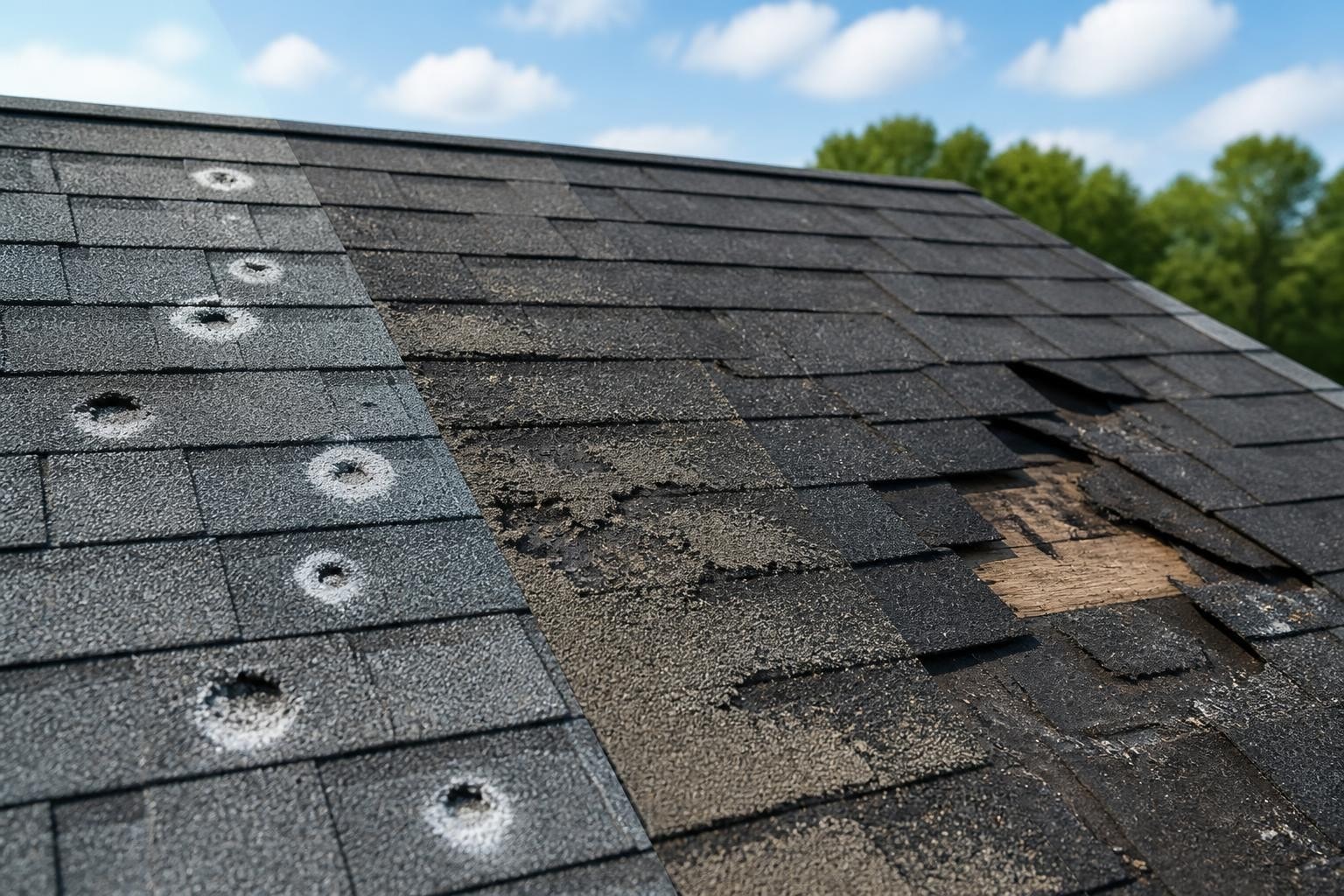
Hailstones create distinct damage patterns depending on their size, density, velocity, and the roofing materials they strike. When a hailstone impacts an asphalt shingle, it typically creates a bruised area where the protective granules have been displaced or removed entirely. This exposure leaves the underlying asphalt mat vulnerable to ultraviolet radiation, moisture infiltration, and accelerated deterioration.
The Insurance Institute for Business & Home Safety has conducted extensive research demonstrating that hail damage varies significantly based on multiple factors. Impact severity depends not only on hailstone size but also on wind speed, trajectory angle, and the age and condition of your roofing system. A roof already compromised by age or previous weather damage will sustain more significant harm than a newer installation.
Common Hail Damage Indicators
Detecting roof hail damage requires knowledge of what to look for during inspections. Professional contractors examine multiple elements beyond the primary roofing surface to build a comprehensive damage assessment.
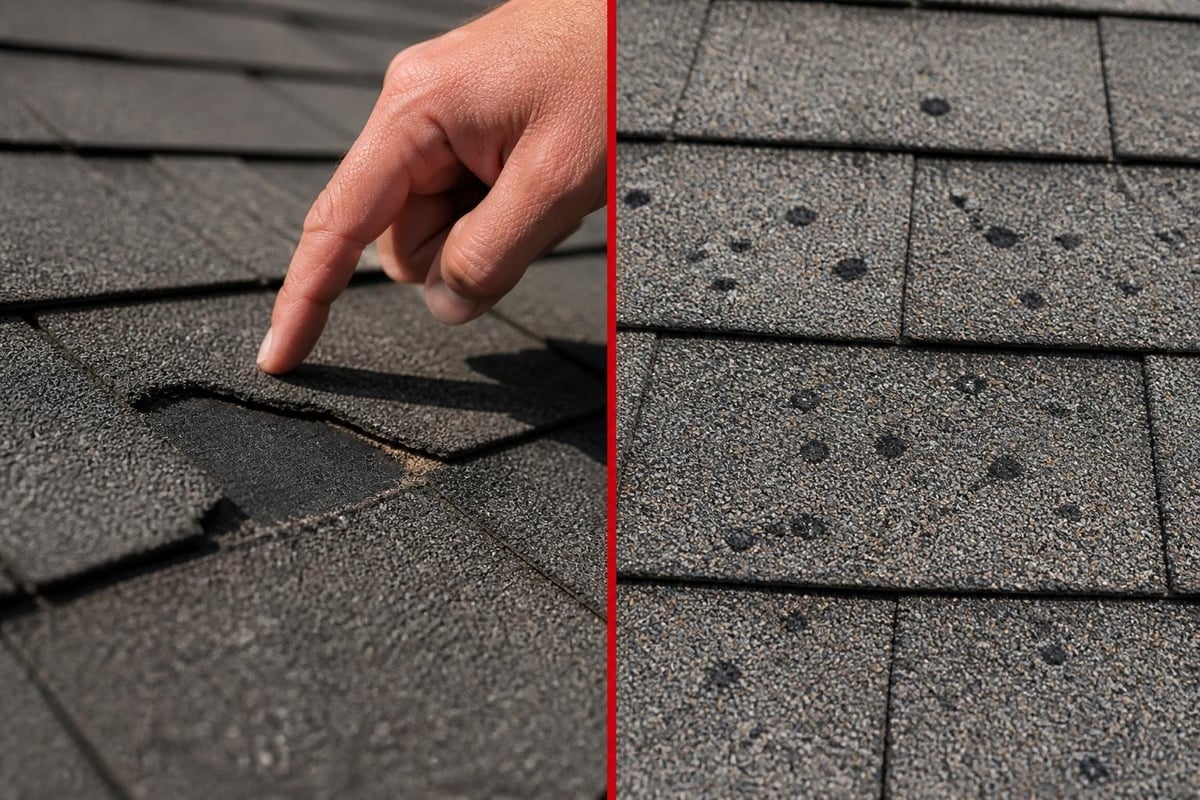
Visible signs on asphalt shingles include:
- Dark spots where granules have been knocked away
- Shiny areas indicating exposed asphalt
- Cracked or fractured shingles
- Dislodged or missing shingles
- Creased or torn shingle corners
Additional indicators throughout the property:
- Dented or damaged metal components (vents, flashing, gutters)
- Damaged window screens or siding
- Impact marks on air conditioning units
- Dented mailboxes or vehicles
- Stripped bark or broken branches on trees
These collateral damage indicators help establish the storm's severity and support insurance claims by demonstrating widespread impact across the property.
Size Matters: Hail Dimensions and Damage Correlation
The National Roofing Contractors Association provides detailed classification systems for assessing hail damage severity. Hailstone size serves as the primary predictor of potential damage, though other factors significantly influence actual outcomes.
| Hail Size | Diameter | Typical Damage Potential |
|---|---|---|
| Pea | 0.25 inch | Minimal to no damage on most roofs |
| Marble | 0.50 inch | Minor granule displacement possible |
| Dime | 0.75 inch | Moderate damage on older roofs |
| Quarter | 1.00 inch | Significant damage likely on most roofs |
| Golf Ball | 1.75 inch | Severe damage, potential structural impact |
| Tennis Ball | 2.50 inch | Extensive damage, probable replacement needed |
Hailstones measuring one inch or larger typically cause functional damage to asphalt shingle roofing systems, though the Nebraska Department of Insurance notes that impact from smaller hail can accumulate over multiple storms to create significant degradation. This cumulative effect makes historical storm data valuable when evaluating your roof's condition.
The Science Behind Hail Impact
Understanding hailstone density and composition provides insight into damage patterns. Hailstones form in turbulent thunderstorm updrafts where supercooled water droplets freeze around condensation nuclei. As stones circulate through varying atmospheric layers, they accumulate ice in concentric layers, creating varying density patterns.
Softer, less dense hailstones produce distinctive rounded impact marks with rough-textured centers where the ice shattered on contact. Denser hailstones create smooth, circular impact craters with sharp, clearly defined edges. These physical characteristics help professionals determine storm severity and damage patterns during roof inspections.
Professional Inspection Protocols and Assessment Procedures
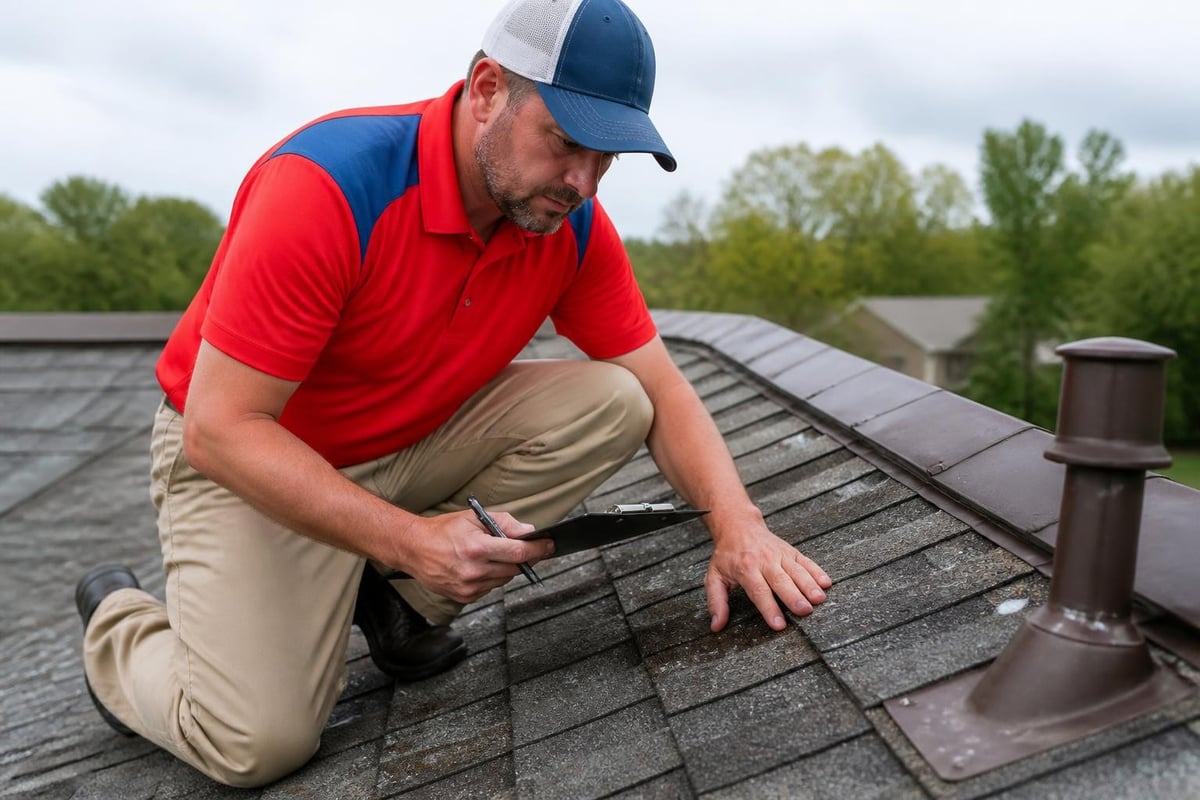
Proper roof hail damage evaluation requires systematic inspection methodology. Professional contractors follow established protocols to ensure comprehensive assessments that document all damage accurately.
The inspection process begins with a thorough ground-level examination of the property's exterior, looking for collateral damage indicators mentioned previously. This preliminary survey establishes baseline storm severity before contractors access the roof surface.
On-Roof Evaluation Techniques
Once on the roof, qualified inspectors employ specific techniques to identify and document damage:
- Systematic grid pattern examination – Inspectors divide the roof into sections, examining each area methodically
- Random sampling methodology – Multiple representative areas receive detailed scrutiny
- Test square analysis – Concentrated examination of 10-foot by 10-foot sections to determine damage density
- Photographic documentation – Detailed images with measurement references for insurance purposes
- Comprehensive written reports – Documented findings including damage locations, severity, and recommendations
Professional inspectors examine all roofing components, including shingles, underlayment visibility, flashing, vents, chimneys, and penetrations. This holistic approach ensures no damage goes undetected.
The National Roofing Contractors Association protocols emphasize the importance of distinguishing functional damage from cosmetic issues. Functional damage impairs the roof's weatherproofing capability and requires repair or replacement, while cosmetic damage affects appearance without compromising performance. Insurance coverage typically addresses functional damage exclusively.
Insurance Claims: Documentation and Filing Considerations
Navigating the insurance claims process for roof hail damage requires strategic planning and thorough documentation. The decisions you make immediately following a hailstorm significantly impact your claim outcome and financial responsibility.
Initial Response Steps
Immediate actions after a hailstorm:
- Document the storm date and approximate time
- Photograph visible damage from multiple angles
- Contact your insurance company to report potential damage
- Request a professional roof inspection
- Avoid signing contracts before insurance assessment
According to Kiplinger’s analysis, homeowners should carefully weigh whether filing a claim makes financial sense. Small damage claims might cost less than your deductible, and filing claims can impact future premium rates. However, significant roof hail damage affecting your home's weather protection warrants immediate claims filing.
Working With Your Insurance Company
Insurance adjusters evaluate roof damage to determine coverage eligibility and claim amounts. Understanding this process helps homeowners advocate effectively for fair settlements.
Your insurance policy likely includes specific provisions regarding roof damage coverage. Actual Cash Value policies depreciate roof value based on age, while Replacement Cost Value policies cover full replacement without depreciation penalties. Review your policy details before meeting with adjusters.
Professional roofing contractors can assist during insurance inspections, providing technical expertise and documentation supporting your claim. Great Roofing's experience with storm damage insurance claims helps homeowners navigate this complex process, ensuring all damage receives proper documentation and evaluation.
| Documentation Element | Purpose | Best Practices |
|---|---|---|
| Date-stamped photographs | Prove damage extent | Multiple angles, close-ups and wide shots |
| Professional inspection report | Technical assessment | Detailed written findings from certified inspector |
| Storm data records | Establish causation | NOAA reports, local weather service documentation |
| Repair estimates | Determine claim value | Detailed line-item estimates from licensed contractors |
| Previous maintenance records | Demonstrate proper care | Receipts, inspection reports, repair history |
Understanding how NOAA collects hail data provides valuable context when supporting your insurance claim. Official storm reports documenting hail size and storm paths in your area strengthen claims by establishing that damage-causing weather definitively impacted your property.
Repair Options: Partial Fixes Versus Full Replacement
Once roof hail damage has been confirmed and your insurance claim approved, you face decisions regarding repair scope. This choice impacts both immediate costs and long-term roof performance.
Factors Influencing Repair Decisions
Several considerations determine whether partial repairs or complete replacement represents the optimal solution:
Age and condition of existing roof – Roofs approaching or exceeding their expected lifespan benefit more from replacement than patching. Attempting to match aged, discontinued shingles creates aesthetic inconsistencies and may prove impossible.
Damage extent and distribution – Widespread damage across multiple roof sections makes replacement more cost-effective than extensive piecemeal repairs. Concentrated damage in limited areas may permit successful spot repairs.
Warranty implications – Many manufacturer warranties become void when repairs mix old and new materials or when damage compromises system integrity. Full replacement often provides new warranty coverage.
Future resale considerations – A new roof installed by professional roofing contractors increases property value and marketability. Patched roofs with visible repairs may concern potential buyers.
Shingle Replacement Complexities
Replacing individual damaged shingles presents unique challenges that homeowners should understand before selecting this approach. Modern three-tab and architectural shingles feature specific installation patterns and adhesive strips that make partial replacement technically demanding.
Matching existing shingles exactly often proves difficult or impossible, particularly for roofs several years old. Manufacturers regularly discontinue colors and product lines, and even identical shingle models weather differently, creating noticeable color variations between old and new materials.
Professional roof repair services can blend repairs strategically, placing new shingles on less visible roof sections while relocating salvageable older shingles to prominent areas. However, this approach requires expertise and may still produce less satisfactory aesthetic results than complete replacement.
Decision framework for roof hail damage repairs: comparing roof age, damage percentage, insurance coverage, warranty status, and material availability to determine optimal repair versus replacement choice
Material Selection for Hail-Resistant Roofing Systems
When roof hail damage necessitates replacement, selecting appropriate materials significantly impacts future storm resistance. Recent advancements in roofing technology have produced products specifically engineered for enhanced hail protection.
Impact-Resistant Shingle Technology
The roofing industry has developed impact-resistant (IR) shingles designed to withstand severe hail better than standard products. These shingles undergo UL 2218 testing, which subjects samples to steel balls dropped from specific heights to simulate hail impacts.
Impact resistance ratings:
- Class 1 – Withstands 1.25-inch steel ball impacts
- Class 2 – Withstands 1.50-inch steel ball impacts
- Class 3 – Withstands 1.75-inch steel ball impacts
- Class 4 – Withstands 2.00-inch steel ball impacts (highest rating)
Class 4 rated shingles offer the maximum protection currently available for residential applications. These products feature enhanced asphalt formulations, polymer-modified materials, or specialized reinforcement layers that absorb impact energy without fracturing or granule loss.
Many insurance companies provide premium discounts for homes with Class 4 roofing, recognizing the reduced claim likelihood. These discounts often offset the higher initial material costs over the roof's lifespan.
Commercial Roofing Considerations
Commercial properties utilizing modified bitumen or TPO membrane systems face different hail vulnerability compared to residential shingle roofs. The Department of Energy discusses hail impact considerations for rooftop installations, principles that apply to commercial roofing systems.
Modified bitumen roofing's multiple layers provide inherent impact resistance, though large hail can puncture membranes or compress insulation layers beneath. Regular inspections following hailstorms help identify damage before leaks develop. Great Roofing's expertise with commercial roofing systems ensures proper assessment and repair of these specialized installations.
Prevention and Mitigation Strategies
While preventing hail damage entirely remains impossible, proactive measures reduce vulnerability and minimize repair costs when storms strike.
Regular Maintenance Programs
Implementing residential roof maintenance schedules keeps your roofing system in optimal condition to weather storms. Well-maintained roofs resist damage better than neglected systems with pre-existing weaknesses.
Essential maintenance activities include:
- Annual professional inspections identifying emerging problems
- Prompt repair of minor damage before compounding
- Gutter cleaning preventing water accumulation
- Tree trimming eliminating overhanging branches
- Attic ventilation verification ensuring proper airflow
These routine activities extend roof lifespan and help identify storm damage quickly by establishing baseline conditions for comparison.
Documentation and Record Keeping
Maintaining comprehensive roof documentation proves invaluable when hail strikes. Detailed records demonstrate proper care to insurance adjusters and help distinguish new damage from pre-existing conditions.
Create a roof history file containing:
- Installation date and contractor information
- Material specifications and warranty documents
- All inspection reports with date-stamped findings
- Repair receipts and before/after photographs
- Manufacturer literature and care instructions
This documentation package supports insurance claims and helps contractors understand your roof's history when assessing damage.
Regional Considerations and Climate Factors
Geographic location significantly influences roof hail damage risk and appropriate protection measures. Understanding regional weather patterns helps homeowners make informed decisions about roofing investments.
The central United States, particularly the corridor from Texas through Oklahoma, Kansas, and Nebraska into South Dakota, experiences the highest hail frequency due to atmospheric conditions favorable for severe thunderstorm development. Properties in these regions benefit substantially from impact-resistant roofing materials.
However, hailstorms occur throughout the country, and climate change appears to be altering traditional storm patterns. Areas historically experiencing minimal hail activity have seen increased severe weather frequency in recent years, making protective measures relevant nationwide.
Local building codes sometimes mandate specific wind and impact ratings for roofing materials based on regional risk factors. Verify code requirements before selecting replacement materials to ensure compliance and optimal protection.
Seasonal Storm Patterns
Hailstorm frequency varies seasonally, with peak activity typically occurring during spring and early summer months when atmospheric instability reaches maximum levels. Understanding these patterns helps homeowners schedule timely inspections.
Following severe weather seasons, many roofing contractors experience high demand, potentially delaying inspection and repair schedules. Proactive scheduling during off-peak periods ensures prompt service when you need damage assessments.
Working With Professional Roofing Contractors
Selecting qualified contractors for roof hail damage assessment and repair significantly impacts outcomes. The roofing industry includes both reputable professionals and opportunistic storm chasers who arrive following severe weather, making contractor selection critical.
Contractor Qualification Criteria
Essential contractor qualifications include:
- Proper licensing and insurance coverage for your state
- Established local business presence with verifiable references
- Manufacturer certifications for specific roofing products
- Membership in professional organizations like NRCA
- Detailed written estimates and comprehensive contracts
Avoid contractors demanding large upfront payments, pressuring immediate decisions, or offering to waive insurance deductibles. These practices often indicate fraudulent operations.
Great Roofing's family-owned operation provides the local accountability and professional expertise necessary for quality roofing installation and repair work. Established contractors maintain reputations within their communities, ensuring long-term warranty support and customer service.
Understanding Estimates and Contracts
Professional contractors provide detailed written estimates specifying all work scope, materials, costs, and timelines. Review these documents carefully before signing contracts.
Comprehensive estimates should include:
- Specific material brands, models, and quantities
- Labor costs broken down by activity
- Removal and disposal of existing materials
- Necessary permits and inspection fees
- Warranty information for materials and workmanship
- Project timeline with start and completion dates
- Payment schedule tied to completion milestones
Vague estimates lacking detail create opportunities for disputes and unexpected costs. Insist on specificity before authorizing work.
Protecting your property from roof hail damage requires vigilance, proper documentation, and partnering with experienced professionals who understand the complexities of storm damage assessment and repair. Whether you need a comprehensive inspection following a recent hailstorm or you're considering upgrading to impact-resistant materials for future protection, working with qualified contractors ensures your roof receives the expert attention it deserves. Great Roofing brings decades of family-owned experience to every project, providing Joliet-area homeowners and businesses with reliable assessments, quality repairs, and complete replacement services tailored to your specific needs and budget.