


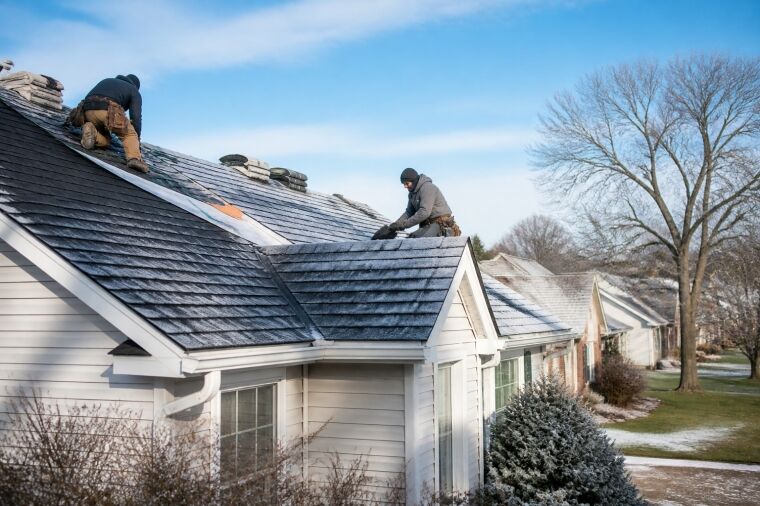
Yes, roofing in cold weather is possible, and many Joliet roofs are repaired or replaced successfully in winter, but it requires the right materials, installation methods, and a crew that knows how cold affects asphalt shingles. The main risks are brittle shingles, sealant strips that fail to bond, and slippery working conditions. With careful scheduling and the right techniques, a winter roof project can be done correctly.
Can You Roof in the Winter?
You can roof in the winter when temperatures are manageable, the roof deck is dry, and the crew adjusts its methods for the conditions. Illinois winters bring long stretches of freezing temperatures, but they also bring dry, calm days that can suit installation well.
The National Roofing Contractors Association notes that there is no specific temperature guideline for when asphalt shingles are too cold to install, but cold can make them brittle and prevent their self-sealing strips from bonding adequately. That distinction matters. Temperature alone does not decide the question. The condition of the materials, the time of day, the weather forecast, and the experience of the crew all do.
For Joliet homeowners, the practical answer is this: emergency repairs should never wait for spring, and a full replacement can proceed in winter if the contractor plans for it. A roof with active leaks, missing shingles, or storm damage is a bigger risk than a carefully managed winter install.
What Cold Does to Roofing Materials
Cold temperatures change how roofing materials behave, and each material responds differently. Understanding these changes explains why winter work demands extra care.
Asphalt shingles
Asphalt shingles stiffen as temperatures fall. Stiff shingles can crack when bent over ridges or fastened, and nails driven too hard can fracture the mat. The bigger issue is the factory-applied sealant strip. It relies on warmth from the sun to activate and bond each shingle to the course below. In cold weather, that bond can be delayed or incomplete.
Shingles that do not seal are vulnerable to wind uplift. Joliet's winter winds can lift unsealed tabs, so contractors often hand-seal shingles with asphalt roofing cement in colder conditions, particularly at eaves, rakes, and ridges.
Underlayment and ice barriers
Synthetic underlayments and self-adhering ice and water membranes also behave differently in the cold. Self-adhering products may not stick reliably to a cold, damp deck, so crews may need to warm the deck or store rolls in a heated space until use. Ice and water barrier along the eaves is especially valuable in northern Illinois, where ice dams are a recurring threat.
Commercial modified bitumen
Commercial flat and low-slope roofs face a different set of constraints. Modified bitumen systems depend on proper adhesion, whether torch-applied or cold-applied, and moisture or frost trapped in the system can cause blisters and failures later. NRCA guidance states that cold-weather roofing may require changes to material storage, handling, equipment, and installation methods, with tents sometimes needed in severe cold for certain work. Commercial property managers planning ahead should review what commercial roofs need before cold weather in Joliet.

Pros and Cons of Winter Roof Work
Winter roofing has real advantages and real drawbacks, and weighing them against your roof's condition is the sensible way to decide.
Advantages
- Faster scheduling. Roofing demand drops in winter, so crews are often more available and projects can start sooner.
- Dry, stable days. Cold, clear days avoid the heat stress and afternoon thunderstorms that complicate summer work.
- Prevents further damage. Fixing a compromised roof now stops moisture from reaching insulation, drywall, and framing.
- Possible cost flexibility. Some contractors offer more flexible pricing in slower months, though pricing depends on the project and the supplier.
Drawbacks
- Shorter working days. Fewer daylight hours mean projects can take longer to finish.
- Weather delays. Snow, ice, or sustained subfreezing temperatures can halt work for days.
- Slower sealing. Shingles may need hand-sealing, which adds labor.
- Safety demands. Frost, ice, and snow make roofs slippery, so crews must use proper fall protection and wait for conditions to improve.
The cheapest month for roofing varies by market, but late fall through winter often brings lower demand. If you are comparing budgets, our overview of roof replacement costs in Joliet explains what drives the final price.
How Contractors Adapt Installation in Freezing Conditions
A qualified crew changes its process in cold conditions rather than simply working faster. These are the adjustments that protect the finished roof.
- Store materials in warmth. Bundles of shingles and rolls of membrane are kept in a heated area until they are needed, which keeps them pliable.
- Choose the right working window. Installation is scheduled for the warmest part of the day, usually late morning through mid-afternoon.
- Handle shingles gently. Crews avoid bending cold shingles sharply and adjust nail guns to prevent overdriving.
- Hand-seal where needed. Dabs of roofing cement secure shingles that will not seal on their own, especially in high-wind areas.
- Clear the deck. Snow, ice, and frost are removed before any underlayment or shingles go down, because trapped moisture causes problems later.
- Use fall protection. Harnesses, roof jacks, and traction-friendly footwear are standard, and work stops when surfaces are unsafe.
Homeowners can ask a prospective contractor how they handle each of these steps. Specific answers signal experience. Vague answers are a warning sign. Our page on preparing for your roof replacement lists what to do before the crew arrives.
Ice Dams, Insulation, and Ventilation
Ice dams are the most common winter roof problem in northern Illinois, and preventing them depends more on the attic than on the shingles. An ice dam forms when heat escaping from the living space melts snow on the upper roof, and the meltwater refreezes at the cold eaves, trapping more water behind it.
The National Weather Service advises that attic insulation should be at least R-30, with R-38 preferable in northern climates, and that airflow from the eaves to the roof vents helps keep the attic cold and limit freeze-thaw cycles. A roof replacement is an ideal moment to correct these issues, since the deck and soffits are exposed.
Ventilation space matters too. The U.S. Department of Energy's Building America Solution Center indicates that a 2-inch unobstructed ventilation space can be more effective at preventing ice dams than a 1-inch space in the cited roof assembly guidance. If your attic runs warm in January, a ventilation upgrade can protect your roof for decades. Read our guide to attic ventilation for the basics.
Gutters are the other half of the equation. The National Weather Service recommends clearing leaves and debris from gutters and downspouts and keeping them clear of snow and icicles during winter to help reduce ice-dam risk. Homeowners with heavy snow load on sidewalks and driveways sometimes rely on professional snow removal crews, but in Joliet the principle is the same: keep water moving away from the building.
Winter Roof Repair vs. Full Replacement
Repair is usually the right winter response to a limited problem, while replacement makes sense when the roof is near the end of its service life or the damage is widespread.
Winter repair is appropriate for:
- Missing or lifted shingles after a wind event
- Damaged flashing around chimneys, vents, and skylights
- Small leaks traced to a specific penetration
- Temporary tarping after storm or hail damage
Full replacement in winter makes sense when leaks are recurring, the decking is damaged, or the shingles are well past their expected life. If you are unsure how old is too old, our guide on when to replace a roof in Joliet offers clear benchmarks.
Storm damage deserves special mention. Hail and wind can leave subtle damage that only shows up weeks later as stains or leaks. If a storm hit your area, review what roof storm damage looks like weeks after the storm and schedule an inspection before the next freeze-thaw cycle widens any gaps.
What About a Cold Flat Roof?
A cold flat roof can be perfectly acceptable if it is designed, ventilated, and maintained correctly. In a cold roof assembly, insulation sits at the ceiling level and a ventilated gap separates it from the roof deck, which keeps the deck near outdoor temperature. The risk is condensation: if warm, moist air reaches the cold deck and ventilation is poor, moisture accumulates and can cause rot.
For commercial buildings in Joliet, low-slope roofs are usually modified bitumen or similar membranes, and winter performance depends on drainage and an intact membrane. Ponding water that freezes can stress seams and flashing. Regular inspections, especially after heavy snow, catch small defects before they become leaks.
Preparing Your Roof Before Winter Hits
Preparation done in the fall is the least expensive winter roofing strategy. A short checklist can prevent most cold-season emergencies:
- Inspect the roof. Look for cracked, curled, or missing shingles and damaged flashing. Our guidance on how often to have your roof inspected suggests an annual check at minimum.
- Clean gutters and downspouts. Clear debris so meltwater drains instead of refreezing.
- Trim overhanging branches. Falling limbs during ice storms can puncture shingles.
- Check attic insulation and ventilation. Look for compressed insulation, frost on the underside of the deck, or uneven snow melt on the roof.
- Review vulnerable areas. Valleys, chimneys, and penetrations are the usual leak points, as outlined in our look at vulnerable areas of a Joliet roof.
- Know your emergency options. Keep a contractor's number handy and ask about roof tarping during storm season.
Homeowners considering a larger life change, such as selling a property with an aging roof, may weigh repair costs against options like cash home buyers who purchase homes as-is. For most owners, though, a timely repair preserves value better than a distressed sale.
Choosing a Contractor for Winter Work
The right contractor for a winter roof project is one who can explain, in specific terms, how they will protect the quality of the installation in cold conditions. Credentials and local experience matter more in January than in July.
Ask about their cold-weather process for storing and handling materials, hand-sealing practices, fall protection, and how they handle delays. Confirm that they carry insurance, offer a written warranty, and will pause work when conditions are unsafe. Local knowledge helps as well. A Joliet crew understands the area's freeze-thaw patterns, wind exposure, and typical housing stock, from older bungalows to newer subdivisions in Plainfield and New Lenox. You can review the range of work available on the Great Roofing services page.
FAQ
What is the cheapest month for roofing?
Roofing demand often slows in late fall and winter, and contractors may have more open schedules, though pricing varies. Actual pricing depends on material costs, project scope, and the contractor, so request written estimates and compare them.
Is a cold flat roof okay?
Yes, a cold flat roof works well when it has adequate ventilation, a proper vapor control layer, and good drainage. Poor ventilation lets condensation build up under the deck, which can lead to rot and mold.
How do I install shingles correctly in cold temperatures?
Follow the manufacturer's installation instructions, keep shingles warm until use, and avoid overdriving nails. Hand-seal tabs with roofing cement where the factory sealant strip has not bonded, and have a licensed professional handle the work for the best result and warranty protection.
If your roof shows signs of damage or you are weighing a winter project, start by scheduling a professional inspection so you know exactly where it stands before the next freeze. Great Roofing is a family-owned roofing contractor in Joliet that handles residential shingle roofs and commercial modified bitumen systems, along with repairs and siding, and understands how local winters affect every installation. Reach out to Great Roofing to talk through your options and get a clear, honest recommendation.