

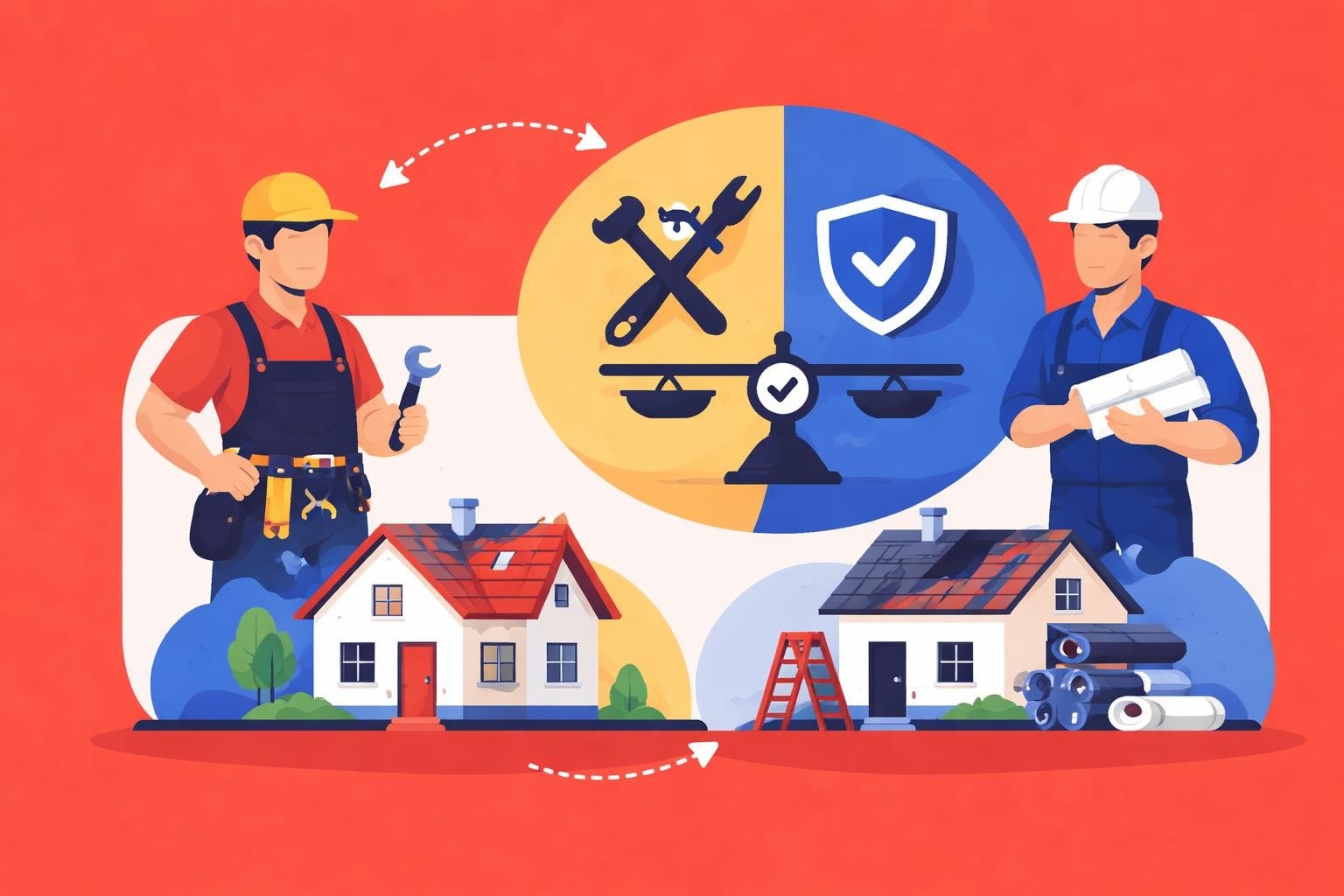
When a minor roof issue arises, many homeowners in Joliet and surrounding areas face a common dilemma: should they call a handyman or contact a professional roofing contractor? The answer depends on several critical factors, including the scope of damage, licensing requirements, and the long-term implications for your home's structural integrity. Understanding the capabilities and limitations of handyman roof repair services helps you make informed decisions that protect your investment while avoiding costly mistakes. This comprehensive guide explores when handyman services are appropriate, what tasks fall outside their expertise, and why working with licensed roofing professionals like Great Roofing ensures quality outcomes for your property.
Understanding the Scope of Handyman Roof Repair
The term "handyman roof repair" encompasses a variety of minor tasks that skilled generalists can safely complete without specialized roofing credentials. These services typically address cosmetic issues or temporary fixes rather than structural problems.
Tasks Handymen Can Typically Handle
Most handymen excel at smaller repairs that don't involve extensive roofing knowledge or specialized equipment. Common tasks include:
- Replacing a few missing or damaged shingles
- Cleaning gutters and downspouts
- Applying temporary sealant to minor leaks
- Installing gutter guards
- Minor flashing adjustments around chimneys
- Removing debris from roof surfaces
These straightforward repairs often require basic tools and materials available at local hardware stores. Benefits of handyman services include quick response times and lower hourly rates compared to specialized contractors.
However, the convenience of handyman roof repair comes with significant limitations. Many jurisdictions require specific licensing for roofing work beyond simple maintenance tasks. Illinois regulations, like those in many states, distinguish between minor repairs and work requiring contractor certification.
When Handyman Services Fall Short
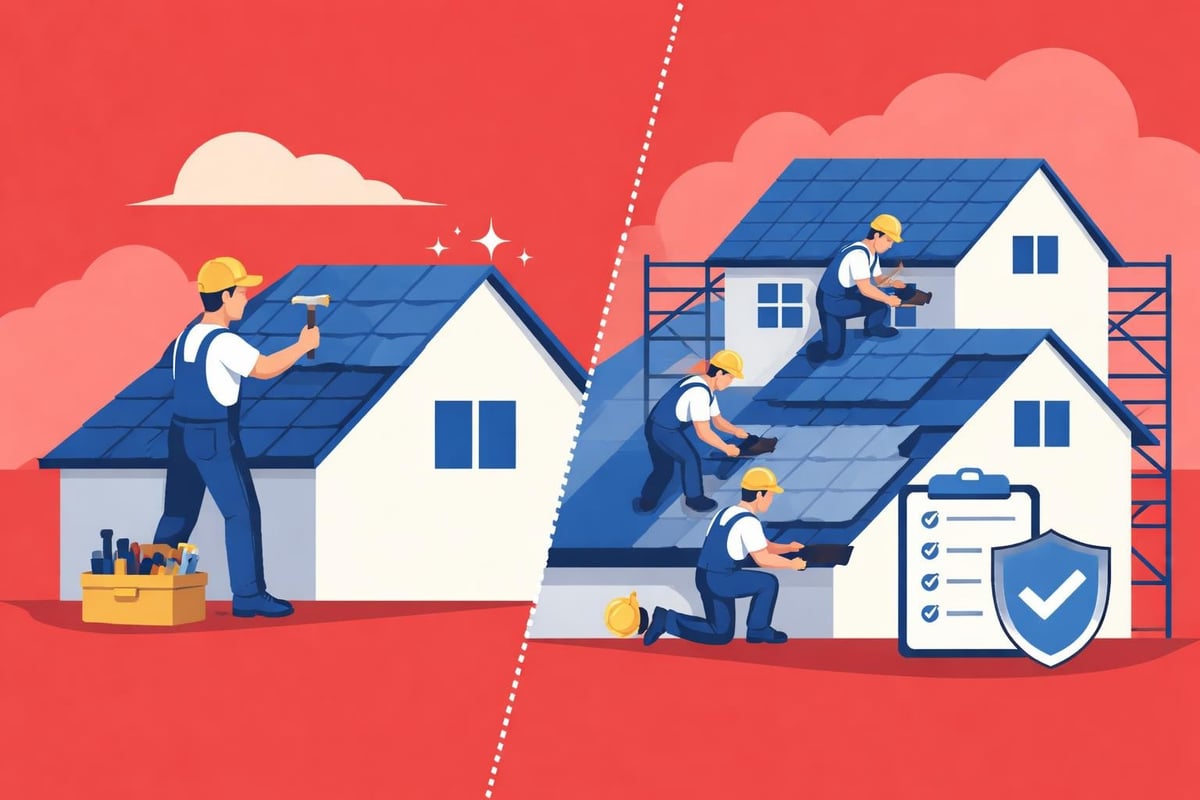
Understanding where handyman capabilities end is crucial for protecting your home and avoiding liability issues. Most handymen lack the specialized training for:
| Complex Task | Why Professional Expertise Matters |
|---|---|
| Full roof replacement | Requires warranty compliance, proper ventilation design, and code adherence |
| Structural repairs | Involves load calculations, engineering knowledge, and building permits |
| Modified bitumen installation | Demands specialized equipment and material-specific certification |
| Storm damage assessment | Requires insurance documentation expertise and comprehensive evaluation |
| Valley repairs | Involves critical waterproofing techniques that prevent major leaks |
The National Handyman Authority provides detailed information about scope-of-work boundaries that vary by state and municipality. In the Chicago area, roofing work exceeding $1,000 typically requires contractor licensing.
Licensing and Insurance Considerations
Professional accountability separates qualified roofing contractors from general handyman services. This distinction becomes critical when problems arise months or years after repair work.
Why Licensing Matters for Your Protection
Licensed roofing contractors must meet stringent requirements that protect homeowners. These include:
- State and local licensing: Demonstrates technical competence and legal compliance
- Insurance coverage: Provides liability protection and workers' compensation
- Bond requirements: Offers financial recourse if work isn't completed properly
- Continuing education: Ensures knowledge of current building codes and techniques
According to comprehensive roofing repair resources, licensed contractors carry general liability insurance typically ranging from $1 million to $2 million in coverage. Most handymen carry significantly less insurance, leaving homeowners vulnerable if accidents occur.
The insurance gap between handymen and licensed contractors represents a substantial risk. If a handyman falls from your roof or causes water damage during repairs, your homeowner's policy might become your only protection.
Warranty Implications You Can't Ignore
Manufacturer warranties on roofing materials often require installation by certified contractors. When handymen perform repairs, you risk voiding these warranties.
For example, premium asphalt shingle manufacturers offer 50-year warranties, but these typically require certified installation. Even minor repairs using improper techniques can compromise these guarantees. This concern applies equally to residential shingle systems and commercial roofing applications.
Cost Comparison: Short-Term Savings vs. Long-Term Value
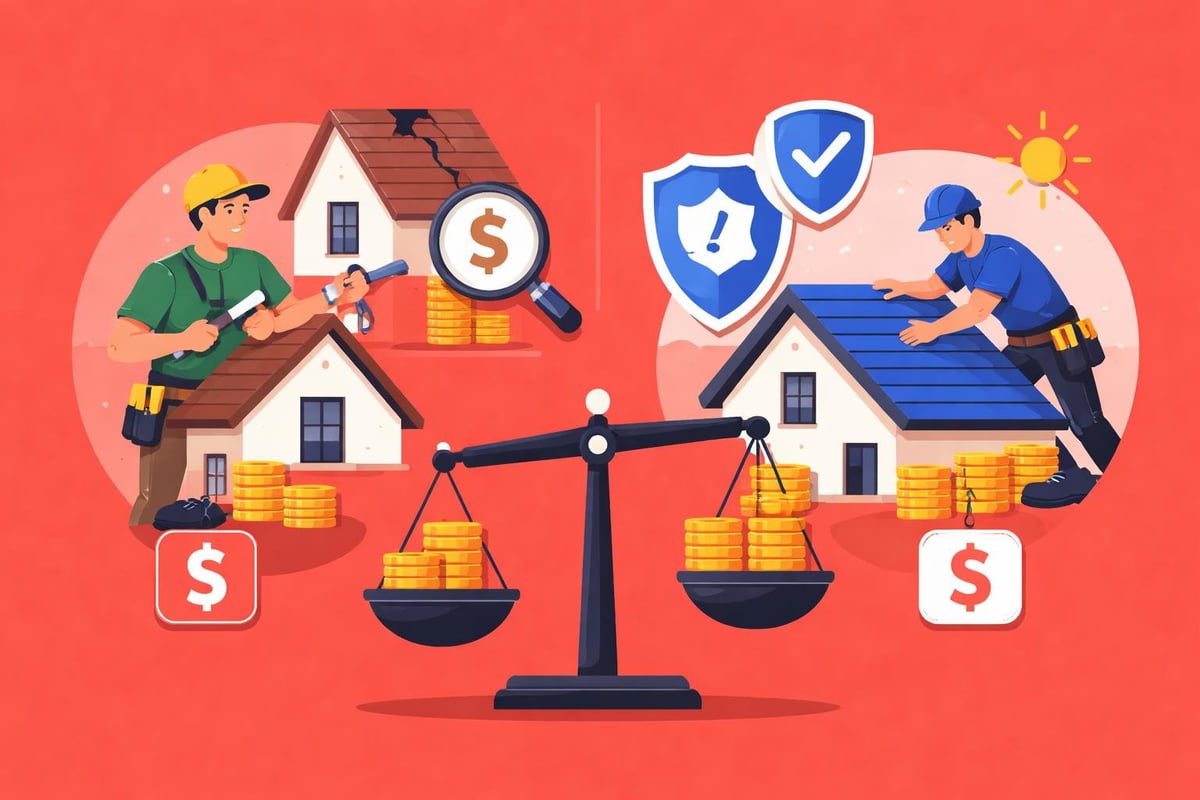
The financial equation for handyman roof repair extends beyond initial service charges. While hourly rates appear attractive, the total cost of ownership tells a different story.
Initial Price Differences
Handymen typically charge $50-75 per hour in the Joliet area, compared to $75-150 for licensed roofing contractors. For a simple two-hour repair replacing a few shingles, this difference seems significant:
- Handyman service: $100-150
- Licensed contractor: $150-300
However, this calculation ignores critical factors that affect long-term costs.
Hidden Costs of Improper Repairs
When handyman capabilities are exceeded, seemingly minor errors cascade into major expenses. Common problems include:
- Improper flashing installation leading to water infiltration
- Inadequate shingle sealing causing wind damage
- Ventilation disruption creating ice dam conditions
- Mismatched materials voiding manufacturer warranties
- Code violations requiring complete rework during home sales
A handyman might save you $150 on initial repairs, but correcting improper work often costs thousands. Professional contractors understand substrate conditions, proper nailing patterns, and ventilation requirements that handymen commonly overlook.
When to Choose Professional Roofing Contractors
Certain situations demand the expertise, equipment, and accountability that only licensed roofing contractors provide. Recognizing these scenarios protects your home and finances.
Storm Damage Requires Specialized Assessment
Severe weather events create complex damage patterns that require professional evaluation. Storm damage assessment involves more than visible shingle loss.
Professional contractors examine:
- Granule loss patterns indicating impact damage
- Shingle seal integrity across the entire roof
- Flashing condition around penetrations
- Structural components for water infiltration
- Ventilation system functionality
Insurance companies recognize the difference between handyman patch jobs and professional restoration. When filing claims, documented assessments from licensed contractors carry significantly more weight. Many insurers specifically exclude handyman repairs from coverage.
Structural Concerns Demand Engineering Knowledge
Any repair involving decking, rafters, or trusses requires professional expertise. Signs you need a licensed contractor include:
- Sagging rooflines or visible dips
- Water stains on interior ceilings
- Daylight visible through roof boards
- Cracked or separated rafters
- Multiple leak locations
The complexity of structural roof repairs makes them unsuitable for general handyman services. Licensed contractors coordinate with structural engineers when necessary and obtain proper building permits.
Age and System Complexity Matter
Older roofing systems and complex architectural designs require specialized knowledge. If your roof features any of these characteristics, choose professional contractors:
| Feature | Why Professionals Are Essential |
|---|---|
| Multiple valleys | Critical waterproofing intersections |
| Low-slope sections | Requires specialized membrane understanding |
| Multiple roof planes | Complicated flashing and transition details |
| Historical materials | Demands matching and preservation techniques |
| Commercial systems | Involves warranties and specialized installation |
Modified bitumen systems common on commercial properties absolutely require contractor expertise. These torch-applied or self-adhering membranes demand specific installation training and equipment.
Quality Indicators for Roofing Services
Whether considering handyman roof repair or professional contractors, specific quality markers help you evaluate service providers effectively.
Credentials to Verify
Before hiring any service provider, confirm these essential credentials:
- Valid contractor license (check state database)
- Current insurance certificates (request directly from insurer)
- Workers' compensation coverage (verify active policy)
- Better Business Bureau rating (review complaint history)
- References from recent projects (contact directly)
Professional contractors like Great Roofing readily provide this documentation because it demonstrates their commitment to quality and accountability.
Red Flags That Signal Problems
Certain warning signs indicate you should continue your search:
- Reluctance to provide written estimates
- Requests for full payment upfront
- Lack of physical business address
- No verifiable insurance documentation
- Pressure tactics or limited-time offers
The importance of professional roofing contractors becomes evident when you consider accountability. Licensed contractors maintain reputations within their communities and answer to regulatory boards.
Material Considerations and Warranties
The roofing materials market has evolved significantly, creating challenges for generalist handymen who lack manufacturer training and certification.
Manufacturer Certification Requirements
Premium roofing manufacturers now require installer certification for warranty validation. GAF, Owens Corning, and CertainTeed all offer tiered warranty programs based on contractor credentials.
These programs provide:
- Extended material warranties (up to 50 years)
- Workmanship guarantees (typically 10-25 years)
- System warranties covering integrated components
- Transferable coverage that adds resale value
Handymen cannot access these warranty programs because they lack required training and certification. This limitation significantly impacts long-term value, especially for homes in areas prone to hail damage.
Material Matching Challenges
Discontinuation cycles make matching existing shingles difficult. Manufacturers update product lines every few years, creating color and texture matching challenges.
Professional roofing contractors maintain relationships with suppliers and access to discontinued materials. They also understand blending techniques that minimize visual differences when exact matches aren't available.
The Role of Professional Inspections
Regular professional inspections prevent minor issues from becoming major problems, regardless of who performs repairs.
Recommended Inspection Frequency
Homeowners should schedule professional roof inspections:
- Annually for roofs over 15 years old
- Every 2-3 years for newer systems
- After severe weather events
- Before listing properties for sale
- When purchasing homes
These inspections identify problems before they cause interior damage. Licensed contractors provide detailed reports documenting conditions and recommending repairs.
What Professional Inspections Include
Comprehensive roof inspections examine components that handymen often overlook:
- Shingle condition: Checking for curling, granule loss, and seal integrity
- Flashing assessment: Evaluating all penetrations and transitions
- Ventilation analysis: Ensuring proper attic airflow
- Structural evaluation: Looking for sagging or deterioration
- Interior inspection: Checking attics for water stains and mold
Documentation from professional inspections proves invaluable for insurance claims and home sales.
Maintenance Tasks Appropriate for Handymen
While major repairs require professional expertise, handymen can effectively handle routine maintenance that extends roof lifespan.
Preventive Maintenance Services
Regular maintenance prevents many common roofing problems. Practical roof maintenance tips include tasks handymen can safely complete:
- Gutter cleaning: Removing debris quarterly or after storms
- Minor caulking: Sealing small gaps around penetrations
- Debris removal: Clearing leaves, branches, and other materials
- Ventilation maintenance: Ensuring soffit vents remain clear
- Minor shingle replacement: Addressing isolated damage quickly
These preventive measures cost significantly less than emergency repairs and help maintain warranty coverage.
Setting Realistic Expectations
Handyman roof repair works best when homeowners understand scope limitations. Use handymen for maintenance and minor cosmetic repairs, but engage licensed contractors for anything involving:
- Multiple shingle courses
- Flashing replacement
- Structural components
- Insurance claim work
- Warranty-covered repairs
This approach maximizes value while maintaining proper coverage and protection.
Regional Considerations for Joliet Homeowners
Local climate conditions and building codes create specific challenges for roofing systems in the Joliet area and greater Chicago region.
Weather Patterns That Accelerate Wear
Illinois weather subjects roofs to extreme temperature fluctuations and severe storms. These conditions cause:
- Thermal cycling: Expansion and contraction weakening seals
- Ice dam formation: Winter temperature variations creating ice buildup
- Wind damage: Strong storms lifting improperly secured shingles
- Hail impact: Summer storms damaging shingle surfaces
Understanding storm damage signs weeks after events helps homeowners know when professional assessment becomes necessary.
Local Code Requirements
Building codes in Will County and surrounding areas establish minimum standards for roofing work. These regulations address:
| Code Requirement | Impact on Repairs |
|---|---|
| Permit thresholds | Work over certain values requires permits |
| Nailing patterns | Specifies fastener placement for wind resistance |
| Ventilation ratios | Mandates proper attic airflow |
| Material ratings | Requires specific wind and impact resistance |
| Flashing standards | Details waterproofing requirements |
Licensed contractors understand these requirements and obtain necessary permits. Handymen typically lack this knowledge, potentially creating code violations that complicate future home sales or insurance claims.
Making the Right Decision for Your Property
Choosing between handyman roof repair and professional roofing contractors requires honest assessment of your specific situation and needs.
Questions to Ask Before Hiring
Evaluate your roofing project by considering:
- Does the repair exceed $500 in materials and labor?
- Will the work affect structural components?
- Do you need documentation for insurance or warranties?
- Does the project involve complex flashing or valleys?
- Is permit approval required in your municipality?
If you answered yes to any question, professional roofing contractors provide the appropriate solution. For simple maintenance tasks answered with no, qualified handymen may suffice.
Building Long-Term Relationships
The most successful homeowners develop relationships with both reliable handymen for minor tasks and trusted roofing contractors for significant work. This approach provides:
- Quick response for minor issues
- Professional expertise when needed
- Continuity of service over time
- Familiarity with your property
- Trusted recommendations for other trades
Great Roofing has served Joliet families for years, building relationships based on quality workmanship and honest communication about what services each situation requires.
Documentation and Communication Best Practices
Regardless of who performs your roofing work, proper documentation protects your interests and maintains warranty coverage.
Essential Documentation to Maintain
Keep organized records of all roofing work:
- Written estimates and final invoices
- Warranty certificates and registration
- Photographs before and after repairs
- Inspection reports from professionals
- Permit approvals and final inspections
- Insurance correspondence and claims
This documentation proves invaluable during home sales, insurance claims, and warranty disputes. Professional roofing contractors provide comprehensive paperwork, while handymen often offer minimal documentation.
Communication Standards
Clear communication prevents misunderstandings and ensures quality outcomes. Expect your service provider to:
- Provide detailed written estimates
- Explain work scope and timelines
- Update you on unexpected findings
- Document changes in writing
- Answer questions promptly
- Follow up after completion
Professional contractors maintain these communication standards as part of their business practices. When considering handyman roof repair, verify that providers offer similar accountability.
The Value of Family-Owned Roofing Expertise
Family-owned roofing contractors bring unique advantages that large corporations and independent handymen cannot match. These businesses invest in their local communities and maintain reputations across generations.
Community Accountability
Local contractors depend on reputation within their service areas. This accountability creates powerful incentives for quality work and customer satisfaction. They:
- Respond quickly to warranty issues
- Maintain relationships with local suppliers
- Understand regional building codes
- Participate in community organizations
- Employ local workers and apprentices
This community connection ensures contractors remain invested in every project's long-term success. Unlike transient handymen or national chains, family-owned businesses stake their reputations on every roof they touch.
Comprehensive Service Offerings
Established roofing contractors provide integrated services beyond basic repairs. Comprehensive offerings include roof replacement, commercial roofing, and gutter installation that handymen cannot deliver.
This breadth of expertise means one trusted contractor handles all your exterior needs, from minor shingle replacement to complete system renovations. The continuity of service simplifies maintenance and ensures consistent quality across projects.
Understanding when handyman roof repair makes sense versus situations requiring professional roofing contractors protects your home and investment. While handymen offer value for minor maintenance tasks, complex repairs demand the licensing, insurance, and expertise that only certified contractors provide. Great Roofing brings three generations of family-owned expertise to every project in Joliet and surrounding communities, offering the accountability and comprehensive services that ensure your roof protects your property for decades. Contact Great Roofing today for a complimentary assessment and discover the difference professional roofing expertise makes for your home or business.