

Storm systems across the Midwest bring powerful winds, hail, and heavy precipitation that can compromise your roof's structural integrity within minutes. Whether you're a homeowner in Joliet or manage commercial properties throughout Will County, understanding how to identify and address a storm damage roof is essential for protecting your investment and ensuring the safety of occupants. The aftermath of severe weather demands immediate attention, proper documentation, and collaboration with qualified professionals who can navigate both the technical and insurance aspects of roof restoration.
Recognizing the Signs of Storm-Related Roof Damage
Identifying storm damage roof conditions requires careful examination from both ground level and closer inspection. Many homeowners miss critical damage indicators because they focus only on obvious problems like missing shingles or visible holes.
Immediate visual indicators include:
- Missing, cracked, or curled asphalt shingles
- Dented or punctured metal flashing around chimneys and vents
- Granule accumulation in gutters and downspouts
- Dented or damaged roof vents and exhaust caps
- Scattered debris embedded in roofing materials
Hail Damage Characteristics
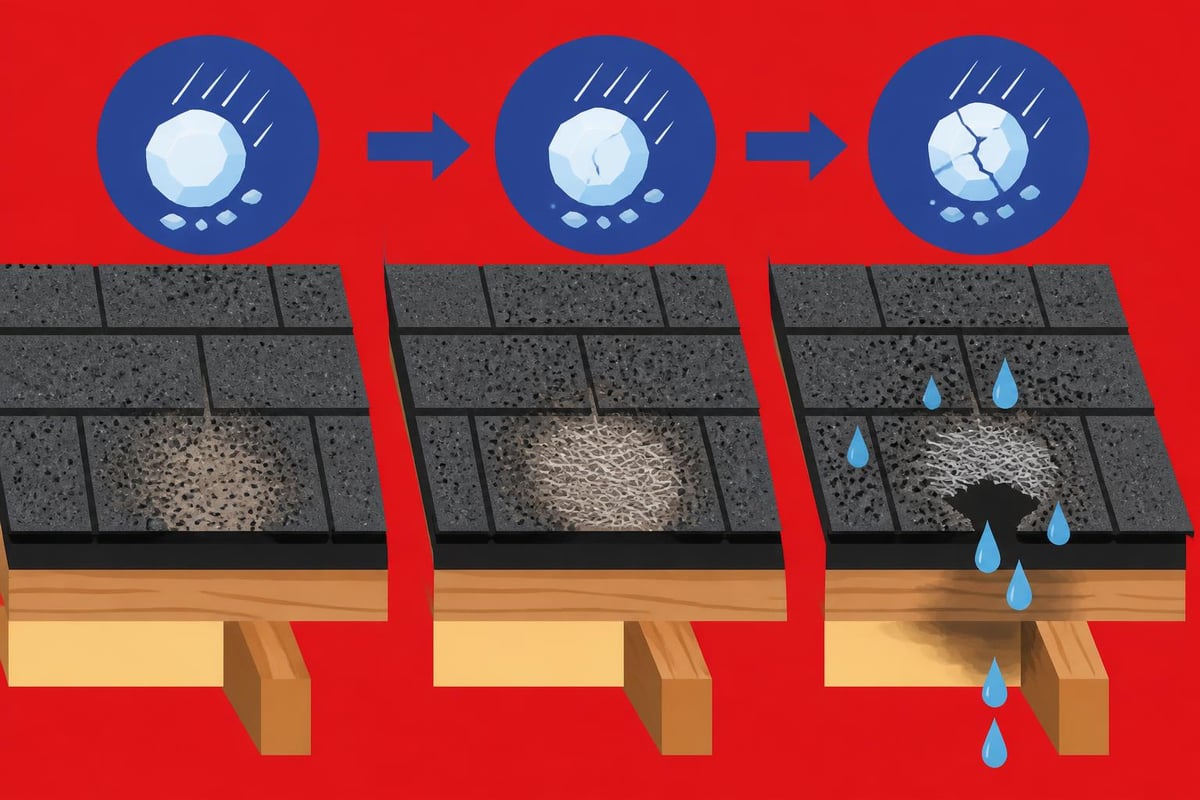
Hail creates distinct patterns that experienced contractors can identify through systematic inspection. On asphalt shingles, hail damage to asphalt shingles typically appears as circular divots where granules have been knocked loose, exposing the underlying mat. These impact points weaken the shingle's protective layer and accelerate deterioration.
Wind damage manifests differently, often creating a pattern of shingle loss that begins on the roof's edges and corners where uplift forces concentrate. Modern dimensional shingles require specific installation techniques to resist high winds, and improper installation can make them vulnerable even in moderate storms.
Hidden Interior Damage
Water infiltration frequently occurs without exterior evidence becoming immediately apparent. Check your attic for water stains on rafters, wet insulation, or moisture accumulation along the underside of decking. These signs indicate that your storm damage roof has allowed water penetration, which can lead to mold growth and structural deterioration if left unaddressed.
| Damage Type | Exterior Signs | Interior Signs | Urgency Level |
|---|---|---|---|
| Hail Impact | Dented shingles, granule loss | Possible water stains | High |
| Wind Uplift | Missing shingles, lifted edges | Active leaks during rain | Critical |
| Debris Impact | Punctures, broken materials | Visible daylight through deck | Critical |
| Water Pooling | Sagging areas, standing water | Saturated insulation | High |
Documenting Storm Damage for Insurance Claims
Proper documentation transforms a stressful claim process into a straightforward transaction with your insurance carrier. Understanding storm damage and roof claims procedures ensures you collect the evidence adjusters need to approve your claim.
Begin documentation immediately after the storm passes and conditions are safe. Take wide-angle photographs showing the entire roof from multiple ground positions, then capture close-up images of specific damage areas. Include reference objects like coins or measuring tape next to hail dents to establish scale.
Essential documentation elements:
- Date and time-stamped photographs from all angles
- Video walkthroughs showing damage extent
- Written descriptions of each damaged area
- Weather service reports confirming storm severity
- Contractor inspection reports with detailed findings
Working with Insurance Adjusters
Professional roofing contractors who specialize in storm roofing services can provide invaluable assistance during the adjustment process. They understand how adjusters evaluate damage and can identify issues that untrained eyes might miss. Many homeowners benefit from having their contractor present during the adjuster's visit to ensure all damage receives proper documentation.
The storm damage roof insurance claims process typically follows a predictable timeline, though complexity varies based on damage severity and policy specifics. Adjusters generally arrive within 7-14 days of claim filing, conduct their inspection, and issue preliminary findings within another week.
Understanding Different Types of Storm Damage
Each weather event creates characteristic damage patterns that require specific repair approaches. Recognizing these distinctions helps property owners communicate effectively with contractors and insurance representatives.
Wind Damage Assessment
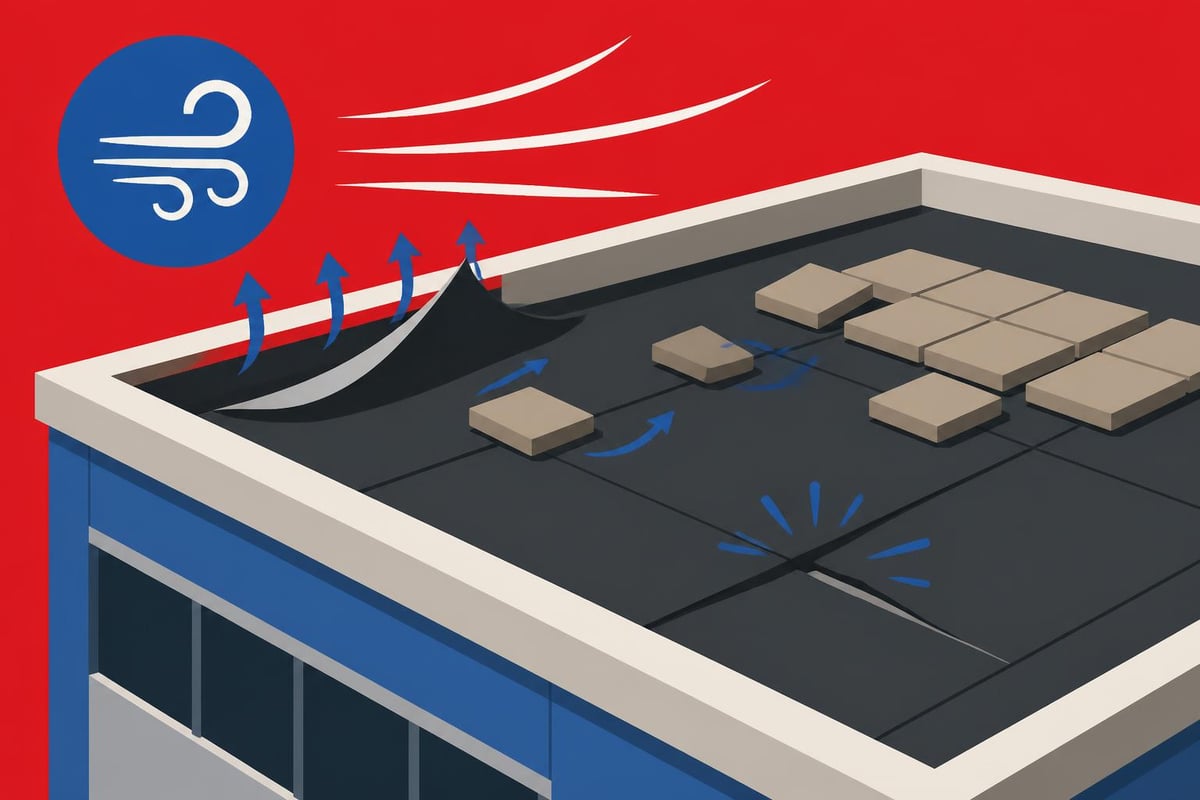
Wind events range from straight-line winds during thunderstorms to tornadic activity that can completely remove roofing systems. The American Roofing Guide’s 2026 update details how sustained winds above 50 mph begin affecting properly installed asphalt shingles, while gusts exceeding 70 mph can damage even commercial modified bitumen systems.
Commercial properties face unique challenges because their typically flat or low-slope designs make them vulnerable to different failure mechanisms than residential structures. Modified bitumen and EPDM systems can develop edge laps that pull away under wind pressure, allowing water infiltration that damages insulation and decking.
Hail Impact Considerations
Hail size, density, and wind speed during precipitation all influence damage severity. Statistical analysis, including Bayesian modeling approaches to insurance claims, helps insurers predict damage patterns, but individual roof conditions vary significantly based on material quality, installation techniques, and existing wear.
Metal roofing materials resist hail differently than asphalt products. While metal roofing material may dent visibly without losing protective capacity, asphalt shingles can suffer internal mat damage that isn't immediately apparent but leads to premature failure.
Professional Inspection and Assessment
Attempting roof inspections without proper safety equipment and training puts homeowners at significant risk. Professional contractors carry liability insurance, use fall protection systems, and know how to navigate roofing surfaces without causing additional damage.
A comprehensive storm damage roof inspection examines every component:
- Shingles or membrane surface integrity
- Flashing condition around penetrations
- Gutter and downspout functionality
- Soffit and fascia damage
- Chimney cap and vent hood condition
- Attic ventilation system performance
Thermal Imaging Technology
Advanced contractors employ thermal imaging cameras to detect moisture intrusion invisible to visual inspection. These devices identify temperature differentials caused by wet insulation, revealing the full extent of water damage that occurred during the storm event.
Aerial photography services, particularly those using professional-grade equipment from specialists like Extreme Aerial Productions, provide comprehensive roof documentation that ground-based photography cannot match. High-resolution aerial imagery captures damage patterns across large commercial buildings and helps adjusters understand the scope of necessary repairs.
Emergency Repairs and Temporary Protection
Between initial damage and permanent repairs, protecting your property from further deterioration becomes paramount. Emergency tarping prevents additional water intrusion that could exponentially increase claim costs and extend the restoration timeline.
Immediate protective measures include:
- Professional-grade tarping over damaged sections
- Temporary sealing of penetrations and flashing
- Debris removal to prevent additional punctures
- Gutter clearing to restore proper drainage
- Interior water extraction and drying
Property owners should never attempt emergency repairs on pitched roofs during wet or windy conditions. The same storm systems that damaged your roof create hazardous working conditions that require professional equipment and expertise.
Preventing Additional Damage
Understanding insurance policy terms related to storm damage reveals that policyholders have a duty to mitigate losses following covered events. Failing to protect your property from obvious additional damage can result in claim denials for secondary losses that could have been prevented.
Garages often sustain damage during severe storms, particularly when high winds affect overhead doors or hail damages roof sections. Specialists like NextLevel Garage Co. can assess and repair garage-specific storm damage, ensuring your entire property receives appropriate attention during the restoration process.
Repair vs. Replacement Decision Factors
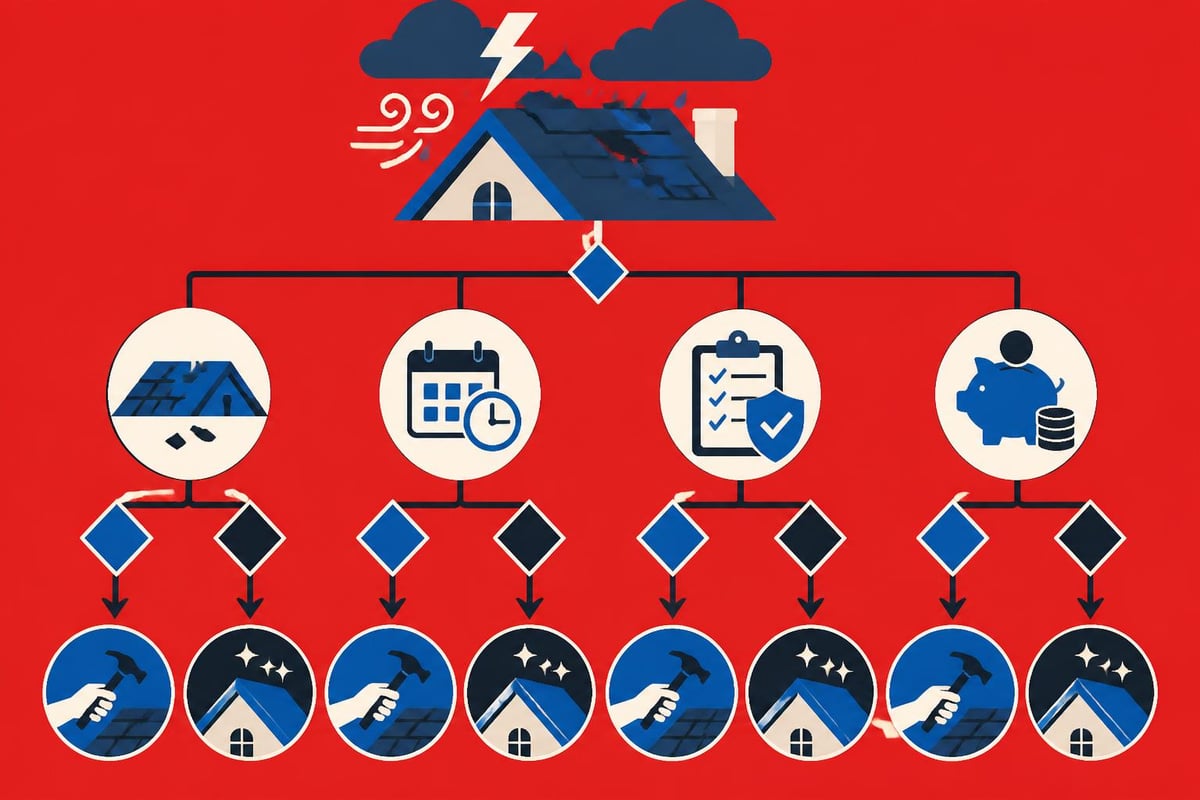
Insurance adjusters and contractors evaluate multiple factors when determining whether a storm damage roof requires repair or complete replacement. This decision significantly impacts claim amounts and project timelines.
| Decision Factor | Repair Indicators | Replacement Indicators |
|---|---|---|
| Damage Extent | Less than 30% surface area | More than 40% surface area |
| Shingle Age | Less than 10 years old | Over 15 years old |
| Material Availability | Current products match | Discontinued materials |
| Building Codes | Repairs meet current codes | Extensive code updates required |
The roof replacement decision often depends on matching existing materials. When manufacturers discontinue specific shingle colors or styles, achieving a uniform appearance may require replacing larger sections than initially damaged.
Commercial Considerations
Commercial roofing systems involve different evaluation criteria than residential projects. Modified bitumen, EPDM, and TPO membranes can sometimes be sectionally repaired if damage is localized and the existing system hasn't reached its expected service life.
Building owners must consider business interruption costs when planning repairs. Phased replacement approaches allow portions of the building to remain operational while work progresses, though this extends the overall project timeline.
Navigating the Claims Process
Successfully processing a storm damage roof insurance claim requires understanding timelines, documentation requirements, and communication protocols. The process typically spans 4-8 weeks from initial filing to final settlement, though complex claims may extend longer.
Key process milestones:
- Immediate reporting – File claims within 48-72 hours of discovering damage
- Adjuster assignment – Insurance company assigns an adjuster within 3-5 business days
- Initial inspection – Adjuster visits property within 7-14 days
- Estimate comparison – Review adjuster's estimate against contractor's assessment
- Negotiation period – Address discrepancies through documentation and supplemental claims
- Approval and payment – Receive initial payment (often actual cash value minus deductible)
- Completion verification – Submit final documentation for recoverable depreciation
Understanding how to file tornado insurance claims or hurricane insurance claims provides valuable context, as these severe weather events follow similar documentation processes despite creating different damage patterns.
Handling Claim Disputes
Disagreements between contractor estimates and adjuster assessments frequently occur. Professional contractors experienced in storm damage insurance claim processes can prepare supplemental documentation that addresses specific line items where estimates diverge.
When considering whether filing hail damage insurance claims is worth the cost and hassle, property owners should evaluate deductible amounts against repair costs and consider potential premium increases. Minor damage costing less than 150% of your deductible may not warrant filing, while significant storm damage roof conditions clearly justify claims.
Material Selection for Storm Resistance
Replacement projects offer opportunities to upgrade to more storm-resistant materials that can reduce future damage risk. Modern roofing products incorporate design features specifically engineered to withstand severe weather events common throughout the Midwest.
Impact-resistant shingles carry Class 4 ratings from Underwriters Laboratories, indicating they've passed testing with 2-inch steel balls dropped from 20 feet. Many insurance carriers offer premium discounts for Class 4 installations, partially offsetting their higher initial cost.
Wind Resistance Ratings
Asphalt shingles receive wind resistance ratings based on standardized testing protocols. Products rated for 130 mph winds provide superior protection compared to basic 60 mph rated shingles, though proper installation techniques matter equally.
Contractors must follow manufacturer specifications precisely to validate warranty coverage and achieve rated performance. This includes proper nail placement, adequate starter course installation, and appropriate sealant application in high-wind zones.
Contractor Selection and Verification
Severe weather events attract both legitimate contractors and fraudulent operators seeking to exploit property owners during vulnerable periods. Verifying contractor credentials protects you from substandard work and potential scams.
Essential contractor qualifications:
- Active state and local licensing
- Comprehensive liability and workers' compensation insurance
- Verifiable local business address and established history
- Manufacturer certifications for products they install
- References from recent projects in your area
Reputable contractors provide detailed written estimates breaking down material and labor costs. They should explain the scope of work, project timeline, payment schedule, and warranty coverage before requesting deposits.
Family-owned businesses with established community presence typically provide more accountability than storm-chasing operations that appear after major weather events and disappear once work is complete. Local contractors understand regional building codes and maintain relationships with suppliers that ensure material availability.
Long-Term Roof Maintenance After Storm Repairs
Storm damage roof restoration provides an opportunity to implement preventive maintenance programs that extend your roof's service life and reduce future damage susceptibility. Even the highest-quality repairs require ongoing attention to maintain optimal performance.
Annual professional inspections identify minor issues before they escalate into major problems. These examinations should occur in spring after winter weather and fall before harsh conditions return. Inspectors check sealant condition, flashing integrity, and overall system performance.
Regular gutter cleaning prevents water backup that can damage roof edges and fascia boards. Clogged gutters during heavy rain events create ice dams in winter and can allow water to infiltrate beneath shingles.
Documentation for Future Claims
Maintaining comprehensive records of repairs, maintenance, and inspections creates valuable documentation for potential future claims. Photographs showing roof condition before and after storm events help establish baseline conditions and demonstrate proper maintenance.
Property owners should retain all invoices, warranties, and inspection reports in accessible files. This documentation proves you've fulfilled maintenance obligations and can expedite future insurance processes by demonstrating responsible property stewardship.
Regional Considerations for Joliet and Will County
Weather patterns specific to northeastern Illinois create unique challenges for roofing systems. The region experiences severe thunderstorms with large hail, occasional tornadic activity, and heavy snow loads that stress roofing components throughout the year.
Local building codes reflect these climate considerations, requiring specific wind uplift resistance and snow load capacities. Contractors familiar with jurisdictional requirements ensure installations meet or exceed code minimums, protecting both structural integrity and insurance coverage validity.
Neighboring communities including areas requiring Lockport roofing, Frankfort roofing, and Mokena roofing services share similar weather exposure and construction standards. Working with contractors who regularly serve these communities ensures familiarity with regional best practices.
Understanding storm damage roof identification, documentation, and repair processes empowers property owners to protect their investments and navigate insurance claims confidently. Professional assessment remains crucial for determining the full extent of damage and developing appropriate restoration plans. When severe weather affects your property, Great Roofing brings three generations of roofing expertise to Joliet and surrounding communities, providing thorough inspections, detailed documentation support, and quality repairs backed by manufacturer warranties and local accountability.