


When severe weather strikes, homeowners often face significant damage to their most important investment. Hail damage on shingle roof systems represents one of the most common yet frequently overlooked consequences of severe storms. Unlike wind damage that displays obvious missing shingles or visible tears, hail impacts create subtle deterioration that may not become apparent until weeks or months after a storm passes. Understanding how to identify this damage, assess its severity, and take appropriate action can mean the difference between a properly restored roof and escalating repair costs. This comprehensive guide explores the critical aspects of hail damage recognition, professional assessment standards, insurance considerations, and repair options for residential property owners.
Understanding How Hail Impacts Asphalt Shingles
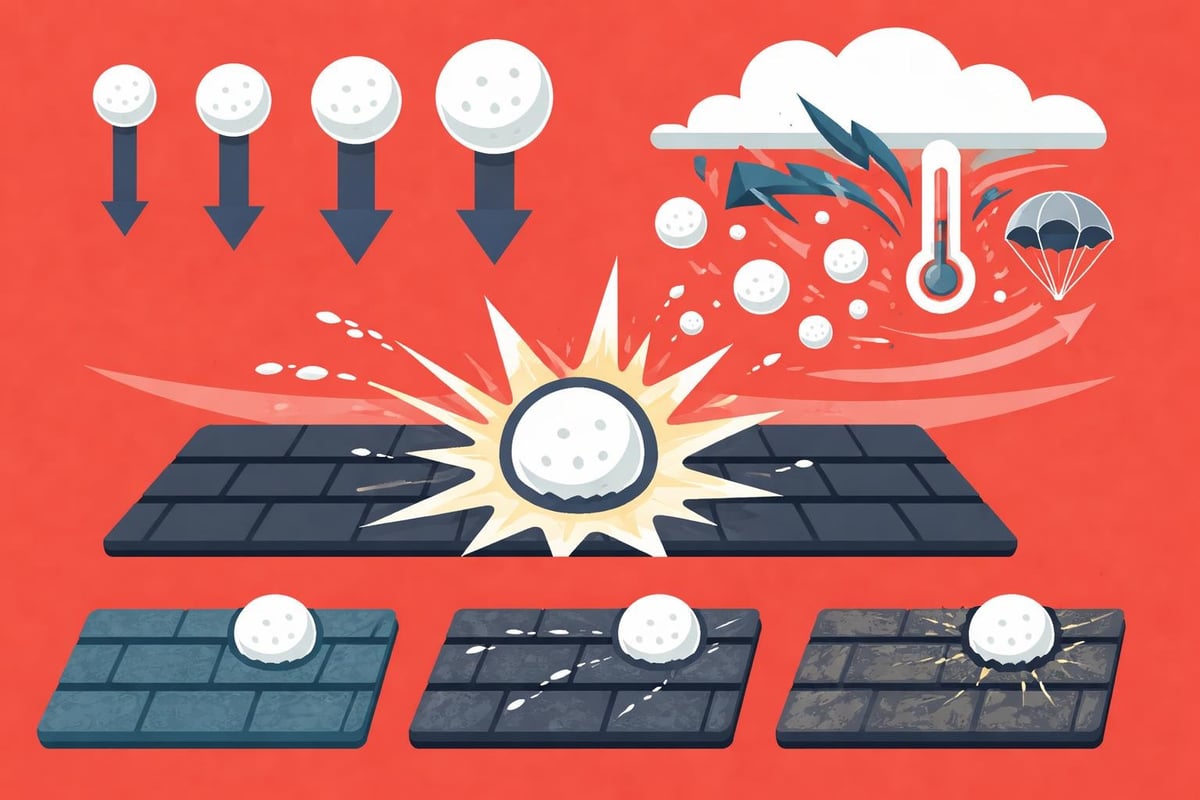
Hailstones traveling at terminal velocity create significant force upon impact with roofing materials. The damage severity depends on multiple factors including hailstone size, wind speed, impact angle, and the age and condition of existing shingles.
When hail strikes an asphalt shingle, the impact compresses the protective granule layer into the underlying asphalt mat. Fresh, pliable shingles may absorb some impact without immediate failure, while aged, brittle shingles fracture more readily. The Insurance Institute for Business & Home Safety provides detailed research on how hailstones behave upon impact and the resulting damage patterns across different roofing materials.
Size and Velocity Relationships
The relationship between hailstone diameter and damage potential follows predictable patterns:
- Pea-sized hail (0.25 inches): Minimal damage, primarily cosmetic bruising
- Quarter-sized hail (1 inch): Moderate damage potential, granule displacement
- Golf ball-sized hail (1.75 inches): Significant damage, mat fractures common
- Baseball-sized hail (2.75 inches): Severe damage, immediate replacement typically necessary
Wind speed amplifies impact force considerably. Hail falling vertically at 40 mph causes less damage than identical hailstones driven at a 45-degree angle by 60 mph winds. This explains why damage patterns often concentrate on specific roof slopes facing the storm direction.
Material Composition Factors
Different shingle compositions respond differently to hail strikes. Three-tab shingles typically sustain more visible damage than architectural shingles due to their thinner profile and single-layer construction. Architectural shingles with their multi-layered design and enhanced thickness provide better impact resistance, though they're not immune to damage from severe hail events.
The asphalt formulation matters significantly. Shingles manufactured with flexible, polymer-modified asphalt compounds demonstrate superior impact resistance compared to those using standard oxidized asphalt. Age deteriorates these properties regardless of initial quality, making older roofs particularly vulnerable.
Identifying Visible Signs of Hail Damage on Shingle Roof Systems
Recognizing hail damage on shingle roof systems requires systematic inspection from both ground level and close-up examination. Professional contractors use established protocols to ensure comprehensive assessment.
Granule loss represents the most common indicator. Hail impacts dislodge the protective granule coating, exposing the black asphalt substrate underneath. Fresh damage appears as dark spots where granules have been knocked away, contrasting with surrounding intact areas. Check gutters and downspouts for excessive granule accumulation, which indicates widespread surface damage.
Functional vs. Cosmetic Damage
Not all visible damage requires immediate replacement. Understanding the distinction between functional and cosmetic damage helps property owners make informed decisions.
| Damage Type | Characteristics | Action Required |
|---|---|---|
| Functional | Mat fractures, exposed substrate, compromised waterproofing | Immediate repair or replacement |
| Cosmetic | Surface bruising, minor granule loss, no substrate exposure | Monitor condition, document for records |
| Borderline | Significant granule loss, surface indentations, no fractures yet | Professional assessment recommended |
The National Roofing Contractors Association’s assessment protocol provides industry-standard definitions for categorizing damage severity. Their comprehensive guidelines help distinguish between damage requiring replacement versus damage that can be monitored.
Inspection Pattern and Methodology
Professional inspectors follow systematic patterns to ensure complete coverage. They examine all roof slopes, paying particular attention to areas facing the storm's approach direction. South-facing and west-facing slopes often show more severe damage in typical Midwest storm patterns.
Inspectors examine metal components including roof vents, flashing, and gutters for telltale denting. Hail large enough to dent metal components almost certainly damaged surrounding shingles, even if shingle damage isn't immediately apparent. This correlation helps validate damage claims and establish storm impact severity.
Understanding what roof storm damage looks like weeks after a storm has passed helps homeowners recognize delayed deterioration signs that initially seemed minor.
Hidden Damage and Long-Term Consequences
Surface-level inspection reveals only part of the story. Hail damage on shingle roof systems often includes hidden deterioration that manifests over time.
Mat fractures represent the most serious hidden damage type. While the shingle surface may appear intact with minimal granule loss, the underlying fiberglass or organic mat sustains fractures from impact compression. These fractures compromise the shingle's structural integrity and waterproofing capability.
Accelerated Aging Process
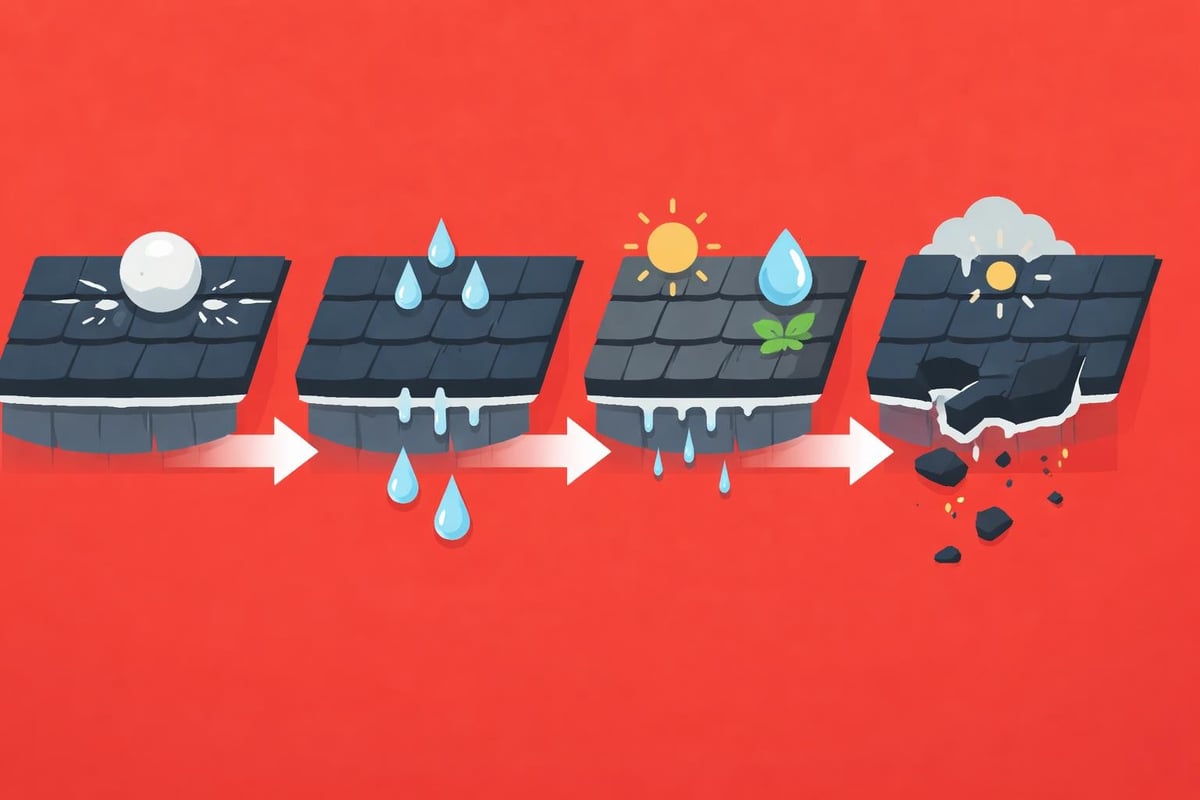
Even moderate hail strikes accelerate normal aging processes. Granule loss exposes asphalt to direct UV radiation, causing rapid deterioration. The asphalt oxidizes and becomes brittle at an accelerated rate compared to undamaged sections. Within 12-24 months, initially minor damage can progress to significant failures requiring extensive repair.
Moisture infiltration through compromised shingles affects underlayment and decking. This secondary damage often exceeds the cost of shingle replacement itself. Water-damaged decking requires replacement before new shingles can be installed, substantially increasing project scope and expense.
Testing Methods for Suspected Damage
Professional assessment uses both visual inspection and tactile testing. Inspectors gently press suspected impact sites to detect mat fractures. Fractured areas feel softer or spongier than intact shingles. This hands-on approach identifies damage that photographs alone cannot reveal.
Moisture meters detect elevated readings in decking beneath damaged shingles, confirming active leaks even when interior ceiling stains haven't appeared. Early detection prevents extensive interior damage and mold growth.
Professional Assessment Standards and Documentation
Standardized assessment protocols ensure consistent, objective damage evaluation. Insurance companies, roofing contractors, and adjusters reference these standards when determining claim validity and repair scope.
The comprehensive hail damage assessment procedures developed by industry experts assign damage susceptibility factors for various roof systems and propose classification systems for rating hail resistance. These technical standards provide the foundation for professional evaluations.
Test Square Methodology
Professional inspectors establish test squares-defined 10×10 foot areas-on each roof slope. They count and document all hail strikes within these test squares, calculating hits per 100 square feet. This quantifiable approach removes subjective interpretation from damage assessment.
Insurance carriers typically require a minimum threshold of strikes per test square before approving replacement. While thresholds vary by carrier, 8-10 documented functional hits per 100 square feet commonly triggers replacement approval. Working with experienced storm damage roofers ensures proper documentation meets carrier requirements.
Photographic Documentation Requirements
Comprehensive documentation includes multiple photograph types:
- Wide-angle shots showing overall roof condition and storm approach slopes
- Close-up images of individual impact sites with measurement references
- Metal component damage photos showing dented vents, flashing, or gutters
- Interior damage documentation if leaks have occurred
- Surrounding property damage to fences, siding, or vehicles establishing storm severity
Proper documentation strengthens insurance claims and provides contractors with accurate information for preparing estimates. Understanding the storm damage insurance claim process helps homeowners gather necessary documentation before filing.
Insurance Considerations and Claims Process
Navigating insurance claims for hail damage on shingle roof systems requires understanding carrier requirements, policy coverage details, and timing considerations.
Most homeowner policies cover sudden, accidental damage including hail impacts. However, coverage specifics vary significantly between policies. Replacement Cost Value (RCV) policies pay for full replacement with comparable materials, while Actual Cash Value (ACV) policies deduct depreciation based on roof age.
Critical Timing Factors
Insurance policies impose strict time limits for reporting claims after discovery. Many carriers require notification within one year of the damage occurrence. Delayed reporting beyond policy limits results in claim denial regardless of damage severity.
The challenge lies in determining when damage "occurred" versus when it was "discovered." Storm dates establish occurrence, but how insurance adjusters assess hail damage involves correlating damage patterns with documented weather events. This correlation proves critical when storms occurred months before damage discovery.
Adjuster Inspection Process
Insurance adjusters conduct independent inspections to verify contractor findings. They follow similar protocols to roofing professionals but represent the carrier's interests. Understanding their methodology helps property owners prepare for this crucial inspection.
Adjusters reference Xactimate pricing software for estimating repair costs. This industry-standard tool provides regional pricing for materials and labor, ensuring consistent claim valuations across different properties and contractors. Discrepancies between contractor estimates and adjuster calculations often stem from scope disagreement rather than pricing disputes.
Having detailed documentation from an initial professional inspection provides leverage when adjuster assessments differ from contractor findings. Independent third-party inspections sometimes resolve disputes when homeowner and carrier assessments conflict significantly.
Repair vs. Replacement Decision Framework
Determining whether hail damage on shingle roof systems requires full replacement or partial repair depends on damage extent, roof age, and economic considerations.
Partial repairs make sense when damage concentrates in limited areas, the existing roof is relatively new, and matching materials remain available. However, patchwork repairs on older roofs often prove false economy, as undamaged sections may fail shortly after repair completion.
Economic Threshold Analysis
| Roof Age | Damage Extent | Recommended Action | Rationale |
|---|---|---|---|
| 0-5 years | <25% damaged | Partial repair | Remaining roof has substantial life |
| 5-10 years | 25-50% damaged | Professional evaluation | Cost-benefit analysis required |
| 10-15 years | >50% damaged | Full replacement | Repair costs approach replacement value |
| 15+ years | Any functional damage | Full replacement | Limited remaining service life |
Insurance carriers often deny partial repair requests when roof age exceeds 15 years, citing inadequate remaining service life to justify investment. They may approve full replacement instead, recognizing that partial repairs provide only temporary solutions.
Material Matching Challenges
Shingle manufacturers regularly update product lines, discontinuing older styles and colors. Finding exact matches for partial repairs becomes increasingly difficult as roofs age. Even when manufacturers claim identical replacements, production batches vary in color tone and texture.
Mismatched repairs create obvious visual discontinuity and may affect property resale value. For asphalt shingle roofing systems visible from the street, aesthetic considerations influence repair decisions alongside functional requirements.

Selecting Qualified Contractors for Hail Damage Repair
Choosing the right contractor significantly impacts repair quality, insurance claim success, and overall project satisfaction. The roofing industry unfortunately attracts storm-chasing operations that provide substandard work and disappear before warranty issues emerge.
Local, established contractors offer advantages that transient operations cannot match. They maintain permanent facilities, employ consistent crews, and stake their reputation on long-term customer satisfaction. Their familiarity with local building codes, permit requirements, and insurance carrier preferences streamlines the entire process.
Credential Verification Essentials
Verify these credentials before engaging any contractor:
- Active state and local licensing appropriate for commercial and residential work
- Current liability insurance with minimum $1 million coverage
- Workers' compensation insurance protecting against on-site injuries
- Manufacturer certifications for installed products
- Better Business Bureau rating and complaint history
- Recent customer references from hail damage projects
Contractors specializing in storm damage repair understand the unique challenges of hail damage assessment and insurance coordination. Their experience with similar projects accelerates claim processing and ensures proper documentation.
Red Flags and Warning Signs
Exercise caution when contractors exhibit these concerning behaviors:
- Requesting large upfront deposits before material ordering
- Offering to waive insurance deductibles (illegal in many states)
- Pressuring immediate contract signing before insurance approval
- Lacking permanent local address or displaying only P.O. box
- Unable to provide proof of licensing and insurance
- Offering unsolicited door-to-door services immediately after storms
Reputable contractors provide detailed written estimates, explain all project phases clearly, and encourage property owners to obtain multiple competitive bids. They understand that informed customers make better long-term clients than those pressured into hasty decisions.
Preventing Future Hail Damage Through Strategic Upgrades
While no roofing system provides complete hail immunity, strategic material selections and upgrades significantly reduce damage susceptibility during future storms.
Impact-resistant shingles carry Class 4 ratings under UL 2218 testing standards, indicating superior performance against simulated hail strikes. These enhanced products incorporate modified asphalt formulations and reinforced backing that absorbs impact energy more effectively than standard shingles.
Insurance Premium Considerations
Many insurance carriers offer premium discounts for Class 4 impact-resistant roofing installations. Discounts typically range from 10-30% on the dwelling coverage portion of policies, potentially offsetting the additional material cost over the roof's service life.
Qualification requirements vary by carrier. Most require documentation of Class 4 product installation including manufacturer specifications and contractor certification. The premium reduction applies as long as impact-resistant materials remain in place, providing ongoing savings throughout the roof's lifespan.
Material Selection Comparison
Different roofing materials offer varying hail resistance characteristics:
- Architectural impact-resistant shingles: Excellent cost-to-performance ratio, wide style selection
- Metal roofing: Superior hail resistance, potential for denting on softer metals
- Synthetic slate or shake: Good impact resistance, premium pricing
- Clay or concrete tile: Excellent durability, may crack under severe impacts
Property owners considering metal roof installation should understand that while metal roofs resist functional damage well, they may show cosmetic denting from large hail. This denting rarely affects performance but creates aesthetic concerns for some homeowners. Researching the best metal roofing materials helps identify options with optimal hail resistance for your specific requirements.
Maintenance Practices That Preserve Hail Resistance
Regular maintenance preserves the impact resistance and overall condition of roofing systems, maximizing their ability to withstand future hail events.
Annual professional inspections identify minor issues before they escalate into major problems. Inspectors check for loose or damaged shingles, deteriorated flashing, clogged gutters, and other conditions that compromise roof integrity. Addressing these issues promptly maintains the roof's designed performance capabilities.
Post-Storm Assessment Protocol
Implement systematic post-storm assessment procedures after any severe weather event:
- Document the storm date and time for insurance records
- Conduct initial ground-level inspection looking for obvious damage signs
- Check for granule accumulation in gutters and downspouts
- Examine metal roof components for denting indicating hail presence
- Schedule professional inspection if any damage indicators appear
- Photograph all observed damage from multiple angles with date stamps
Following established protocols ensures comprehensive documentation and supports insurance claims when necessary. Many homeowners only discover hail damage to asphalt shingles during unrelated inspections months after storms, missing critical claim filing deadlines.
Seasonal Maintenance Checklist
Quarterly maintenance activities preserve roof condition and extend service life:
- Spring: Remove winter debris, inspect for ice dam damage, check flashing integrity
- Summer: Verify adequate attic ventilation, trim overhanging branches, inspect shingle condition
- Fall: Clean gutters thoroughly, check for loose shingles before winter, seal minor issues
- Winter: Remove excessive snow accumulation, watch for ice dam formation, inspect from ground level
Consistent maintenance creates documented condition history that proves valuable during insurance claims. Before-and-after comparisons clearly establish that damage resulted from specific storm events rather than gradual deterioration or deferred maintenance.
Regional Considerations for Midwest Properties
Hail damage on shingle roof systems presents particular challenges in Midwest regions experiencing frequent severe thunderstorms. Illinois properties face elevated hail risk during spring and summer months when atmospheric conditions favor supercell development.
Understanding local storm patterns and damage risks helps property owners prepare adequately. While this Michigan-focused resource discusses regional specifics, the assessment methodologies and professional standards apply broadly across Midwest markets.
Climate-Specific Material Recommendations
Midwest climate demands roofing materials that withstand not only hail impacts but also extreme temperature fluctuations, heavy snow loads, and intense UV exposure during summer months.
Modified asphalt formulations perform better in freeze-thaw cycles common to this region. Standard asphalt shingles become brittle during extended cold periods, increasing fracture susceptibility during spring hail events. Polymer-modified products maintain flexibility across wider temperature ranges.
Proper ventilation proves critical for preventing ice dam formation during winter months. Ice dams stress shingles through repeated freeze-thaw cycling, weakening their structure before hail season arrives. Adequate ridge and soffit ventilation maintains consistent attic temperatures, preventing the snowmelt-refreeze cycle that creates dams.
Recognizing and properly addressing hail damage on shingle roof systems protects your property investment and prevents costly secondary damage from delayed repairs. Understanding damage indicators, insurance requirements, and contractor selection criteria empowers informed decision-making during stressful post-storm periods. Great Roofing brings decades of experience helping Joliet-area homeowners navigate storm damage assessment, insurance claims, and quality repairs. Our family-owned team provides the expertise and integrity you need when hail threatens your home's primary defense against the elements-contact Great Roofing today for a comprehensive inspection and straightforward guidance on your best path forward.