


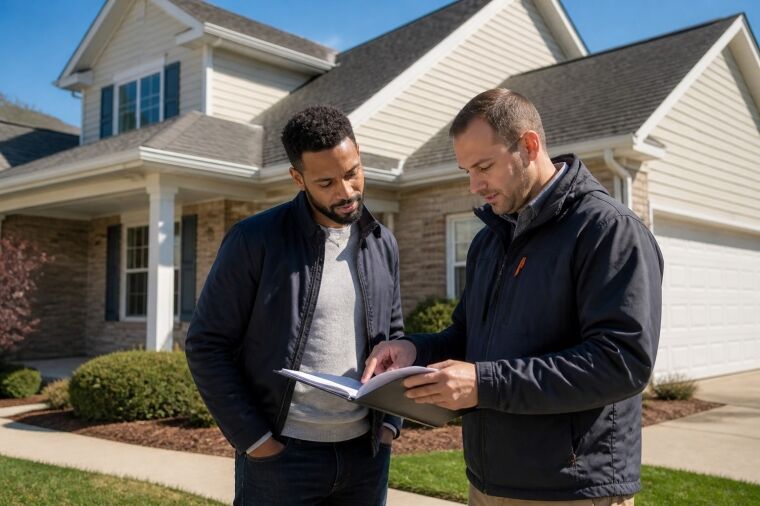
The best way to evaluate contractors roofing projects depend on is to verify four things before anything else: a valid license and insurance, a written proposal with specific materials and scope, a clear warranty, and a record of local work you can confirm. A roof is one of the largest exterior investments you will make, and the contractor you hire matters as much as the shingles or membrane going on top. This guide walks through each check in the order that saves you the most time and risk, written for homeowners and commercial property owners in Joliet and the south Chicagoland area.
Why the Contractor Matters as Much as the Materials
A roof is only as reliable as the crew that installs it. Even premium shingles fail early when flashing is rushed, ventilation is ignored or fasteners are driven incorrectly. Most manufacturer warranties also depend on correct installation, so poor workmanship can quietly void coverage you thought you had.
Local conditions raise the stakes. Northern Illinois roofs handle freeze-thaw cycles, ice dams, heavy snow loads, summer heat and the occasional hail or high-wind event. A contractor who works in this region every year understands how these stresses show up on a roof and plans for them.
What Credentials and Insurance Should You Verify?
Start by confirming that the contractor is properly licensed where required, carries general liability insurance and carries workers' compensation coverage for its crews. These three items protect you from financial exposure if a worker is injured on your property or a mistake damages your home.
Ask for the documents themselves rather than relying on a verbal assurance. A legitimate contractor can provide a certificate of insurance quickly, and you can ask your insurance agent to confirm it is current.
Beyond the baseline, look for credentials that show training and manufacturer relationships:
- Manufacturer certifications. These indicate the crew has been vetted by the brand whose products they install. Great Roofing, for example, is IKO Roof PRO certified and AirVent certified, and its employees hold VSI certification.
- Accreditation and ratings. Check the Better Business Bureau profile for rating, complaint history and how complaints were resolved. Great Roofing is BBB Accredited with an A+ rating.
- Industry recognition. Awards matter less than credentials, but consistent recognition over multiple years suggests steady performance. Great Roofing has earned the Platinum Award for Joliet Roofing/Siding/Soffit Contractor for two consecutive years.

How Many Estimates Should You Collect?
Collect at least three, and ideally up to four. The National Roofing Contractors Association recommends getting three or four proposals from reputable local contractors, which gives you enough data to spot an outlier without turning the process into a months-long chore.
Use the estimates to compare scope, not just the bottom line. A low bid often reflects a thinner scope: fewer materials, no ventilation work, minimal flashing replacement or a cleanup that is left to you. A high bid may include steps the others quietly omitted. When two numbers differ widely, ask each contractor to explain the difference line by line.
Be cautious of any contractor who pressures you to sign the same day, offers a discount that expires within hours or asks for a large cash payment up front. Reputable companies expect you to compare.
What Should a Roofing Proposal Include?
A solid proposal spells out the work in enough detail that you could hand it to a different contractor and get a comparable bid. According to the National Roofing Contractors Association, a roofing proposal should specify the roof covering, manufacturer and color; scope and materials; flashing and ventilation work; approximate start and completion dates; payment procedures; and warranty coverage.
Use this as a working checklist when you read each bid:
- Roof covering, manufacturer and color. The exact shingle line or commercial membrane, not a generic "architectural shingles" line.
- Scope and materials. Tear-off versus overlay, underlayment type, ice and water shield placement, drip edge, fasteners and decking repair allowances.
- Flashing and ventilation. Chimneys, valleys, walls and penetrations should be addressed explicitly. Poor ventilation shortens shingle life, so intake and exhaust should be described.
- Start and completion dates. Approximate windows are normal, since weather can shift a schedule.
- Payment procedures. Deposit amount, progress payments and final payment tied to completion.
- Warranty coverage. Both the manufacturer's material warranty and the contractor's workmanship coverage, in writing.
If a bid is a single line with a total price, ask for a detailed version. A contractor unwilling to document the work is telling you something.
Which Roof Type Fits Your Property?
The right contractor should recommend a system that matches your building, budget and climate, and explain the trade-offs plainly. For most Joliet-area homes, that conversation centers on asphalt shingles, which balance cost, durability and repair simplicity. Great Roofing's team can walk through options on its pages for asphalt roofing and home roofing.
Commercial properties follow a different logic. Flat and low-slope roofs on retail buildings, offices and multifamily properties often use modified bitumen, a asphalt-based membrane built for low-slope applications. Some contractors specialize in residential shingle and commercial modified bitumen systems, and you can review their commercial roof repair options if you need to extend a roof's life before committing to replacement.
A few questions help you judge whether a contractor knows the system they are proposing:
- How many roofs of this type has your crew installed in the past year?
- Why this product line over the alternatives for my building?
- What does the decking inspection process look like once the old roof is off?
Vague answers are a signal. Specific answers that reference your roof's slope, exposure and ventilation are a good sign.
How Do You Check Reviews and Local Track Record?
Judge a contractor's track record by patterns across several sources, not by a single star rating. Look at Google reviews, the BBB profile and any local award or association listings. Read the three-star and two-star reviews carefully, because they reveal how a company behaves when something goes wrong.
Pay attention to the following:
- Response behavior. Does the company reply to criticism professionally and offer a fix?
- Consistency over time. A steady stream of reviews across years is more reliable than a burst of five-star ratings in one month.
- Local specificity. Reviews that mention neighborhoods and towns near you confirm that the crew works in your area and knows local building practices.
Ask for two or three recent addresses nearby and, if possible, drive past them. A roof that is straight, clean at the edges and tidy around vents tells you more than a brochure. Ask also about cleanup: a good crew handles nails, debris and landscaping protection. Ask each contractor how they handle cleanup and landscaping protection before you sign.
How Should Warranties Be Handled?
Treat warranties as two separate promises: the manufacturer covers the product, and the contractor covers the installation. Both should be documented before work starts, including what is covered, for how long and what actions void coverage.
Material warranties can be long. Material warranty length depends on the product selected and registration requirements, so confirm the specifics for your project in writing. For workmanship, ask how the company handles problems after the job is complete. A contractor who takes ownership of its work and makes it right when a customer is not satisfied is worth far more than a long number printed on a certificate.
Keep digital and paper copies of your contract, warranty registration and final invoice. If you sell your home, a transferable warranty and documented roof history can support your asking price.
What About Storm Damage and Insurance Claims?
If a hailstorm or windstorm has damaged your roof, choose a contractor who understands the claims process before you sign anything. Illinois weather can produce hail and straight-line winds that leave damage that is not obvious from the ground, such as bruised shingles, lifted tabs and compromised flashing.
Document damage quickly with photos, schedule an inspection and review your policy's deductible and any time limits for filing. Be wary of anyone who knocks on doors after a storm demanding a signed agreement before explaining the scope of damage, and never let a contractor promise to cover your deductible, which can create legal trouble for you.
A contractor with in-house claim support removes a lot of friction. Some roofing companies offer claim support, and you can ask any contractor how they handle the process before you sign, including on pages about storm damage repair and roof damage insurance claims. Temporary protection, such as tarping, should be addressed first so that water does not cause secondary damage to ceilings and insulation.
Should You Repair or Replace?
Choose repair when damage is localized and the roof still has meaningful service life, and choose replacement when problems are widespread or the roof is near the end of its expected lifespan. A trustworthy contractor will tell you which applies, even when the answer is the smaller job.
Repair usually makes sense for a few missing or lifted shingles, a failed pipe boot, a small flashing leak or storm damage confined to one slope. Replacement becomes the better value when you see curling or granule-bare shingles across the roof, repeated leaks in different areas, sagging decking or recurring repairs that add up. For leak and shingle problems on a home, Some contractors offer Residential Roof Repair for leaks and damaged shingles, and a good one will fix the source of the problem rather than only the visible symptom.
Request an honest assessment with photos of what the contractor finds on your roof. Being shown the problem areas builds trust and lets you compare diagnoses between companies.
Why Does Ventilation and Insulation Deserve a Line in the Bid?
Ventilation and attic insulation directly affect how long your new roof lasts, so a bid that ignores them is incomplete. In a northern climate, heat escaping from the living space can melt snow on the roof deck and refreeze at the eaves, which feeds ice dams. In summer, a poorly ventilated attic bakes the underside of the shingles.
Ask the contractor to describe the intake and exhaust ventilation plan, including soffit vents, ridge vents and baffles. Insulation also deserves attention, since the right R-value and air sealing reduce the load on the roof assembly. Local building codes and your contractor's guidance should determine what insulation suits an Illinois attic.
What Questions Should You Ask Before Signing?
Ask direct questions and expect direct answers. A good contractor welcomes them, because informed customers are easier to work with.
- Will my project be handled by your own crew or by subcontractors?
- Who will be my point of contact from the sales visit through production?
- What happens if we discover rotted decking once the old roof is removed, and how is that priced?
- How do you protect landscaping, gutters and siding during tear-off?
- What is your plan for rain delays?
- How are changes to the scope documented and approved?
Communication is often where projects succeed or fail. Ask who will be your single point of contact, so you are not left chasing updates between departments.
Finally, confirm that the contract matches the proposal word for word. Anything verbally promised should appear in writing. Do not sign a contract with blank fields, and never make the final payment until the work is complete and any punch-list items are resolved.
Where Can You Learn More Before You Decide?
Reading widely helps you recognize good answers when you hear them. If you are comparing options in the area, the page on roofing contractors in Illinois gives useful context.
Treat vetting as a short project of its own: gather documents, compare written proposals, check references and confirm warranty terms. An afternoon spent on those steps can prevent years of leaks, disputes and unplanned repairs.
Your next step is simple: pull together your last roof inspection photos or notes, then request two or three detailed written proposals and compare them against the checklist above. If you live in Joliet or the south Chicagoland area, you can start by requesting a written estimate from any local contractor you are considering, including Great Roofing, and make sure the scope, materials and warranty are spelled out in writing.